Deer In Headlines II
By Gery Deer
(Edited / Gameshow Fact Checking by Bob Stolz)
(Editor’s Note: This is an extended edition of the June 19, 2024 print edition of Deer In Headlines II. Throughout the piece you’ll find links to IMDB pages and YouTube videos which give you more information and even let you watch episodes of the shows mentioned. One link is a full documentary of the events surrounding a 1984 episode of the show, “Press Your Luck.” I hope you enjoy it.)

See if any of these titles spin your wheel: “To Tell the Truth,” “Truth or Consequences,” “Press Your Luck,” “Password,” “Card Sharks,” “The $64,000 Question,” “Who Wants to Be a Millionaire,” “$100,000 Pyramid,” “What’s My Line.” – the list goes on. Welcome to the world of television gameshows, a uniquely American invention that has endured long past the time any survey might have said it would.
Television game shows hit the air almost the moment picture tubes began to glow in households nationwide. The genre may change over the years, and some are downright ridiculous. But whatever you think of them, these programs continue to be a popular influencer of American culture.
According to broadcast historians, the first game show was a radio quiz show called “Brooklyn Eagle Quiz on Current Events.” It debuted in 1923 on WNYC, New York, but eventually achieved national broadcast status, setting the stage for all that would follow.
Game shows are categorized by how the contestants play. Quiz shows, like “Who Wants to Be A Millionaire,” rely on a question-and-answer trivia format. Panel shows, like “Match Game,” use groups of celebrities to move the game along. Activity-oriented programs, such as the more recent “Total Wipeout,” require contestants to do something physical. Reality game shows and talent contests, like “Survivor” and “American Idol,” are relatively new formats. However, it could be argued that shows like “The Gong Show” and possibly Ed McMahon’s “Star Search” were Simon Cowell’s inspiration for programs like “Britain’s Got Talent” and “Idol.”
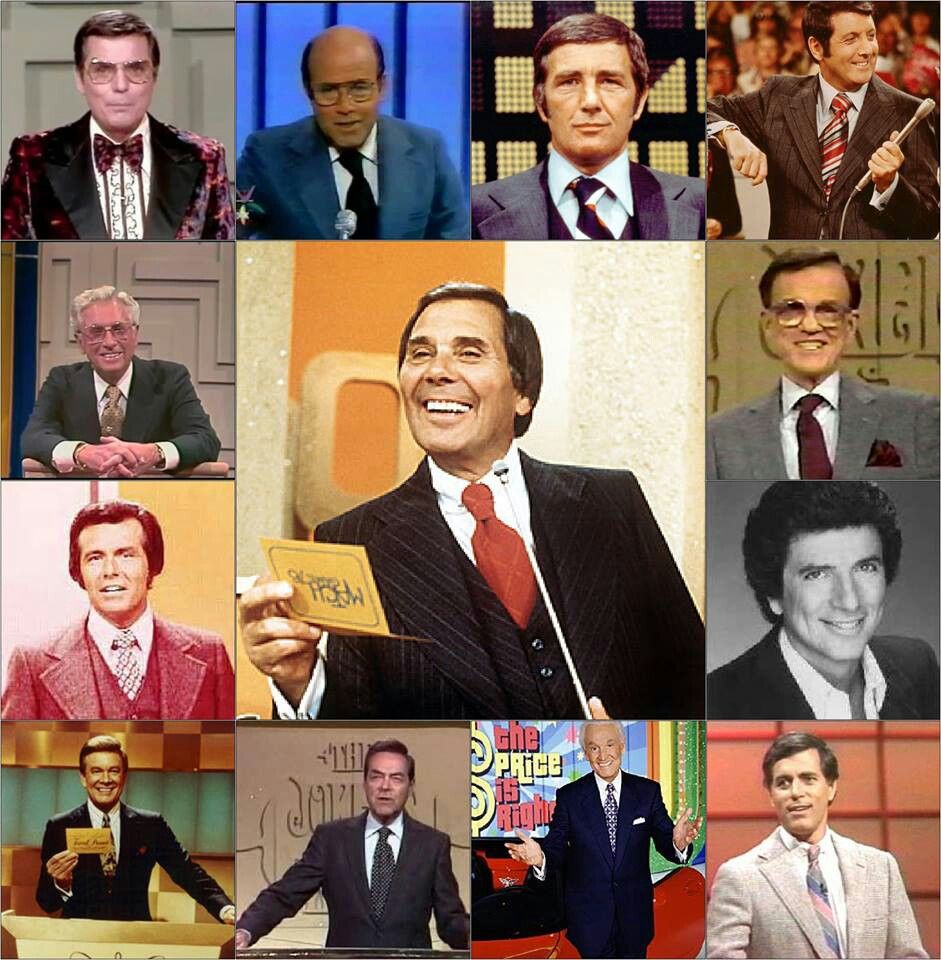
From the 1960s through the 80s, producers of these programs were prolific and turned their hosts into stars. The list includes such performers as Gene Rayburn (Match Game), Monty Hall (Let’s Make A Deal), Allen Ludden (Password), Gary Moore (To Tell the Truth), Chuck Woolery (Wheel of Fortune/Love Connection),Tom Kennedy (Name That Tune), the late Alex Trebek of “Jeopardy!” fame, and many others. As “Wheel of Fortune” host Pat Sajak takes his final spin in June 2024, Ryan Seacrest joins the ranks with other more recent additions like Steve Harvey (Family Feud), Howie Mandell (Deal or No Deal), Keke Palmer (Password, 2022), and Jane Lynch (The Weakest Link, US).
Many shows started at local TV stations and grew in popularity until they became network products. Although most began at the network level, produced either in New York or Los Angeles, there were a few locals. Around 1975, the Dayton, Ohio edition of “Bowling for Dollars,” a sort of franchised show package that any station could license, was hosted weeknights by long-time radio personality, David G. McFarland. Most local stations chose the cheaper option, however, which was simply to air pre-produced programs like “Wheel of Fortune,” saving thousands on production costs.
At the network level, a staggering amount of money was generated by advertising, and show producers wielded a great deal of power over daytime television. Mark Goodson and Bill Todman produced such long-running shows as “The Price is Right” and “Match Game.” Their programs still generate ratings and money, even the reruns. Chuck Barris helmed “The Newlywed Game” and several others. Talk show host and producer Merv Griffin is responsible for two of the most popular shows still in production: “Jeopardy!” and “Wheel of Fortune.”

Virtually every network scrambled to fill morning daytime slots with gameshows, from card games to shopping sprees. Every type of game or activity was being turned into a gameshow. Even PBS had a game show at one point called “Think Twice,” starring Monteria Ivey. Needless to say, it didn’t last very long.
Like other media, game shows have had their share of scandals over the years. The one with the farthest-reaching repercussions was the 1950s quiz show, “Twenty-One.” Advertisers and producers colluded to provide breakout contestants with quiz answers to keep them in the game longer and drive drama and viewership. Once discovered, convened hearings to determine how the scandal would affect future programs. Eventually, legislation was passed to limit advertisers’ influence over the outcome of these contests.
One of the highest-rated shows of the 1980s, “Press Your Luck,” rocked CBS network execs when a single contestant racked up more than $100,000 in one game. For perspective, the maximum daily winnings on any show in those days was around $50,000. But an aimless Ohio man named Michael Larsen, looking for easy money and with a lot of time on his hands, spent months memorizing the flashing patterns of the “Press Your Luck” game board.
When he finally became a contestant on the show, Larsen focused on one particular pattern with every spin and timed his hit of the buzzer to stop the board at just the right moment. Through 40 spins, he avoided the prize-stealing “Whammy,” racked up his cash, and went home. The incident was not exactly scandalous, but it was certainly embarrassing for the network.
“Press Your Luck” has seen at least one reboot over the years, but after that incident, the gameboard’s electronics were greatly modified. As for Larsen, he lost a good bit of his money to a home robbery and bad financial decisions. Sadly, he died of cancer just 15 years later at the young age of 49.
Today, three long-running game shows still rule the airwaves: “Jeopardy!,” “The Price is Right,” and “Wheel of Fortune.” “Wheel” and “Jeopardy!” are syndicated programs airing at different times in local markets. However, “The Price is Right” remains a network behemoth that still anchors the CBS daytime lineup.
With its famous phrase, “Come on down,” inviting audience members to Contestants’ Row, “The Price is Right” is the longest-running game show on television. It debuted in 1956 but was revamped some years later. Prior to that, the program was hosted by the venerable “dean of game show hosts,” Bill Cullen. Don Pardo, later of “Jeopardy” and “Saturday Night Live” fame, was one of his announcers.
In 1972, CBS debuted a new, more modern version of the program. The network eventually broke convention by expanding from the typical 30-minute format to a full hour, capitalizing on the show’s wild popularity. They also tapped popular “Truth or Consequences” host Bob Barker to become master of ceremonies. The success of the new format led to a syndicated evening version hosted by Dennis James, also one of the earliest game show hosts.
Today, “Price” is the longest-running television game show at more than 9,000 episodes and Barker spent the last 35 years of his career holding the mic. Upon Barker’s retirement, comedian Drew Carey stepped in during the 2007 season, again giving it a fresh look and attracting a younger demographic.
As Ryan Seacrest assumes the role of spin-maestro on “Wheel of Fortune,” the rest of the show will stay pretty much the same. Vanna White will stay on, although her purpose seems superfluous at this point given the electronic nature of the puzzle board’s letters. She is apparently still needed to tap on a digital screen while someone in the control room pushes a button to reveal the letter.
Game shows generally offer a glimpse of ordinary people in an extraordinary, albeit artificial, situation. Behind door number three, each contestant can hope for a new car, and Monty Hall (and now Wayne Brady) always has a smile and a cash prize for finding that one random object in their pocket.

Some game shows, like Hall’s “Let’s Make A Deal,” are pure silliness, while others offer contestants the unrealistic promise of fulfilling their dreams (at least financially). But modern talent and reality gameshows, like “American Idol,” “Survivor,” and CBS’s “Big Brother,” dangle fame and fortune before their contestants, luring viewers in with contrived drama and fake infighting.
I know what I’m talking about, here. I was a compensated performer on NBC’s “America’s Got Talent” (AGT) in 2006. I met many of the contestants and witnessed their hope and agony as they struggled to meet sometimes impossible demands of producers. The show is crushing to those who compete, some of whom are seasoned, talented performers hoping for a break.
These programs never reveal to the audience the manipulation that goes on behind the scenes as producers subject the performers to the scrutiny of unqualified, B-list celebrity judges. Easy money? Hardly. Quiz shows can be fun and quick entertainment for contestant and viewer. But contests like AGT are arduous, dejecting, sometimes even humiliating for the contestants.
Sadly, it’s unlikely this particular form of gameshow is going away anytime soon. Talent and reality gameshows rake in millions of dollars in ad revenue for every episode, each artificially sweetened and chock full of “unscripted” flavor.
Fear not—the old-school gameshow format is making a resurgence. Thanks to connected TV, you can stream hundreds of these daytime diversions from nearly every decade since their inception. Amazon Prime even includes a channel called Buzzr, a gameshow buff’s paradise that runs them all day, all the time. (Buzzr is owned by Fremantle, the successor owner of the Mark Goodson-Bill Todman game show library.)
Like any other television programming, gameshows must be taken for what they are – mindless diversion. They were never meant to be Shakespeare or Ibsen. As children they often helped pass sick days home from school or gave our mothers something to do while ironing. However you experience them, they’re here to stay. So, until next time, this is Gery Deer saying, “Help control the pet population. Have your pet spayed or neutered. Goodbye, everybody.” (Special thanks to Bob Barker.)
 The Jamestown Comet