Local News & Commentary Since 1890.

Archive for the ‘Senior Lifestyle’ Category

Creative people are not predisposed to mental illness.

In Entertainment, Health, National News, Opinion, Senior Lifestyle, sociology, State News, Uncategorized on December 12, 2014 at 2:12 pm

When it happened, I did not want to be one of the millions of journalists writing about the tragic death of comedian Robin Williams. I wanted no part of the relentless armchair quarterbacking of commentators who so easily claimed to have the man, “figured out.” No one knew what was in his head or heart and pretending to in order to secure 15 seconds of publicity on the morning talk shows is disrespectful on countless levels.

As a kid, “Mork & Mindy” was a favorite television show of mine. Naturally, I was too young to understand that Williams’ extra-terrestrial comic genius may have originated from a man with deep, emotional fragility in a constant struggle with personal demons. However, Williams’ death led to interesting dialogue about whether brilliantly creative people have a higher tendency toward mental illness.

Psychologists have long debated the relationship between the creative mind and various mental illnesses, particularly bipolar disorder.  Personally, I reject the psychobabble that suggests creative people innately suffer from a myriad of mental and emotional disorders.

I’m not a psychiatrist or a physician but I am one of those creative people, albeit that I walk the line to the other side of the brain as well. I can rebuild an engine, write this article, and produce a television segment, all in the same day. But am I, by nature, mentally ill?

Benjamin Franklin was one of the most creative and inventive people in American history. He was a statesman, a writer and an inventor, and there is no evidence to suggest he had any sort of mental illness.

But in today’s era of mass publicity, there are other pressures that can affect the creative mind’s health besides that to produce new work. Anyone who becomes successful or is thrust into the public eye at any level has an entirely different set of stresses to deal with.

From my own, small experience, I can tell you first-hand that, as a public figure, you are expected to be “on” all the time. Because of your public work, people believe they know “you,” and anticipate you to behave a certain way to meet their expectation.

When you don’t, they are disappointed and react negatively. The pressure of not being able to meet those expectations can take a toll on someone who already suffers from self-doubt, depression and other areas where a negative personal image is already prevalent.

Most creative people are in the business they love in order to do a good job at work then go about their lives as normally as possible. Often, however, the public won’t allow it.

Williams’ death serves as a reminder that every creative person is just that, an individual, whether working from their garage or signing million-dollar movie deals. Every day they struggle with the same concerns as you and I, it’s just that the scope of view might be a bit larger or different.

Has anyone considered the possibility that people who already have mental illnesses choose to go into a more creative line of work because it fits their “disability?” It’s no secret that actors and writers tend to be introverted, keep to themselves and often reject the idea of the 9 to 5 job and even general social conformity. Since mental illness isn’t something a person just contracts, like the flu; it’s logical to conclude that it’s got to be in the genetics somewhere waiting for a trigger. Depression and other illnesses can also be affected by the lifestyle of the individual through alcohol and drug use, exacerbating the problem.

Therefore, it is entirely likely that those with mental issues actually choose the more fluid existence of the creative lifestyle early on.  The common absence of structure and responsibility probably plays well into their ever fluctuating mental state.

In other words, it’s a chicken or the egg problem. Are creative people mentally ill (as a generalization), or do the mentally ill choose the more creative path? A great talent was lost in Robin Williams and he was by no means the first. Sadly, regardless of how it comes about, it is unlikely he will be the last.

Gery L. Deer is an independent columnist and contributor to WDTN-TV2’s Living Dayton program


For some, depression darkens the holiday season

In Children and Family, Health, Holiday, Opinion, Senior Lifestyle, sociology, Uncategorized on November 24, 2014 at 1:54 pm

DIH LOGOIt’s never great to lead off with a cliché, but there may really be a silver lining behind every dark cloud. The hard part is that it’s up to the individual to recognize and interpret it. During the holiday season, however, for some the darkness may become overwhelming and everyone else should be sensitive to those around them suffering from seasonal depression.

As the Thanksgiving Day holiday heralds in the Christmas season, it’s important to try to remember that not everyone is happy and cheerful during this time. Many people suffer from various types of clinical depression, exacerbated by the holidays.

Seasonal Affect Disorder, or SAD, is a seasonal pattern associated with a recurring depressive disorder. It’s a fact that people experience mood changes along with the seasons but some may actually experience an even more sever bout during the stressful holiday season.

According to Healthline.com, “Depression may occur at any time of the year, but the stress and anxiety of the holiday season—especially during the months of November and December (and, to a lesser extent, just before Valentine’s Day)—may cause even those who are usually content to experience loneliness and a lack of fulfillment.”

baileygeorgeNot surprisingly, depression during this time can result from loneliness. Healthline.com reports that a 1999 Canadian study of patients treated by emergency psychiatric services during the Christmas season, states the most common stressors were feelings of loneliness and “being without a family.”

Experts also suggest that part of the problem is a level of media bombardment, mostly advertising, that depicts cheerful holiday festivities, smiling families, and so on. The joyful, light-heartedness of the season might to a depressed person seem much more a requirement and painful nuisance than a genuine, heart-felt emotion.

The elderly often suffer from depression caused by any number of contributors including, serious medical problems, poor diet, loss of a spouse, chronic pain and more. Depression may worsen in the elderly, not expressly because of the holiday, but that it brings memories of happier, more fulfilling times, and it might be hard to spot.

Helpguide.org suggests that elderly patients suffering from depression might display rapid mental decline but memory of time and date, as well as awareness of the environment, remain. They may also exhibit more outward concern than usual about slipping memory and their motor skills may be normal but noticeably slower.

Regardless of age, depression is a painful illness to endure at a time of year when the sufferer is surrounded by the usual excitement of the season.  There are many ways to help combat depression.

Social isolation can be a major contributor to depression, particularly during the holidays.  Start by getting involved and being among friends and family wherever possible. Of course, sometimes, family can be the cause of stress. In those instances, it might be better to spend time with close friends or attend some kind of social activity, go to bingo at the local community center, or anything else to avoid being alone. But remember to feel free to leave an event if you feel uncomfortable. Adding stress to depression would be seriously detrimental to the purpose of the interaction.

Other ways to ward off “holiday blues” include, beginning a new tradition, volunteering at local charity centers, or get outside and take a walk or go on a bike ride.  Self-care is an important step to fighting depression. Even with decreased appetite, it’s important to remember to try to eat well, exercise and maintain a regular sleep schedule.

Seek medical treatment as well. General practice doctors can help determine what sort of specialized treatment may be beneficial. Depression is an illness with treatments available to help people live active, involved lives but nothing can happen without taking that first step. Proper treatment may help people have a happier, more meaningful holiday season.

On a final note, although it is a myth that more suicides occur between Thanksgiving and Christmas, those suffering severe depression might still be dealing with suicidal thoughts. Contact one of the local crisis lines, 24/7: Greene County Crisis Services: (513) 376-8702 or Dayton Suicide Prevention Center, Inc.: (937) 297-4777.


Gery L. Deer is an independent columnist and business writer based in Jamestown, Ohio. More at gerydeer.com


Medication adherence vital to senior health

In Business, Dayton Ohio News, Education, Health, Local News, National News, Senior Lifestyle, Uncategorized on November 19, 2014 at 7:16 pm

PrsnlCareSrvcs-300x300Dayton, OH – According to studies published in the New England Journal of Medicine, approximately one-half of senior adults who take at least one medication per day find keeping to the regimen difficult to maintain. Elderly patients can often become confused about dosage and scheduling and sometimes do not even understand the purpose for each prescription.

Because medication is metabolized differently as people age, timing is important. To be most effective, many medications have to be taken exactly as prescribed for the full benefit to be achieved. Unfortunately, many seniors may be taking prescriptions at the wrong time or missing doses entirely.

Medications can also get mixed up when there is more than one elderly resident in the home, creating an additional danger to the individuals. Without daily monitoring, it may also be difficult to identify older adults who may be at risk for medication nonadherence. In the absence of daily oversight by close friends or family members, one helpful alternative is a professional senior care provider.

Becky Kearney is the Senior Director of Operations for Golden Heart Senior Care in Centerville, Ohio. She notes that, along with other tasks, one of the jobs asked of Golden Heart caregivers is to help seniors maintain their medication adherence.

“Our caregivers frequently deal with the effects of over or under medicating,” Kearney says. “Improper medication administration can create havoc for both the individual and his or her family members.”

Daily home care providers can help to ensure that medication is properly taken, in the accurate dosage and by the correct method (oral, topical, etc.), and at the right time. “Mishandling of prescriptions can cause long term, if not permanent damage to the physical and mental health of the individual.  All of which could be prevented with medication monitoring by a caregiver,” adds Kearney.

As a senior’s health and independence decline, constant prescription changes can also become more confusing and difficult to manage alone. For those with elderly friends or family, inquire how he or she is managing medications and if no one is monitoring the situation, suggest a call to an in-home senior care agency or contact the local council on aging for a referral.

To learn more about getting help for senior medication adherence in the Miami Valley area, contact Golden Heart Senior Care by calling, 937-506-0190.

Jamestown Opera House Show celebrates 20 years of a local family’s musical history

In Children and Family, Entertainment, history, Local News, Media, News Media, Senior Lifestyle, Theatre, Uncategorized on November 17, 2014 at 11:51 am
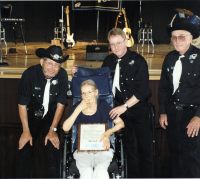
Lois Deer (center) with The Brothers & Co. members Gary Deer Jr., Gery Deer, and husband Gary Deer Sr. at the Jamestown Opera House in 2010

Lois Deer (center) with The Brothers & Co. members Gary Deer Jr., Gery Deer, and husband Gary Deer Sr. at the Jamestown Opera House in 2010

JAMESTOWN, OH – On a cold, winter night, a couple of weeks after a family Christmas party in 1994, something historic took place. William Sutton, his brother Gary “Tuff” Sutton, Sr., and their nephews, Gery Deer and Gary Deer, Jr., did something they’d never done before. They all met up on a Friday night at the Deer family farm in Jamestown, Ohio and collected their musical talents into what would become a lifelong undertaking. While you may never have heard of “The Brothers & Co. Entertainers,” their history is one of a unique brotherhood derived from a family whose musical talent goes back several generations.

While William and Tuff had played together many times over the years, the Deer brothers had never made the attempt. Tuff had helped Gery develop his natural piano skills and Gary Jr. hadn’t played his drums much after graduating high school in Fairborn in the early 1970s. But when they sat down, something really amazing happened, they just “worked.”

Tuff took on the lead and rhythm guitar duties. William was initially the group’s bass player, but picked up his dusty bow and took over the fiddle spot once family friend Jess W. Young, of Fairborn, signed on, and then there were five.

Originally called simply, “The Brothers,” the band went through a lot of changes in its first year or two, adding and subtracting musicians, but always maintaining the two sets of brothers as the foundation. By 1996, a decision was made to change the group’s name, adding, “& Co.” (and company), allowing them to add and subtract whomever they wanted without much of a branding problem, so long as Gery and Gary Jr. at least remained. Somewhere along the way, Gery and Gary Jr. decided that the group was made up more of “entertainers” than trained musicians, so that was tagged onto the name too – “The Brothers & Co. Entertainers.”

SONY DSCBy 1996, Ed Jones had joined up on banjo and acoustic guitar. A cousin to the Deer brothers and another nephew of the Suttons, he also had never played together with his family before in this way. Sadly, the family lost Uncle Tuff Sutton to cancer in 2005, and William stayed with the group only a short time after and also passed away a few years later. Jess Young also retired from the group due to health reasons and passed away shortly after.

“None of who we are now would have happened without each of them,” Gery remembers of his family members who have passed on, including his mother, Lois, who died in 2011 after suffering for several years from Alzheimer’s disease. “We are who we are because of them and my mother was, essentially, the anchor. It was because of her that my brother and I are here and that the others came together with us. We couldn’t have done this without them.” But the changes weren’t over yet.

From inception until about 2004, the boys had maintained an instrumental bluegrass persona. But one Saturday night, shortly after a family friend, Jim Karns of Fairborn, joined the group, something odd happened. As Gery puts it, “We opened our mouths and a terrible, awful, nails on the chalkboard noise hit the air, as if four birds had flown headlong into a window while screeching at the top of their lungs.”

The Brothers & Co Variety Show will perform a 45 minute set at the Schuster December 4. Photo by Jen Copas

The Brothers & Co Variety Show will perform a 45 minute set at the Schuster December 4. Photo by Jen Copas

Brothers_Co-Whip_Gery_JimIn truth, the experiment had landed them in uncharted waters. Although Ed had done some singing, and Jim, as the most experienced, having performed in theater productions while in school at Kettering Fairmont, Gery and Gary Jr. had virtually no singing experience. But there were some golden nuggets amidst the muddy waters of their four-part vocalization.

Working hard to find their respective parts, eventually everything finally fell into place and they had become singers as well as naturally talented musicians. But with change comes growing pains.

An expanded repertoire and wider variety of music required instrument and key changes and since they guys play their own instruments, staging issues caused shows to come to a dead crawl. But a solution for that problem quickly presented itself, and, as is the norm with this group, Mother Necessity birthed yet another Brothers & Co. innovation – one they like to call, “comagic.

In addition to having a great set of bass singing pipes, Jim Karns is also an award-winning, classical stage magician. In addition, Gery was an accomplished stage bullwhip artist, having performed all over the country and on national television shows like America’s Got Talent and The Bonnie Hunt Show. He and Gery had met while working for an engineering center in Dayton and found they had many common interests, the least of which was a somewhat Vaudevillian sense of humor, one that fit in perfectly with an almost Grand Ole Opry styled stage show.

The Brothers & Co. Bus, NOAH'S ARK

The Brothers & Co. Bus

The new family-friendly routines, originally designed to give time for stage and instrument changes, soon added a whole new dimension to the show. It wasn’t long until “The Brothers & Co. Entertainers” became, “The Brothers & Co. Music and Variety Show.”

After two decades of constant evolution, weekly rehearsals in a specially built room at the Deer family farm, and shows that spanned everything from coffee shops to casinos, The Brothers & Co. have more to offer than just four guys standing around singing. They are a full, family-friendly, stage variety show that can perform virtually anywhere. Their signature black, western outfits designed by Gary, Jr. and Gery’s mother, Lois, are a tribute to their family’s country music heritage.

The group has performed at the Schuster Performing Arts Center, the Victoria Theatre and the casino resorts of French Lick, Indiana, but their home is in Jamestown, and that’s where they want this 20th anniversary to tour to start. Gary Deer, Jr. is the percussionist of the group and sees to most of their technical requirements. “Mostly, we want to entertain people and give them a show like most haven’t seen since the 60’s,” he says.

“We put a modern spin on an old kind of entertainment that’s nostalgic and originally presented all at the same time,” says Jim Karns. “If you’ve never seen a live variety show, this is something the whole family will really enjoy.” To celebrate their 20th anniversary, The Brothers & Co. will present a pre-holiday performance beginning at 7PM, Saturday, November 22nd at the Jamestown Opera House, 19 N. Limestone St., Jamestown, Oh 45335, to benefit the Jamestown Area Historical Society.

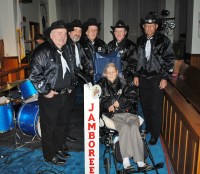
The Brothers & Co. with Gary Deer Sr. and their late mother Lois Deer at the Wheeling Jamboree Radio Show, 2010

The Brothers & Co. with Gary Deer Sr. and their late mother Lois Deer at the Wheeling Jamboree Radio Show, 2010

Gery says the show has something for everyone, and it comes from a place of deep meaning for the family. “This show is hard work, just like anything else of value. It honors our mother’s memory, it gives testimony to the fact that a family can do something together besides watch TV or play a video game. There is a family commitment to The Brothers & Co. that gives other families the chance to bring the kids and enjoy genuine, dare I say it, ‘wholesome’ entertainment that’s just plain fun. It almost doesn’t exist anymore and we rarely get a chance to show it here at home.”

Tickets at the door are $10 for adults, $5 for seniors and students. Children 12 and under are free. Tickets are available at the door the night of the show and for presale at Ted’s Barber Shop, 3 W. Washington St. in Jamestown. Sponsorships are also still available for businesses in the area starting at $100. Proceeds from this performance benefit the Jamestown Area Historical Society. More information is available from The Brothers & Co. website, thebrothersandcompany.com, and from their Facebook page. Watch for The Brothers & Co on the WDTN-TV2 program, Living Dayton, 12 noon, Tuesday November 18.

Music shines light through darkness of dementia

In Health, Local News, Opinion, Senior Lifestyle, Technology, Uncategorized on August 18, 2014 at 12:20 pm

DIH LOGOAccording to statistics, one in three senior Americans now suffers from some type of dementia. My mother, Lois Deer, was one of those unfortunate millions who had an advanced type of Alzheimer’s disease. As it progressed, she lost the ability to communicate on anything more than a passive level, responding to very little, short of a head nod or facial response here and there. When she spoke, it was in whispers and then only gibberish.

One thing that did seem to register, however, was music. Each Saturday night we would move her wheelchair to the band room at my parents’ farm where our family band, “The Brothers & Co.,” would rehearse. We would feed her dinner – a manual task since she couldn’t do it on her own – and she’d spend most of the rest of the evening listening to us play and sing, surrounded by family in a room she created for us.

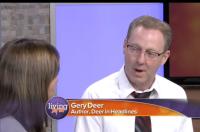
Gery Deer discusses Music and Dementia on WDTN-TV2's Living Dayton during a "Deer In Headlines" segment. Click to watch the video clip ...

Gery Deer discusses Music and Dementia on WDTN-TV2’s Living Dayton during a “Deer In Headlines” segment. Click to watch the video clip …

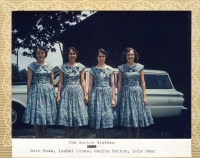
Music was an important part of my mother’s family growing up, with virtually ever member playing some kind of instrument, many of them without the aide of formal lessons. She even sang in an “Andrews Sisters” type quartet with her own sisters in the late 1950s.

By this time, however, Usually, she had a kind of empty, blank expression on her face, a typical Alzheimer’s manifestation. But one evening during our practice, she was sitting near my piano and I caught sight of a slight smile in her eyes and looked down to see her toe tapping on the footrest of her chair.

Since Mom needed 24-hour care, and because we had no intention of leaving her to rot in a nursing home, we cared for her at home and she came along with us to every performance. She had a specially-outfitted seat on our tour bus, complete with an oxygen tank and all of our portable medical supplies. My cousin sat with her in the audience and she would sing, “You are my sunshine,” with us at some point in every show. Music got through, when nothing else would, and I’m relieved to know that I’m not the only one who noticed.

Lois Deer (center) with The Brothers & Co. members Gary Deer Jr., Gery Deer, and husband Gary Deer Sr. at the Jamestown Opera House in 2010

Lois Deer (center) with The Brothers & Co. members Gary Deer Jr., Gery Deer, and husband Gary Deer Sr. at the Jamestown Opera House in 2010

A friend recently told me about a National Public Radio news story related to this phenomenon. The piece focused on a documentary featuring social worker Dan Cohen and his creation of custom music playlists on iPods for elderly dementia patients. Titled, “Alive Inside,” the film explores Cohen’s exploration of the connection between music and long term memory.

“Even though Alzheimer’s and various forms of dementia will ravage many parts of the brain, long-term memory of music from when one was young remains very often,” Cohen told NPR’s Melissa Block. “So if you tap that, you really get that kind of awakening response. It’s pretty exciting to see.”

That all makes a lot of sense when you think about the kinds of music my family band plays and the relationship my mother had to it. There’s no question we were reaching an area of her mind that the Alzheimer’s hadn’t yet shorted out.

After I noticed my mother’s reactions, I paid more attention whenever we performed at nursing facilities where a great number of the residents were suffering from similar illnesses. I can’t tell you what a heart-wrenching experience it always is to see these poor people in such a state; doubled over in wheelchairs, closed off, withdrawn into the isolated torment of their own disease-ravaged minds. And then …

And then we start playing and something would happen, a toe would begin to tap here and there, or a silent face would begin to mouth words to a song. Although it might seem like there’s nothing left of the people they once were, here was a sign that they were still in there – somewhere – and we were reaching into that one place the disease couldn’t penetrate.

All I can imagine is that the music we were playing took my mother somewhere else within a mind that’s organization had long since scattered, as if someone rearranged all the drawers in a wardrobe chest.  She was in another place and another time, a better time.

Christina Corallo, North Shore LIJ Orzach Center for Rehabilitation, Valley Stream, N.Y., tells MusicandMemory.org, “Patients with anxiety and depression are less agitated and appear calmer. The music transports them to a happier place in their minds.”

"The Sutton Sisters" singing family, Lois Deer (far right) and her sisters, (from left) Ruth Rowe, Isabel Jones, and Regina Marshall, ca. 1958

“The Sutton Sisters” singing family, Lois Deer (far right) and her sisters, (from left) Ruth Rowe, Isabel Jones, and Regina Marshall, ca. 1958

Cohen’s idea of customized iPod playlists for each patient is still plagued by one major hurtle – money. Nursing care, particularly long-term dementia care, is incredibly expensive and iPods aren’t cheap. It’s the same financial roadblock encountered by virtually every other progressive therapy for dementia ever proposed.

With that, I am challenging one member of the family of every dementia patient to buy an iPod for their loved one and load it with music from their life. Give them a moment to feel who they once were in the most personal, powerful way possible – through music.

 Learn More About Music and Memory…

Click here for a link to the full NPR story,”For elders with dementia, musical awakenings,” by Melissa Block.

Click here to watch the trailer, “Alive Inside: A Story of Music & Memory” featuring Dan Cohen.

Donate to Music & Memory: Monetary or iPods 


It’s not what you read, but why.

In Books, Children and Family, Literature, Opinion, Senior Lifestyle, Uncategorized on August 11, 2014 at 12:10 pm

DIH LOGOAs a professional writer, and the executive director of the Western Ohio Writers Association, I am often asked what books I read or what I’d recommend to someone. But, over the years, I’ve learned that it’s not so much what you read that’s as important as why you’re reading it. Let me try to explain.

For example, it would be pretty short-sighted to read bestselling novels simply because they made the list, rather than because of their actual content. Just because a book or movie is popular, particularly with critics, by no means guarantees its quality.

The same could be said of reading only one genre or restricting your choices to only a couple of authors. Science fiction buffs, for instance, might really enjoy a good political thriller – I know I do – but rarely does one give the other a chance.

I tend to go take risks on books or lesser known writers. Since I work with so many unknown authors, I have the advantage of being exposed to material you’ll probably never see listed in the New York Times but which is still of outstanding quality and entertainment value.

I tend to ignore online reviews considering, instead, the recommendations of friends or family. A great many reviews today are pretty unreliable since they’re often paid for by the book’s publisher, or even the author, to boost the book’s visibility and increase sales.

"Flights of Fancy" is an anthology of stories set in southwest Ohio by local authors from the Western Ohio Writers Association. It will hit shelves in mid-April 2013 and features local talent and production.

“Flights of Fiction” is an anthology of stories set in southwest Ohio by local authors from the Western Ohio Writers Association. Click the cover art to order!

Local authors are also a favorite of mine and I’m always surprised at how people rarely give them a chance until they’ve hit the big time, as if they’re not good enough yet – nonsense. Remember, talented writing does not require residence in a high-rise loft in Manhattan. Helping a new writer break ground is part of my job, but I also enjoy having a connection with the author. Even if you don’t know the individual, however, chances are you’ll have a greater appreciation for their work if they’re from your hometown.

The format of the book is also less important to me than the content. I like e-readers like Kindle Fire and Nook because they make reading convenient, but I still buy hardbacks when I want to collect a book or have it autographed.

So, having said all of this, I will break my rule and answer those questions for you, starting with my favorite author: Douglas Adams, the British author of “The Hitchhiker’s Guide to the Galaxy,” series of novels. I’ve always loved Adams’ satirical style of storytelling and his ability to say precisely what everyone else is thinking but won’t speak aloud. You don’t have to be a science fiction buff or a fan of Monty Python to enjoy his work.

If I had to pick a periodical I read regularly, it’d probably be split between “The Writer,” a magazine for – you guessed it – writers; and “The New York Times.” As a former editor and long-running op-ed writer, I enjoy reading the work of my fellow columnists. It’s interesting to see all of our different approaches to the same subjects.

Lastly, here is a list of books I’d recommend. I won’t say why I’m recommending them, however, because that would spoil the reader’s personal discovery of their value.

In bestselling fiction I can recommend, “Hit Man,” by Lawrence Block, as well as “Camel Club,” “Simple Genius” and “Stone Cold,” all by David Baldacci. If you’re looking for work by local authors, I suggest “Pretty Girl 13,” by Liz Coley, and “Flights of Fiction,” an anthology of stories set in and around the Dayton region by member authors of the Western Ohio Writers Association. For non-fiction I would propose “Lucky Man: A Memoir,” by Michael J. Fox; “I Will Never Forget,” by Elaine C. Pereira, and “The Art of War,” by Sun Tzu.

There you have it. My recommendations, at least up to this point. There are others I could suggest but these are the top of the list. So put down the video game, turn off the TV and pick up a good book. See you in the library stacks!


Gery L. Deer is an independent columnist and executive director of the Western Ohio Writers Association. More at westernohiowriters.org.


Long-arm quilting services now available at Crafters Lodge in Sugarcreek Plaza

In Business, crafts, Education, Entertainment, Senior Lifestyle, Technology, Uncategorized on July 15, 2014 at 9:05 am

By Gery L. Deer

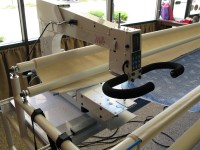
IMG_7258 Sugarcreek Twp. – A homemade quilt can be a treasured and very personal family heirloom. From the earliest American settlers, the craft of quilting has been passed down from one generation to the next, each adding a new creative style to the process. Once the top of a quilt is completed, it must be stitched to the back with batting in between – a detailed and painstaking process if done by hand. Fortunately, Crafters Lodge in Sugarcreek Township now offers long-arm quilting services and certification classes for those who wish to learn to do the work personally.

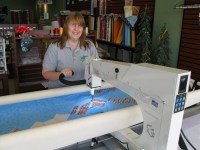
A long arm quilting machine is an industrial sewing machine similar to those used in the mattress industry.  It moves along a track or rails and sews the three parts of a quilt together. “We have the American Professional Quilting Systems (APQS) Millennium or Millie as it’s also known,” says Crafters Lodge co-owner, JoBeth Bryant. “The Millennium is the top of the line long arm quilting machine.”

JoBeth Bryant of Crafters Lodge demonstrates the Long Arm Quilting Machine nicknamed, "Millie"

JoBeth Bryant of Crafters Lodge demonstrates the Long Arm Quilting Machine nicknamed, “Millie”

Bryant says the store currently has two certified long-arm operators on staff and walk-ins are welcome. “When you bring your quilt top to us it will be measured and checked for any issues that may affect the quilting process.  Then you can choose the type of quilting you want done and the thread color.”A fifty-percent deposit and signed contract are required at time of drop-off.  Customers can also choose any additional services they may want, such as binding, a hanging sleeve, or a label.

To make the process go as smoothly as possible, Bryant notes that customers should properly prepare the work. “Make sure the backing is square, backing must be at least six inches wider than the top,” she says.  “There are some materials, particularly generic brands from chain stores, which may not be suitable for batting, and they must be clean and odor-free. Check with us for details on acceptable batting and backing materials, both are available in our store.”

Certification classes are also available for those who wish to learn to use the long arm machine and handle the IMG_7254quilting job personally.  Students are given expert instruction on how to load a quilt, threading the machine, wind and load bobbins, access the various features, use of the pantograph, and how to create basic “meander” quilting pattern.

Crafters Lodge is located at 6056 Wilmington Pike, just behind Fazoli’s in the Sugarcreek Plaza in Sugarcreek Township. Regular store hours are Tuesday through Saturday 11:00 am to 8:00pm, Sunday noon to 6:00 pm and closed on Monday. For more information and a schedule of classes, visit the store’s website, http://www.crafterslodge.com or call (937) 470-2649.

V.A. health care debacle is nothing new

In Health, National News, News Media, Opinion, Politics, Senior Lifestyle, Uncategorized on May 27, 2014 at 8:06 am

DIH LOGOAs an organization that serves more than 9 million, it would be difficult to imagine a more complicated system than the United States office of Veterans Affairs (V.A.). Recent allegations of wrong doing within the V.A. health care system has erupted in congressional investigations and strong admonishment from President Obama, one of a half-dozen occupants of the Oval Office under whom this system has thoroughly failed its distinguished beneficiaries.

Naturally, the White House spin doctors tried to express the president’s astonishment and outrage over this issue with their typical press room song and dance. When he finally spoke about the matter publically last Wednesday, Mr. Obama said, “I will not stand for it. There must be consequences.”

Of course there was absolutely no mention of exactly what kinds of consequences.  Even more insulting was the way the administration has fained ignorance about one of the worst kept secrets in America – that there is a mind-blowing level of back-door politics and bureaucracy grinding away below the V.A.’s spit and polished façade.

In the 1992 movie, "Article 99," Kiefer Sutherland struggles to adapt to a broken V.A. system.

In the 1992 movie, “Article 99,” Kiefer Sutherland struggles to adapt to a broken V.A. system.

Critics of the administration are also using this crisis to, once again, lambaste Democrats over Obamacare, to which they compare the crippled V.A. medical system. Some of them have even suggested that the problems deep in the core of the V.A. health care system will eventually overwhelm Obamacare in a similar manner.

Plagued with technical issues and lackluster participation, the “Affordable Care Act” has not been the overwhelming success once envisioned. Legislating mandated health care coverage for all is one thing, but managing patient care based on politics is quite another.

But if you think it’s a stretch to compare the V.A. problems with eventual Obamacare snags, consider this.  Once the Affordable Care Act became law, the U.S. Government suddenly turned into a middle man for selling health insurance and controlling the care received by the patients. Keep in mind this isn’t a “Conservative vs. Liberal” problem. The simple lesson to be learned here is that the government should stay out of the health care business.

As for the existing V.A. problems, the congressional hearings so far have managed to do little more than humiliate the head honcho, Veterans Affairs Secretary Eric Shinseki, a guy who, while maybe turning a blind eye to these concerns, most certainly inherited the majority of them.

Way back in 1992 director Howard Deutch released a dramatic comedy  called, “Article 99,” which followed a V.A. hospital intern played by Kiefer Sutherland who struggled to acclimate in ridiculously bureaucratic and money-driven system where patients are either denied treatment or made to wait months for life-saving procedures until it’s too late. In a style similar to Robert Altman’s original 1970 film, “MASH,” the main characters are dedicated doctors who regularly defy government rules to help get their veteran patients urgently needed care.

Set in present day – 1992, during the Clinton administration – “Article 99” exposes only a few known problems within the veterans’ health care system. Apparently, things grew increasingly worse.

Oddly enough, government’s treatment of veterans (of all ages) can often mirror the way in which American society deals with the elderly; by putting them off a few more times until they eventually die and the problem solves itself. Shameful.

Perhaps it’s time for the V.A.’s executives, congress and the president, maybe even Supreme Court justices, to be forced to wait a ridiculous amount of time for care. It’s a foregone conclusion that a solution would rapidly appear if the Obama daughters had to wait six months to get their tonsils out, or if John Boehner knew that coverage for some future tanning-induced skin cancer would be denied because it wasn’t a work-related condition. Instead, they enjoy free, top-of-the-line medical care, all on the dime of hard-working Americans, including veterans.

So what to do? Well making a blustering speech on TV is a start, but it’s also an overture to a lack of any real action. Firing the head guy is a gesture to appease the public but it’ll last about 12 seconds. Instead, the entire system needs a full shakedown. That’ll take time and money. Meanwhile, more veterans are waiting for treatment. Drop the bureaucracy and treat the patients, regardless of the paperwork and expense.


The Jamestown Comet editor, Gery L. Deer, is an independent columnist and business writer based in Jamestown, Ohio. More at http://www.gerydeer.com.


More family advocacy needed for elder care

In Children and Family, Health, Opinion, psychology, Religion, Senior Lifestyle, sociology, Uncategorized on April 16, 2014 at 1:31 pm

DIH LOGOCaring for an aging parent is, in my opinion, one of the most difficult and often painful experiences life throws our way. Providing a safe, healthy environment for an elderly family member is just as taxing as doing the same for a child.

What makes this process even harder is when the parent is resistant to help or simply won’t accept that they are no longer in a position to take care of themselves. Poor decisions, an inability to recognize when driving has become hazardous and, worst of all, when they will listen to anyone’s advice but that of their children, complicates the care process and causes serious damage to the parent/child relationship.

It’s hard to watch parents age and knowing you’re headed the same direction only solidifies the reality of it all. It’s harder still when they resist every attempt to maintain their health and sometimes doctors undermine your efforts by telling them they don’t have to do anything they don’t want to.

I understand that people need to make their own choices, but some shrink in a hospital cannot possibly know an individual’s mental status by talking to them once for three minutes and asking a half dozen pointless questions. “Do you know where you are? Do you know what day it is? Can you draw this box? Write your name.” “Draw this box,” are they kidding?

How about we ask them what their checking account number is, or the name of their insurance company? How about asking when they last paid their phone bill? These are vital questions to someone who is supposedly “competent” and yet this is not what is included in a psychiatric evaluation for a senior’s ability to make his or her own decisions.

Then there are those who are intent on taking advantage of the elderly person’s desire to feel “needed” and useful. These individuals worm their way into the lives of the elderly, showering them with compliments and creating a rift between the senior and his or her family. These unscrupulous people are trying to get money and property away from the senior and alienate children and others who are trying to protect their interests.

Deer In Headlines author Gery Deer is helping his brother Gary Jr and sister Cathy to take care of their father, Gary Sr. and it's rarely easy work.

Deer In Headlines author Gery Deer is helping his brother Gary Jr and sister Cathy to take care of their father, Gary Sr. and it’s rarely easy work.

Laws addressing the rights of seniors, as well as those regarding patient rights, seem to take no account to dementia and speak only to protecting them from family members bent on securing money or locking them away in a nursing home. What about those of us who are trying to protect our parents and provide a safe, secure life for them in their own home as long as possible? Where is our protection and support? There is none.

Preserving a person’s dignity is difficult enough without being able to handle even the most basic decisions absent a mile of legal documents in place only to provide more money for lawyers. Power of attorney documents are meaningless unless the person is thoroughly incapacitated and no one will help without signing over deeds and financial statements.

Believe it or not, sometimes money has nothing to do with it! There are actually situations when families are trying to preserve an aging parent’s lifestyle, dignity and financial security. Someone should be out there advocating for us, not making it harder. Unless you’re loaded with money, there is just no support for people dealing with this kind of problem.

So what is to be done? Good question. I am all for protecting the rights of the elderly and maintaining their ability to make decisions, but there are many degrees of incompetence between fully cognizant and Alzheimer’s dementia and that should be taken into account.

My mother lost all of her reasoning ability as Alzheimer’s set in and it nearly bankrupted my family to get her under a guardianship so we could keep her safe and well-cared for. But when a senior has some competence but not all, that needs to be addressed and the family should be able to have some advocacy for protecting the interest of that individual without so many roadblocks.

Legislation should be put into place for the varying degrees of dementia and stop relying on the ‘one size fits all’ psychiatric evaluations that prove nothing more than the person can read a calendar.


Gery L. Deer is the editor and publisher of The Jamestown Comet.com an independent columnist and business writer based in Jamestown, Ohio. More at http://www.gerydeer.com.


Crafters Lodge to host two-day t-shirt quilt workshop

In Business, Children and Family, Education, Entertainment, Health, Holiday, Local News, Senior Lifestyle, Uncategorized on April 16, 2014 at 1:20 pm

CLLOGOSugarcreek Twp., OH – Nearly every event a student attends as he or she goes through school is commemorated by a t-shirt. Crafters Lodge in Sugarcreek Township, is providing a two-day course on transforming those keepsake tees into a cherished family heirloom – the t-shirt quilt.

On Sunday April 27th and Sunday May 4th, Crafters Lodge, located at 6056 Wilmington Pike, just behind Fazoli’s, will host a t-shirt quilting class. The two-day class will provide complete instruction, from start to finish, for a fee of $35 for both days, not including materials. Participants must purchase their own supplies and costs vary based on the materials chosen.

A t-shirt quilt is made up of the artwork from cherished t-shirts commemorating everything from a student’s first day of school or high school prom to concerts and extracurricular events. The artwork is cut from the fronts and backs of the shirts and sewn together to make a quilt. Jo Beth Bryant is co-owner of Crafters Lodge.

“Registered students should stop by the store at least two or three days prior to the first class for instruction on how to prep the T-shirts,” Bryant says. “Having the shirts prepped prior to class will allow the student to begin the layout and design process sooner and thus finish the quilt in a shorter amount of time.”

Teaching the upcoming class is life-long needleworker, Wendy Crawford. A veteran of 4-H and Girl Scout sewing competitions, Crawford started making baby quilts while in junior high school.  She turned to hand quilting after inheriting a quilter’s estate and is now a certified Gammill (Long Arm) operator with more than 350 quilts under her belt. Today, she enjoys sharing her knowledge with the local community after an absence from teaching.

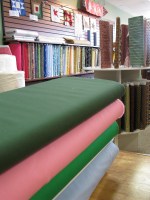
Crafters Lodge opened in September of 2013 and offers high-end supplies and expertise to the serious crafter. In addition to the t-shirt quilting course, the store also offers classes in fiber arts (knitting, weaving, tatting, etc.), tole painting, stained glass and more.

Registration for the t-shirt quilting class is limited and participants are required to bring their own sewing machines. Crafters Lodge is open Tuesday through Saturday 11:00 am to 8:00pm, Sunday noon to 6:00 pm and closed on Monday. For more information and a schedule of classes, visit the store’s website, http://www.crafterslodge.com or call (937) 470-2649.


Is this your new site? Log in to activate admin features and dismiss this message
Log In