Local News & Commentary Since 1890.

Archive for the ‘Politics’ Category

Beavercreek Computer Service Celebrates Grand Opening with Ribbon Cutting

In Business, Jobs, Local News, Politics, Technology, Uncategorized on July 11, 2012 at 7:48 am

By Gery L. Deer

The Jamestown Comet.com


Beavercreek – On Tuesday, July 10, Computer Troubleshooters of Beavercreek celebrated its one-year business anniversary with a ribbon cutting at its new location at1255 N. Fairfield Road. Part of an international network of franchises, Computer Troubleshooters provides IT support for residential and commercial clients servicing both Apple and Windows based computer systems.

President and CEO, Cliff Brust spoke briefly after the ceremony. “We’re happy to be here and we hope you don’t have too many computer problems, but if you do, remember we’re here to help you.”

Among the thirty-plus attendees for the event were Beavercreek Mayor Vicki Giambrone, Vice Mayor Jerry Petrak, Council Members Scott Hadley, Debborah Wallace and Chamber of Commerce President/CEO Clete Buddelmeyer. Guests received a tour of the new office and two desktop printers were given away as door prizes. Refreshments were provided by Subway and 4Starters coffee shop.

The celebration continues this weekend. Computer Troubleshooters is holding a public grand opening from 11AM until 3PM on Saturday July 14. Visitors can stop in to meet the staff and register to win a free desktop printer. For more information contact Computer Troubleshooters by calling (937) 458-2000 or visit http://www.ctbeavercreek.com.

A Half-Century of Walmart. Economic Savior or Evil Empire?

In Business, Economy, Entertainment, Jobs, Local News, National News, Opinion, Politics, Senior Lifestyle, sociology, Uncategorized on July 2, 2012 at 10:25 pm

Singer, songwriter Jessica Frech’s satirical music video, “People of Walmart” has attracted more than 6 million viewers, and probably offended just as many. (Jessica is in the upper left square of this screen shot from her video.)

By Gery L. Deer

Deer In Headlines

Most people don’t realize that Walmart is the world’s largest private employer. According to a recent article in Time magazine’s business section, only the U.S. Department of Defense andChina’s People’s Liberation Army employ more people than Sam Walton’s massive dynasty of discount. On July 2, Walmart turned the half-century mark of rolling back prices and shaking up the competition.

On that date in 1962, Sam opened the very first Walmart store inRogers,Arkansas. Fifty years and four-thousand, three-hundred-ninety-nine stores later, the chain employs more than 2.1 million people and sets the standard by which other budget retailers are measured.

Along with those who appreciate Walmart’s contributions toAmerica’s economy, there are equally as many who regard it as an evil, impersonal, corporate monster. And they may be correct, after all, it would have been impossible to become the discount retail leader without doing some damage to the competition and holding fast to as much of its own money as possible along the way to get there.

Impenetrable by unions and continually slammed by the liberal left, the bargain behemoth continues to rake in the cash, bringing in a whopping $443 billion last year. Revenue like that must please the company’s shareholders, who, ironically, are probably the last people to set foot in one of its stores (at least while someone’s looking).

But what is Walmart, really? Is it evil? Or, is this just the price that has to be paid for corporate efficiency and unprecedented business growth? Do small towns really dry up and blow away when Walmart moves in?

The pros and cons of Walmart are probably more a matter of perspective than fact. Walmart shoppers are hard to categorize, but the common image is the middle to lower class, interested in getting the lowest price possible on toilet paper while caring nothing about the environment in which it is sold to them.

Well if you believe singer, songwriter Jessica Frech’s point of view in her satirical YouTube music video, People of Walmart, shoppers simply cannot be categorized. They come in every shape, size, color and creed, from every socioeconomic background and lifestyle. They come at every hour of the day and night in search of, well, a great deal on whatever it is they need.

It’s worth mentioning also that many Wallyworlders found Jessica’s music video terrifically offensive because it uses actual photos of Walmart shoppers in their native habitat. Even so, People of Walmart has been watched by more than 6.1 million viewers. People of Walmart 2, released last November, already has more than 1.6 million views. Apparently people weren’t that offended.

The economic effects by Walmart on local communities are as mixed as its clientele, probably more so than people generally know. According to a 2009 study, most negatively affected by the big box giant are those mom-and-pop retailers selling products in direct competition, such as small, higher-priced grocery, clothing and dry-goods stores.

The research also indicated that retailers offering products and services not available from Walmart tend to do better if in close proximity because people are already prepared to spend the money.

As for Walmart’s overall effect on and property values, new research released by the National Bureau of Economic Research startled the company’s critics. A 2001-2006 study of 159 new Walmart stores found that homes within a half-mile of each actually increased in value as much as 3-percent. Local tax revenue also increases substantially.

Like it or not, Walmart is here to stay. Anytime a business or an individual is successful, they will always have critics and even enemies. Fifty years ago, it’s doubtful that Sam Walton could have imagined what his small shop would eventually become.

Today his company provides jobs, affordable food and clothing, and the most unusually diverse array of patrons any retailer could imagine. So, happy birthday Walmart! Keep the rollbacks coming and, please, could someone fix the wheel on that one shopping cart that just won’t roll when you’re in a hurry?

Public Transportation Issues Expose Ignorance and Prejudice

In Business, Children and Family, Economy, Education, Jobs, Local News, Opinion, Politics, Senior Lifestyle, Uncategorized on June 26, 2012 at 10:22 am

Plans for public transportation service to local communities stonewalled by ignorance and prejudice. Photo courtesy RTA Dayton Wright Stop Plaza Transit Center

By Gery L. Deer

Deer In Headlines

Throughout most ofOhio, public transportation mainly consists of busses and commuter trains. But around the country, public transportation also includes cable cars, street cars, subways, ferry boats, and a host of other means, all of which are vital to the communities they serve.

According to the American Public Transportation Association, in 2010 Americans took 10.2 billion trips on public transit systems. The organization also reports that for every $1 spent on public transportation, $4 of economic return is generated.

Additionally, out of every dollar earned, Americans spend 18 cents on transportation and 94 percent of that money is used for maintaining a personal vehicle. People who use public transportation can save that money or use it for other expenses, providing further economic benefit.

So why are so many local government leaders in towns like Beavercreek and Tipp City resistant to the idea of placing public transit stops in their communities?  The answer is simple; the same things that tend to limit progress in any small community – ignorance and prejudice.

Regardless of how much positive information is provided regarding public transportation, some communities believe that unwanted elements outweigh any potential benefit. One argument leveled by critics is that buses will increase traffic problems. In reality, they actually ease road congestion by reducing the number of individual cars.

Proponents say that civic leaders want to block public transit stops so they can be more discriminating about who has access to certain neighborhoods. In the media both sides seem to be dancing around the concept that minorities, lower income people, the disabled and elderly, and even criminal elements are presumed to be the primary customers of public transportation.

Local officials and residents alike apparently believe that by restricting bus routes from higher-end retail areas they are somehow protecting the community from the less-desirable elements of society. How is that not racist or at the very least, discriminatory towards lower income people?

Of course dangerous criminals like drug dealers can ride into town on the local transit bus, but it’s likely that they already have a way in. Research shows that drugs are highly prevalent in upper income neighborhoods – just better hidden – and a bus stop is unlikely to have much of an effect on that problem, one way or the other.

Politically, government officials often take whatever side they think will appease the voters, regardless of what might be the right thing to do. Not everyone does this, but more do than not, unfortunately.

The indication here is that it’s not just the city councils that are uninformed, but so are the residents. After all, any hope of re-election rests with the brainless masses of the voting public. Remember folks that while your elected official is kissing your baby, he or she is also stealing their lollipop.

Regardless of the political implications, increased consumer traffic is good for local merchants and the economy. Public transportation provides more consumers with additional access to restaurants, malls, civic centers, post offices and other business routes. The money they spend goes into the local economy and increases the value of these businesses. When business values rise, so do those of the properties around them – commercial and residential.

In the end, none of the negative arguments hold much water. It still seems to boil down to snobby white guys (and gals) who are stonewalling public transportation expansions because they don’t want their neighborhoods to look like an inner city.

It might behoove these people to do a little research on urban decay before worrying that something like a bus stop is going to destroy their property value. Sometimes stupid is perpetuated by greed, prejudice and arrogance, and this issue is a perfect example of all three.

Has America Become A Babysitting State?

In Children and Family, Economy, Education, Entertainment, Health, Local News, Opinion, Politics, psychology, Religion, sociology, State News, television, Uncategorized on June 12, 2012 at 8:17 am

By Gery L. Deer

Deer In Headlines


Did you ever wonder (thanks Andy Rooney) why we have so many laws designed to, “protect us from ourselves?” You know what I am referring to. Think about the laws requiring us to wear seat belts, no public drinking or smoking, fines for public profanity, mandatory motorcycle helmets, and so on.

With obvious exceptions, like distracted or drunken driving, very little of what we do affects anyone else. If I choose to risk my own death by not wearing a helmet while riding a motorcycle on the highway, who does that affect other than me? It may be incredibly inconsiderate to my family or the poor guy who has to clean my brains off the pavement after an accident, but other than that, who does it really injure?

Of course, I’m exaggerating here. You’d have to be a complete idiot to ride without a helmet – sorry bikers, it’s just plain stupid – but it’s still your own choice and it shouldn’t be up to the government to decide. It can be argued that it costs the taxpayers more money to cover the medical charges of a rider who’s had a head injury without a helmet, but that point of view can be hard to quantify. Applying the same logic, however, tobacco should be made illegal for the same reasons.

Some laws don’t protect us from ourselves but are actually in place to pacify the moral majority. For example, no alcohol sales on Sunday, no cursing in public, television censors and so on. Decency laws require that every television network maintain a department of standards and practices whose sole duty is to ensure that no one says or does anything over broadcast TV or radio prior to 10 PM that might offend the religious right.

Many anti-drug laws, like those against the use of marijuana, are in place, not because of health risks but to satisfy the moral right. Tobacco use has immediate and long-term detrimental effects but is a regulated, taxable commodity. Marijuana, on the other hand, is said by experts to be no more dangerous than tobacco but is still classified as an illegal, Schedule I hallucinogen. Why? There are at least two possible explanations.

First, the obvious reason – hallucinogenic drugs are just bad. There’s no other way to say it. Long-term use of any substance like this is going to eventually be a health hazard. But the other reason is more sinister. The tobacco industry is huge, powerful, and wants complete control over your toxic addiction without competition from Mary Jane.

A great deal of money goes into congress from the tobacco big-wigs. They will always argue against legalized marijuana because it would eat into their profits, and therefore less cash would be available with which to line the pockets of public officials fighting their battle on Capitol Hill.

Understand clearly that I am in no way endorsing or advocating drug use. I think it’s idiotic and makes one stupid and unemployable. I’m simply pointing out that we are living amidst a realm of hopeless double-standards, of which alcohol and drug use is only a small example.

I don’t know whether these pointless and expensive regulations come from genuinely well-meaning people trying to help keep others from making dangerous mistakes or if they are the result of controlling, politically-motivated individuals. Either way, it really seems like we’re moving further into a babysitting state where the government controls everything down to what size soft drink I can buy at 7 Eleven.

There’s nothing wrong with regulating public issues – second-hand smoke is a health hazard to those around the smoker and the dangers of drunken driving are a no-brainer, but what these individuals do in their own home should be their own business – as with the pot smoker, the junk food junkie, or the watcher of reality television.

Personally, I think Americans spend far too much time worrying about what our neighbors doing and not enough time minding our own business. If they really want to regulate something to benefit the public, they should start by outlawing and reality television. Clearly the Kardashians are detrimental to society as a whole.


Empty Promises Headline 2012 Presidential Campaign

In Business, Economy, Education, Jobs, Local News, Media, National News, Opinion, Politics, Senior Lifestyle, Uncategorized on June 4, 2012 at 10:28 pm

By Gery L. Deer

Deer In Headlines
 

Remember when good oratory skills and talk of “change” at least seemed like a good start? The concept might have made a great slogan for candidate Obama’s election run, but there’s very little about it that would apply to his presidency. But would Mitt Romney have been able to achieve any greater success given the same circumstances? Probably not.

The president’s dismal job performance numbers and Romney’s complete lack of connection with those bringing home anything less than a seven-figure salary leave both of them a mediocre choice in November. So far, even the media can’t figure out what to say about these two.

In recent weeks, some of the biggest campaign headlines focus on relatively pointless issues like how much Obama is outspending Romney in advertising or the former governor sending hecklers to an event where the president was campaigning. It’s all fluff and no substance – again.

If something doesn’t happen to really define these candidates, the country may see a repeat of the 2008 election when many Americans were just tired of “W” and hisWashingtoninsiders. Most were happy see him gone but neither did they want a left-wing, America-downing liberal or even another Republican crony. So, who better to put in the White House but an untested, junior senator from Illinois?

As they say at Wrigley Field, “Swing and a miss.” Instead of the hopeful changes promised by the Obama camp, the country slipped deeper into recession and near depression-level unemployment which, incidentally, has yet to return to pre-Obama numbers.

But wait, there’s more. Challenging the president this fall is another millionaire – yes President Obama is a millionaire several times over – the Massachusetts Mormon, former Governor Willard Mitt Romney. Here’s a man so rich and out of touch he seemed in one speech to actually believe that every housewife has two Cadillacs and a summer home inCalifornia.

Why is Romney so out of touch? It might have something to do with that silver spoon sticking he always seems to be gagging on. Despite his profession of “humble beginnings” and being a “self-made man,” he attended Stanford, Brigham Young University in Provo, UT, and finally Harvard.

Given that kind of background, it’s highly unlikely he has any idea what it would be like to have to stand in an unemployment office or apply for some kind of welfare assistance after a layoff. But financial extremism is a problem for both parties in this election.

While the liberal left whines about conservative campaign funding from big business, the president is filling his war chest with least as much from the millionaire actors and studio execs inHollywood. Well, at least both parties are getting their cash from people who make a living off the public while pretending to be what they’re not.

 It’s likely that the 2012 election will come down to two things – the economy and jobs – something neither candidate has much to crow about. However, no one can really be congratulated for that. Many experts suggest that the economy would have eventually recovered in a natural progression without sinking billions of tax dollars into the problem.

However it plays out, in order to reach the voters, Obama and Romney will each need to stop the mud-slinging campaigns and tell the public how they will make things better. So far, all they’ve done is rail against each other. Without some real substance and a plan to get behind, the undecided voter will be stepping into the polls simply to choose the lesser of “who cares.”

Not Enough To LIKE About Facebook’s IPO

In Business, Economy, Entertainment, Media, National News, Opinion, Politics, Science, Technology, Uncategorized on May 21, 2012 at 11:54 pm

Photo Courtesy Associated Press

By Gery L. Deer

Deer In Headlines

Unless you live in a cave someplace, you probably heard that the Internet social media leviathan Facebook hit Wall Street with their initial public stock offering (IPO) on Friday, hoodies and all. Amidst the rock-concert type excitement over the event, the stock’s dismal performance seemed to leave everyone scratching their heads – except me.

No, I’m not some kind of Wall Street clairvoyant, nor do I consider myself any sort of expert on the subject. I do know tech companies, though, and I suggested a few weeks ago in another article that the Facebook public stock release would be a lot of buildup with no substance. Facebook might be the flavor of the month, but just around the corner there’s always another Mark Zuckerberg (Facebook’s founder, or thief, depending on which story you believe).

Not much happened after Zuckerberg rang the opening bell at the New York Stock Exchange. Trading of Facebook stock was delayed until just after 11:30 in the morning and then watching the Facebook stock ticker was a bit like looking at the slow motion replay of a horse race. You know they’re supposed to go faster, but they just poke along.

The company issued 421.2 shares of stock at an initial price of $38 and never really got much past that. With an intentional sense of irony, just a few minutes into trading, I used Facebook to publicly record my prediction that the stock would not exceed $45 a share – and it never did.

The second day of trading was actually worse. When the market closed on Monday, Facebook stock had fallen nearly 11 percent finally ending at $34.03. To say it was disappointing to Facebook followers is an understatement.

I’m not a financial expert, but I have done my fair share of day trading and information was always the best tool for choosing a stock. I honestly believe many people don’t understand how Facebook, and other businesses like it, actually earn money, thus giving them value. They bought in to be part of the fad, and now they’re paying the price.

I also think one of the biggest mistakes made by the financial pundits was to constantly compare Facebook to Apple – literally apples to oranges (pun intended). While Apple does offer some web-based services, at its core (another pun intended) the company sells a product, in fact it sells many different products – physical, usable, manufactured products with an understood perceived value – iPhones, iPads, software and computers.

Facebook, on the other hand, is like a free newspaper or magazine in that makes a great deal of its money from selling advertising space. Add to that the fact that Facebook has yet to establish a solid, profit-generating business model for the long term and you get a company that’s far too volatile to be compared to the likes of Apple.

Hype worked for Apple, in fact, for many years, it seems that most of the computer giant’s marketing plan consisted of Steve Jobs, a black turtleneck and a big empty stage. Facebook tries, and fails, to emulate that kind of drama and we saw a great example of that during Friday’s IPO. As of now, everyone who bought in has officially lost money.

Social media sites like Facebook make their money through advertising and licensing of patented or copyrighted applications (custom programming based on the website content). But if too many major advertisers bail, the company loses steam. Just before Zuckerberg rang the opening bell at the New York Stock Exchange on Friday morning, General Motors announced it was pulling all of its advertising from Facebook.

The exodus of the auto giant was bad news for the company’s bottom line, and shook its viability on the stock exchange. Losing GM cost the Internet behemoth much needed credibility and might have had an effect on the early underperformance of the stock.

In my humble opinion, the Facebook IPO was a publicity failure, but not necessarily a business failure. Still, Facebook will always be forced to outdo itself. But where do you go from up? We’ll have to watch and see. Oh yes, and don’t forget to LIKE me on Facebook!
Columnist Gery L. Deer is an independent journalist and business writer based in Jamestown, Ohio. More at http://www.geryldeer.com

Revising the Book of Romney

In Business, Economy, Jobs, National News, Opinion, Politics, Religion, Uncategorized on April 17, 2012 at 8:38 am

Mitt Romney will have to work hard to earn the 'regular guy' vote in November. Photo by Mark Wilson/Getty Images.

By Gery L. Deer

Deer In Headlines

Presidential GOP front runner Mitt Romney has been repeatedly criticized as being elitist, out of touch, self-aggrandizing and focused only on his capitalist endeavors for gaining wealth. Critics say that he has absolutely no idea what the average American has to go through just to make ends meet in today’s economy, and, unfortunately, his own words have reinforced that image.

During a speech on theMichigan campaign trail, Romney commented that his wife had two Cadillacs. He was attempting to show people that his family owned American-built cars, trying to relate to theDetroit audience. Instead, he left the impression that he thinks that every stay-at-home mom can afford to own two luxury vehicles. Out of touch, or just bad speech preparation?

During the run of the GOP primaries, Romney has often presented himself as snobby, elitist and completely misunderstanding of the challenges faced by today’s worker. His multi-million-dollar income affords him at least two homes, vacations all over the world and much more. But while people are criticizing that kind of success, it’s important to remember that President Obama has also spent a great deal of his adult life in the lap of luxury.

As he finished his first year in office the president reported more than $5 million in personal income; not bad for a junior senator fromIllinois. Like Romney, his fortunes have accumulated because of good financial decisions and investments in the capitalist system – a fact Democrats like to downplay whenever possible.

The truth is, neither man can truly grasp what it’s like to have to scrape together enough money to feed a family or worry that his paycheck won’t be enough to keep the electricity on for another month. But some are working to help change Romney’s image.

Author Jeff Benedict has just released an updated edition of his 2007 book, The Mormon Way of Doing Business, featuring a new chapter about Republican front runner Mitt Romney. Benedict touts a lifetime of the formerMassachusetts governor’s selfless good deeds; from his church-going youth to his big-business adulthood.

No doubt the author added the chapter to use Romney’s fame as a way to refresh book sales, but whatever the motive he does reveal a softer side to the Mormon candidate. In one story Romney grabbed a shovel to assist a family friend after a wildfire nearly destroyed their home. In another, he mobilized a city to search for a missing girl.

In 1996, when the 14-year-old daughter of a business partner disappeared, Romney mobilized the business community and local authorities, creating a command post at his office and utilizing his position to leverage assistance wherever possible. Thankfully, the girl was found, but relatively few know of Romney’s involvement in the incident.

While these stories are emotionally compelling and help to humanize a man who is often seen as cold and without compassion, the timing of their release is precarious. At this point, trying to throw out selfless tales of heroism and personal generosity will likely be reflected by critics as grandstanding from the Romney camp in an effort to win over a few bleeding hearts.

Romney’s business savvy is without question, but can the same be said for his integrity and commitment to working on behalf of a country shackled by an ever-increasing deficit and floundering economy? It’s hard to imagine that a few kind anecdotes will be enough to change his harsh, all-business image enough to sway voters to unseat the president in November.

Given the number of delegates he’s earned in the primaries, the former governor certainly seems a shoe-in for the GOP nomination. If he is chosen to run on the Republican ticket, the challenge will be to convince the majority of the country to give up Obama-ism and follow the book of Romney. It’s too bad the Prophet Moroni didn’t leave behind another golden book to guide his way like the one Joseph Smith found. Romney will simply have to rely on opinion polls and CNN, just like everyone else.


Don’t Believe Everything You Read. Seriously, don’t.

In Entertainment, Local News, Media, Opinion, Politics, psychology, television, Uncategorized on April 3, 2012 at 12:29 pm

By Gery L. Deer

Deer In Headlines


For reasons I still can’t totally understand, many people insist on believing whatever they read on a printed (or digital) page, regardless of how inane or baseless the material may seem. Generally the topic or tone falls in line with the reader’s interests or personal opinions and if it strikes them just the right way they fall for it, bait, hook and headline.

For example, while I appreciate the loyalty of my readers, I always encourage them to explore for themselves whatever topics I present and not simply take my word for it. An op-ed (opinion-editorial) column like mine offers one or two viewpoints about a particular topic but always has a ‘slant’ to it. For the author, the column can serve several purposes.

Some op-ed columnists are simply trying to put a voice to a particular viewpoint and provide food for thought to the reader. Others are doing everything they can to sway public opinion, by whatever means available to them, even by misrepresenting the facts.

Talk radio personalities and television news commentators offer the broadcast version of a written editorial column, usually with a much wider reach and, thus, a larger audience. Broadcast celebrity opinionists (my word for them) have one goal which is to please the advertisers by increasing ratings.

Banging on the desk and yelling, playing sound bites out of context and using as much spin as possible, these over paid blowhards ply the mushy brains of audiences with a lot of self-appointed authority. That authority is false but accepted by the masses, leaving them unable to tell the difference between fact and sensationalism.

Eventually, the Internet provided yet another outlet as audiences took to the computer screen for their news and information. So much pseudo-journalism has flooded the web that many now question the legitimacy and accuracy, not to mention the political slant, of modern news agencies. Take blogs for example.

The word blog is a shortened form of web log. Blogging started out simply enough as the ramblings of disgruntled workers or bored housewives who found an audience for their personal diatribes in the vast wasteland of the information superhighway. Over time, the number of blog followers has begun to surpass broadcast news and print journalism.

Depending on the content, a blog can attract millions of readers worldwide. According to the website InitialTraffic.com, the official blog of The Huffington Post was the most visited blog website of 2011 citing millions of hits for the publication. Other blogs have become mainstream resources, having transformed from op-ed material to news and video content.

Competition for subscribers and high-volume audiences is fierce between media outlets and some will do whatever it takes to keep advertising and subscription revenue coming in. It’s important that readers know the difference between opinion, editorial, news and sensationalist content. But how do you tell the difference?

An article or broadcast story that can be considered ‘news’ will provide the reader with the who, what, why, when and how of a topic, giving you the information without commentary or speculation. An opinion or editorial piece will include conjecture or literally offer the writer’s views in an attempt to slant the story or alter public perception of the topic.

In my columns, I generally cite the facts of a current event, a quote by a politician (in its entirety, so the context is clear), express the concerns of fellow citizens or I will base the work on a historical reference of some kind. The idea is to provide the solid, factual basis for whatever argument I wish to make.

For all of the chatter online, on television and on the radio, your local newspaper, in my opinion, is still your best bet for accurate news coverage regarding events immediately affecting you and your family. Online or in print, it offers a ground-level look at the day-to-day happenings without the ‘noise.’ Whatever your choice for news and commentary, be an informed reader.


DEER IN HEADLINES SPONSORED BY:

GLD Enterprises Commercial Writing

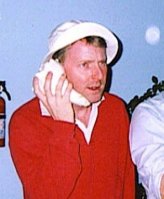
Here On Gilligan’s Island: TV’s Sociological Snapshot

In Entertainment, Opinion, Politics, psychology, Religion, Science, sociology, television, Uncategorized on March 27, 2012 at 9:02 am

Gilligan's Island served as a humorous microcosm of American society.

By Gery L. Deer

Deer In Headlines

In 1963 television writer, producer Sherwood Schwartz created a short-lived situation comedy that, unbeknownst to audiences, provided a peak through a unique magnifying glass into the human condition. Panned by critics and adored by viewers, Gilligan’s Island became one of the most re-run shows of all time and earned a unique place in the annals of American pop culture.

Between 1964 and 1967, 98 original episodes of the show aired when it was suddenly cancelled before a fourth season could be filmed. Surprisingly, the show ran aground, not because of faltering ratings (it was always in the top 20) but instead because the president of CBS wanted to revive his wife’s favorite program, Gunsmoke, which had already drifted into the sunset.

Often taken too seriously by critics and sometimes misunderstood even by its fans, the premise of Gilligan’s was simple. Seven people set out on a scenic, three-hour cruise around theHawaiian Islands aboard the S.S. Minnow when an unexpected storm tossed their tiny ship and left it wrecked on the shore of an uncharted island.

Marooned more than 300 miles from their original course and left with only a transistor radio, a tool chest, four blankets and the clothes on their backs (which never seemed to wear out) the castaways had little hope of rescue. As if that wasn’t enough, each opportunity for escape from their tropical island nest was agonizingly thwarted – usually thanks to the ineptitude of the boat’s lovable, yet bungling first mate, (Willie) Gilligan.

Regardless of what people thought of the show, however, even today, the durability of Gilligan’s Island still leaves entertainment experts scratching their heads. It’s possible, though, that most people simply missed the point.

Gilligan’s offered us more than just 23 minutes of slapstick escapism. Along with campy, cartoon-like comedy, the program granted viewers a humorous and remarkably detailed glimpse of themselves.

Seven people, each of whom represented different social positions, were required to work together in order to survive in their shared predicament. The Skipper and Gilligan, for example, represented average, working class guys; a small business owner and his employee, if you will.

The Professor was a school teacher; the pragmatic scientist focused on getting everyone safely off the island. He also found ways to help make them all more comfortable while maintaining a discrete distance from the obvious distractions – Mary Ann and Ginger.

Sweet, kind, Mary Ann was a wholesome farm girl fromMiddle America. Television psychologists (yes, there are such people) often refer to her as the ‘linchpin’ of the story. Noticeably absent for a good part of an episode, Mary Ann would walk in at just the right moment bringing with her at least part of the solution to an impending problem, though sometimes inadvertently.

Movie starlet, Ginger, was Mary Ann’s voluptuous, big city opposite. Her Marilyn Monroe-esque sensuality was continually implied but never fully executed. Even though she was a film star, on the island she was relegated to a traditional ‘female’ role of the 1960’s, cooking and doing laundry.

Lastly, the millionaire Thurston Howell III and his socialite wife, aptly named, Lovey are obvious stand-ins for the high-brow elite. Carrying enough cash to support a small nation, the lazy yet likable couple solved problems back home with money – something that has no value on the island. Still, Howell’s business savvy and ruthless determination to return to civilization offers both foil and ally to the others.

And there you have it, seven snapshots of modern society dropped into a difficult situation where they are forced to get along for the common good. Of course a sitcom isn’t real life, but it shows us that we all have the same basic needs no matter where we are in the pecking order of society. In the end, we all require food, clothing, shelter, some level of happiness and a margin of personal satisfaction.

No one ever really finds everything they’re looking for in life, but peel away our political, religious and social trappings and we’re all the same. Just people trying to get along, regardless of whether we live on the streets of anywhere U.S.A., or here on Gilligan’s Island.

Future of Jamestown Depends on Creativity and Business Savvy

In Business, Economy, Local News, Opinion, Politics, Uncategorized on March 20, 2012 at 9:25 am

Is the sun setting on the historic past of Jamestown, Ohio? (Photo by Gery L. Deer)

By Gery L. Deer

Deer In Headlines

As the last shovel full of bricks was removed from the site of the old Powers Marine building after its demolition, residents have been staring at yet another vacant lot in the downtown and wondering about Jamestown’s future. Founded on the southeastern edge of Greene Countyin 1816, the tiny village has seen its share of catastrophe.

In the late 1890’s, a devastating tornado leveled the entire town while a century later a fire destroyed most of the southwest side of W. Washington Street. But today, Jamestown may face a greater challenge than natural disasters – short shortsightedness.

What would have happened at the turn of the 20th Century if no one had decided to rebuild after the tornado? Within a few moments, homes and businesses lay in splintered wreckage; a town once poised to compete with Xenia for the county seat lay in ruins. Imagine if it had been left that way. That’s essentially what has been happening in Jamestown for the last couple of decades, with a few exceptions, particularly one structure that was snatched from in front of the bulldozers nearly in the nick of time.

Once again alive with the sounds of ongoing renovation efforts and music and laughter filling its auditorium, in the mid 1990’s the Jamestown Opera House was considered an eyesore and there were those who believed it should be torn down. Fortunately, thanks to the determination of a small number of residents who formed the Jamestown Area Historical Society, the historic theatre is without question a shining gemstone in the village’s tarnished crown.

Then again, if things keep going like they are it might be the only downtown building still standing and occupied ten years from now. How’s that for irony? But it’s not just lost history that is costing Jamestown, but the perception that it’s decaying – rapidly.

An informal survey posted on Facebook revealed some opinions as to why Jamestown has declined. Some people suggested that the village and township officials make it too difficult to establish new business, often rejecting proposals for new business and creating so many roadblocks that there would be no reward for the effort.

One comment said that rents of office and store front space in Jamestown cost between $1,500 and $2,000 per month. If true, one of the problems is obvious. With such outrageous expense just to keep the space, limited street side parking, nothing to draw people to town and an ever expanding sprawl away from the downtown area, there is no practical reason to set up shop there.

Another line of discussion from the survey suggested that Shawnee Hills should be annexed for tax revenue because there are higher property values and income levels than those found in the village proper. The extra money could be used to provide incentives for businesses to settle in town, thus drawing more visitors. Needless to say that drew angry responses from lake dwellers, some of whom commented that they don’t consider themselves as Jamestown residents, but merely living within the same postal district.

Of Course, real estate and financial issues are only part of the problem. People still create the biggest roadblock to regenerating a town’s vitality, regardless of its size. Those who hold the power in small towns still seem to believe that they are all-important.

Good old boy politics thrives and for those who have never been exposed to any other way of doing things, their ability to make forward-thinking decisions may be sharply limited. In addition, pointless and continual bickering between township and village officials over petty control issues only serves to drive the coffin nails deeper.

Trying to return Jamestown to the way it was is hopeless. Those days are gone and though this opinion probably won’t sit well with the powers that be, a new era for Jamestown means more creative thinking, some genuine business savvy and a fresh start. Jamestown may not be able to compete with larger communities, but more open minds must soon prevail or it will just end up a dot on a map and a footnote in the history of Greene County.

Is this your new site? Log in to activate admin features and dismiss this message
Log In