Local News & Commentary Since 1890.

Archive for the ‘National News’ Category

A national, online university is impractical.

In Economy, Education, finances, history, National News, Opinion, Technology, Uncategorized on March 9, 2015 at 12:59 pm

DIH LOGOA recent CNN.com article by Kevin Carey proposed the idea that America could bring to reality George Washington’s dream of a national university by utilizing the Internet-based programs of existing institutions. Colleges and universities already receive millions every year in federal money, so some of that could be allocated towards low-tuition, online education. Good idea in concept, but not practical.

Although Internet-based programs have been in place for some time at universities around the country, many educators still believe that online education lacks the face-to-face contact necessary for students to connect with the subtleties of concepts and ideas. Questions cannot be answered immediately and written communication skills become more vital since intent and personality don’t always come across the same way virtually as in person.

Obviously, online options are not well-suited for every course of study, particularly where hands-on work is vital, such as the physical sciences or engineering. The ITDL article notes that videos would need to be produced, substantially increasing costs, while still lacking in the ability for students to get direct, immediate feedback. Flaws aside for a moment, online options have some positive aspects as well.

booksA few years ago, one article in the International Journal of Instructional Technology and Distance Learning noted that some educators employ online discussion boards to compensate for absent face time. One professor referenced in the article also suggested that, “a virtual environment reduces gender differences,” creating a more equal educational setting for men and women.

A national university could potentially be cobbled together from existing web-based programs and at a considerable savings. With online education there are fewer administrative issues, no buildings to construct and no libraries to collect.

But if the intent of such a program would be a stepping stone towards achieving President Obama’s promises of free community college education, further examination is probably needed. On the surface, a virtually-based, national community college program looks like a great solution to a daunting issue. Digging down, however, the financial and educational factors that sparked the idea in the first place would also be its greatest hindrance.

In order for such a program to be of value, it would need to be within the reach of the poorest of American citizens. Computers, for all they seem readily available by the upper-middle class, are still fiscally out of reach for those of lower income.

A computer at the local library is great for submitting job resumes or checking Facebook, but long-term study on public computers is impractical and insecure. Add to that most public computers are painfully slow and out-of-date, with restricted web search capability, and they seem like a thoroughly impossible option.

Additionally, free (or nearly free) dial-up Internet access would be wholly insufficient for higher learning programs so students would need to use high-speed broadband service. Once again, pricing and accessibility become the major issues. It simply costs too much for most lower-income families to afford high-speed Internet service and, in rural communities, availability remains shockingly limited.

Finally, there is the issue of prerequisite education. Besides whatever background might be needed for enrollment and future success in any particular program, a lack of computer skills can also hamper online class work.

The average computer user has a parenthetical set of skills: they can surf the web (but tend to stay on websites they know how to navigate), use a simple word processor, send a basic email (without attachments), print something and turn the machine off and on. That’s pretty much it.

Some of college coursework would require the student to possess advanced computer skills related to online research, clerical software manipulation, media production and so on. That might be a problem for someone coming from a background of limited resources or a family where technology didn’t play a major role.

None of this is impossible, but the limits on infrastructure, funding and practicality might be too great a challenge to reach those who would most benefit. An online program alone is just not the answer to America’s higher education deficiencies. Sorry George, no national university just yet. But, hopefully, there are some smart people out there trying to make something like it a reality in the near future.

Gery L. Deer is an independent columnist and business writer. Deer In Headlines is distributed by GLD Enterprises Communications. More at gerydeer.com.

Remembering “Spock,” actor Leonard Nimoy

In Entertainment, Movies, National News, Opinion, television, Theatre, Uncategorized, World News on March 3, 2015 at 1:43 pm

DIH LOGO

In 1982, fans of the science fiction franchise, “Star Trek,” more commonly referred to as “Trekkies,” or the more accepted, “Trekkors,” took a kidney punch when Leonard Nimoy’s character of Mr. Spock died at the end of the film “Star Trek II – The Wrath of Khan.” But, thanks to the miracle of science fiction, Spock was resurrected and the Starship Enterprise continued to boldly go where no man had gone before.

Sadly, fans must now face a more painful and permanent fact of life as they mourn the passing of the actor who, for nearly a half century, portrayed their favorite pointy-eared alien. Leonard Nimoy passed away on February 27th at the age of 83 at his home in Los Angeles following a long battle with chronic obstructive pulmonary disease, or COPD.

As a lifelong fan there is no way to adequately convey the sadness of losing such a talented performer whose on-screen character inspired so many. Mr. Spock, Captain Kirk, Dr. McCoy, and the rest of the U.S.S. Enterprise crew, were great sources, not only of entertainment, but incredible inspiration for individual achievement and social change.

spockNetwork executives originally told Star Trek creator Gene Roddenberry to, “get rid of the guy with the ears.” But, thanks to Mr. Nimoy’s talented development of the character,  Mr. Spock became a quintessential part of “Star Trek’s” hopeful future in which everyone worked together to eliminate hunger, pettiness and poverty.

Such a vision is still somewhat unique – and often poked fun at – in the science fiction genre, which more often paints a dark, pessimistic outlook for man and a holocaust-ravaged world of tomorrow.  But with Spock’s presence, a bright future for mankind seemed more plausible. In Spock, Mr. Nimoy created the embodiment of chaos with focus, logic with feeling, and understanding with wonder.

I have been incredibly fortunate on a couple of occasions to have had the chance to meet and speak to Mr. Nimoy, as well as see him perform. At one Star Trek anniversary convention I attended, he invited questions from the audience. He chose my raised hand from several dozen other hopefuls seated nearby and I didn’t waste the opportunity.

A bit stunned at having been selected, I stood up and managed to ask something from the original “Star Trek” pilot episode that I’d been wondering about for years. With a genuinely amused laugh, he thought for a moment and informed us that he’d never before been asked about it.

Then, he answered with a detailed, behind the scenes story and directly thanked me when he finished. I will never forget that. Naturally it was cool even to be picked out of hundreds, but I was far more privileged to have given Leonard Nimoy even a tiny moment of entertainment in return for all he’d given us.

Mr. Nimoy played Spock for the last time in the most recent “Star Trek” film, “Into Darkness,” and, although he will be most remembered for his logical alter-ego, he also performed in dozens of other movies and television programs over the years. Besides “Star Trek,” he’s probably most remembered for his time on “Mission Impossible” and, more recently, in the TV drama, “Fringe.”

Besides being a gifted actor, Mr. Nimoy was a director, poet, photographer and activist. In the “Star Trek” animated series Spock is quoted to have said, “Loss of life is to be mourned. But only if that life was wasted.” Clearly, his was certainly not wasted.

Any of us should be so lucky as to have touched even a fraction of the lives Mr. Nimoy did, and in so many positive ways. To all those mourning a loss, remember the burden will ease over time and those we lose really aren’t gone, as long as we remember them. Live long and prosper.

If you would like to know Gery’s convention question to Mr. Nimoy and what answer he gave, read the BONUS MATERIAL at the end of this article.

Gery L. Deer is an independent columnist and business writer. Deer In Headlines is distributed by GLD Enterprises Communications. More at gerydeer.com.


BONUS MATERIAL:
Question from Gery Deer to Leonard Nimoy in a talk at the Star Trek 35th Anniversary Convention, Las Vegas, Nevada.

Gery L. Deer: Mr. Nimoy, in the Star Trek pilot episode, “The Cage,” you beam down to the surface of planet Talos IV with Captain Pike and a landing party. As you walk around the planet set, you appear to be limping and I wanted to know if you could tell us why? I’ve heard people say it had something to do with your boots, or the set floor, whatever. I just wondered what the real reason was.

Deer In Headlines author, Gery L. Deer in one of the uniforms designed for Star Trek II-The Wrath of Khan

Deer In Headlines author, Gery L. Deer in one of the uniforms designed for Star Trek II-The Wrath of Khan

Leonard Nimoy: (Laughing) You’ve been worried about that all of these years, why I was limping? Well, I have to say I have never been asked about that before.

(The crowd of about 1,200 in the room was really laughing at this point and applauding.)

Leonard Nimoy: Well, I’ll tell you because I really don’t want you to be troubled by this any longer. (More laughter). If you remember in the story there was some discussion about a fight that had taken place on a planet several weeks prior.

As the story goes, the Enterprise crew was ambushed and there was a battle in which crew members were killed or injured. Spock was supposed to have hurt his leg in that fight. In television and movies, you often shoot scenes and story lines out of sequence and the scenes where the fight takes place would have been in another episode to go before the events in The Cage had Star Trek had been picked up without any changes. Then you’d see Spock get hurt and know why he’s limping later. (Crowd applauds.)

Leonard Nimoy: (Nimoy, looking back again at Gery) That’s why I was limping and now you don’t have to worry about it anymore. Thank you for that question, that was really the first time anyone has ever asked me that. (Mr. Nimoy gives Gery the Vulcan salute and the crowd applauds again.)

END.


Still unregulated, e-cigarettes may prove as toxic as tobacco

In Children and Family, Education, Health, Local News, Media, National News, News Media, Opinion, Technology, Uncategorized on February 24, 2015 at 12:22 pm

dih-logo-SE


DEER IN HEADLINES : SPECIAL EDITION – By Gery L. Deer

As smoking bans continue to expand across the United States, more smokers are taking to electronic cigarettes as a way to skirt around the law while still getting their fix. While proponents of the gadgets contend they are a safer, healthier alternative that may actually help smokers quit, new research is showing they are likely to be just as dangerous as tobacco cigarettes.

The concept that people want to inhale poisonous gas is for the non-smoker, and for lack of a better word, baffling. If it makes a person cough, wheeze, choke, and gasp, it probably means the body is trying to reject it. To those trying to breathe clean air (well, as clean as is possible), smoking is just plain disgusting. It makes clothing and people smell bad, it pollutes the air around the smoker and is responsible for more than 440,000 premature deaths in the United States annually. Now that researchers are finally studying the alternatives, they may be proving the electronic options just as dangerous.

“It’s plausible that e-cigarettes have their own particular dangers,” stated Japan’s health ministry following the release of a recent study on the effects of using electronic nicotine delivery inhaler, more commonly known as, e-cigarettes. “That can be true even while e-cigarettes are, in general, less dangerous than traditional tobacco smoking.”

According to the UK’s Daily Mail, the Japanese research found high levels of formaldehyde and acetaldehyde in the vapors of several different e-cigarette brands. The Daily Mail later issued a correction to their original story regarding the amount of carcinogens discovered, however the basic findings of the report are still relevant.

Although e-cigarette proponents (mostly those who earn revenue from the sale of these products) vehemently condemn the Daily Mail’s report and the Japanese findings, a spring 2014 study by the American College of Allergy, Asthma and Immunology (ACAAI) essentially supports the conclusions.

CBS News reported the following excerpt from the study, “Because e-cigarettes are fairly new, there could be other long-term health complications that have yet to be discovered,” the report stated. “Results of long-term exposure to such substances are unknown. Due to the lack of production oversight, most consumers don’t know what’s in the e-cigarettes they buy.”

The report indicated that e-cigarettes operated at high voltages produce vapor with large amounts of formaldehyde-containing chemical compounds. Manufacturers provided a response to the CBS report, suggesting that it would be unusual for users to alter the voltage on the delivery device. READ THE ENTIRE CBS STORY – January CBS News Report indicating formaldehyde in the vapor – click to read.

vaping

All of this study and debate is just a dance around the overlying point that smokers should not have the right to pollute the air of those around them, regardless of the delivery system. Smokers would do best to stifle the tired old argument about the addictive nature of smoking and stop blaming the tobacco companies for their suffering.

In the end, the detrimental nature of smoking is the sole responsibility of the smoker. No one forced the smoker to light up that first time, or the second, or the third. Smoking is a choice that becomes an addiction. If they hadn’t started, they wouldn’t be hooked.

Creating a socially acceptable “cheat” method for taking in nicotine is a little like making alcoholics drink from a cup instead of the bottle. The final effect is the same – the person is still addicted. On the subject of addiction, the idea that e-cigarettes help smokers kick the habit is also unsubstantiated.

Dr. Pamela Ling, an associate professor at the Center for Tobacco Control Research and Education at University of California, San Francisco, was lead researcher on a study published last March in the Journal of the American Medical Association. She concluded, “When used by a broad sample of smokers under ‘real world’ conditions, e-cigarette use did not significantly increase the chances of successfully quitting cigarette smoking.”

An electronic drug delivery system resembling some kind of refugee prop from Star Wars is still just another way of enabling addiction and polluting the air. If the recent studies are accurate, what is released into the air could be just as toxic as the vapor inhaled by the user, possibly even more so. Without further study and government regulation on these chemicals, no one really knows.

“Vaping” is still not widely controlled as actual smoking, so people still light up indoors where smoking is prohibited and that needs to end. Smoking bans should exist for all forms, whether achieved by burning dried leaves or electronically heated vapor.

One person’s right to smoke shouldn’t be more important than the health and safety of those around them. Imagine the result of an asthmatic child falling deathly ill from an attack triggered by the second hand vapors coming out of one of these things (or a tobacco cigarette for that matter), and all because someone couldn’t wait to light up?

Once upon a time, not so long ago, doctors ridiculously gave their seal of health to tobacco products. They even took money to provide testimonials as to the health benefits of smoking. Sadly, a lot of people had to die before health professionals faced the truth. Face the facts – if human beings were meant to breathe toxic gasses, we would be living on Venus.


Emotions must yield to fact in vaccination debate.

In Children and Family, Education, Health, Local News, National News, Opinion, Politics, Science, Uncategorized on February 2, 2015 at 1:25 pm

DIH LOGOFar more than scientific fact, emotion seems to drive the debate surrounding the relationship between autism and the Measles, Mumps and Rubella (M.M.R.) vaccination. In 1998, a British doctor released a study which tied M.M.R. to instances of Autism in vaccinated children. Although that particular report was discredited shortly thereafter, it continues to affect parental decisions regarding vaccination here in America.

Before being debunked, however, the British study went viral (pardon the pun) and many parents became convinced that, for children diagnosed with autism shortly after receiving M.M.R., the vaccine must be the cause. Once the power of suggestion took over and the British findings accepted as gospel, the damage was done and more people than ever began to insist that vaccines, the M.M.R. in particular, were causing higher instances of autism.

In most states, the M.M.R. vaccine is required before children can be enrolled in school. With so many students now enrolled who were never vaccinated, measles is starting a forceful comeback, to be followed, one could only expect, by rubella and mumps.

Fear of the spread of these illnesses has officials warning that unvaccinated students would not be allowed to attend school. But while the vaccination debate goes on, autism numbers are still climbing unabated. So what exactly is Autism and what really causes it?

Centers for Disease Control photo of a child with measles.

Centers for Disease Control photo of a child with measles.

According to the National Autism Association, “Autism is a neurodevelopmental disorder characterized by social and cognitive impairments, communication difficulties and repetitive behaviors. It can range from very mild to very severe and occur in all ethnic, socioeconomic and age groups.”

As for what causes it, well, therein hangs a controversy all its own. The short version is that no one, absolutely no one, really knows for sure.

A long list of factors related to the development of autism includes a combination or individual instances connected to … environment, genetics, chemical exposure, parental age, food preservatives, freeway proximity, pharmaceuticals, and prenatal vitamin deficiencies, just to name a few.

Although autism is treatable, it is a difficult condition that now affects 1 in every 68 children. People with autism often suffer from a host of other medical conditions including allergies, asthma, epilepsy, digestive disorders and increased susceptibility to viral infection. It is clear that research must continue in order to isolate the exact cause(s) of the disorder. But allowing potentially crippling or deadly viruses to regain a foothold is not the answer.

Vaccinations have been acquitted of being the cause of this awful condition and people should listen to the experts who are trying to help them understand that.  While definitive evidence for the cause of autism is still elusive, one fact is difficult to dispute. Without proper vaccination, more of the population will fall victim to serious, communicable illnesses that are known to be preventable.

Is it right then to put entire populations at risk of dangerous disease on the mere possibility that vaccinations might be one of the dozens of potential causes of autism? Most experts say no, but that doesn’t seem to slow the argument.

Once the British study was discredited, it seems in the best interest that children continue to be vaccinated as recommended. Keeping children safe is never an “us” or “them” concept and no one should have to take sides to preserve the health of any population when there are methods proven effective to do so.

As with any emotionally charged issue where facts and anecdotal information are confused or interchanged, the M.M.R. and autism debate will likely continue for some time. In the meantime, more people are contracting measles which means it is spreading beyond the “tragic kingdom,” as one New York Times writer referred to it.

If a solution is to be found on either side of this debate, emotions and “crunchy granola” thinking need to give way to real science. Until that time, these diseases will continue to spread and autism will be no closer to eradication.

For more detailed information on the relationships between vaccinations and Autism, please visit AutismScienceFoundation.org and nationalautismassociation.org.

Gery L. Deer is an independent columnist and business writer. Deer In Headlines is provided by GLD Enterprises Communications. More at gerydeer.com

New laws won’t stop bullying.

In Children and Family, Crime, Education, Health, Local News, National News, Opinion, Politics, psychology, sociology, State News, Uncategorized on January 26, 2015 at 11:25 am

DIH LOGOOn January 1st of 2015, a new state law took effect in Illinois giving school district officials broader power to investigate accusations of bullying – including cyberbullying – even if the activity took place outside administrative jurisdiction. After word spread of the bill’s passing, some media outlets reported, somewhat mistakenly, that school officials now had the right to order students to surrender social media passwords.

According to a report by The Huffington Post, however, the wording actually says, “that if cyberbullying is reported to the school, school administrators can investigate the claim even if the cyberbullying occurred outside of school hours and buildings.”

The report goes on to explain that a bill which took effect in January of 2014 made it unlawful for school officials to force parents or students to hand over online passwords. Brian Schwartz, general counsel for the Illinois Principals Association, told The Huffington Post, “I think there’s some misinformation about [the new bill], because that’s been on the books for over a year.”

bullying2There is no question that schools need to do more to curtail bullying. But, while all the attention has focused these new laws and free speech infringement, the media, and pretty much everyone else, missed the more important issue. Where are the parents in all of this?

School administrators have always been charged with maintaining discipline within the confines of their educational responsibility. However, it was never intended for educators to police kids after school hours or away from district property. They have neither the manpower nor the training to do so.

Worse still, civil liberties organizations have managed to tie the hands of educators to the point that, eventually, even detention will be a violation of a student’s civil rights. Regardless, the big question remains, when did parents abdicate the responsibility of actually “parenting” to school administrators?

Without question, this is a complicated issue, but the long and short of it is this: maintaining discipline after hours should be up to parents. If people are going to have children, they should be prepared to educate them in ways of civilized behavior and establish consequences if those rules are violated.

If a child is threatening or causing harm to others outside of school, it should be dealt with by parents and local police or other authorities – not the district administration. To repeat, they have neither the manpower nor the training for this kind of work.

Expanded powers like those granted in Illinois might seem like a good idea, but granting investigative overreach to teachers and administrative bureaucrats just seems, on every level, like a lawsuit waiting to happen. Imagine if a dangerous bully skipped through some loophole in the legal system simply because the investigation was handled by amateurs?

Such legislation is a knee-jerk reaction during midterm election season which will result in skyrocketing education costs and, in all likelihood, increased legal expenses for school districts. There is no reason school administrators should have such broad-reaching power outside of their areas of responsibility. Once again, it begs the question, where are the parents?

Instead of focusing on it after the fact, it might be a good idea for more parents to take a look at the problem and take responsibility for the behavior of their children before such events occur. Many parents overlook bullying as normal, growing pains. But that couldn’t be farther from the truth.

According to the National Crime Prevention Council, bullying consists of any and all of the following: fighting, threatening, name-calling, teasing, or excluding someone repeatedly and over time, an imbalance of power (such as size or popularity), physical, social, and emotional harm, or hurting another person to get something.  Cyberbullying includes similar issues, but inflicted over social media.

Some parents might ignore some of this behavior as “just kids being kids,” but it’s not. Kids who bully won’t come out and say so and neither will their victims. Bullying is a form of assault and it’s already illegal. New laws and stricter schools are not the solution. It’s up to parents to be more involved and help prevent this terrible problem.


Gery L. Deer is an independent columnist and business writer and distributed by GLD Enterprises Communications. More at gerydeer.com.

Creative people are not predisposed to mental illness.

In Entertainment, Health, National News, Opinion, Senior Lifestyle, sociology, State News, Uncategorized on December 12, 2014 at 2:12 pm

When it happened, I did not want to be one of the millions of journalists writing about the tragic death of comedian Robin Williams. I wanted no part of the relentless armchair quarterbacking of commentators who so easily claimed to have the man, “figured out.” No one knew what was in his head or heart and pretending to in order to secure 15 seconds of publicity on the morning talk shows is disrespectful on countless levels.

As a kid, “Mork & Mindy” was a favorite television show of mine. Naturally, I was too young to understand that Williams’ extra-terrestrial comic genius may have originated from a man with deep, emotional fragility in a constant struggle with personal demons. However, Williams’ death led to interesting dialogue about whether brilliantly creative people have a higher tendency toward mental illness.

Psychologists have long debated the relationship between the creative mind and various mental illnesses, particularly bipolar disorder.  Personally, I reject the psychobabble that suggests creative people innately suffer from a myriad of mental and emotional disorders.

I’m not a psychiatrist or a physician but I am one of those creative people, albeit that I walk the line to the other side of the brain as well. I can rebuild an engine, write this article, and produce a television segment, all in the same day. But am I, by nature, mentally ill?

Benjamin Franklin was one of the most creative and inventive people in American history. He was a statesman, a writer and an inventor, and there is no evidence to suggest he had any sort of mental illness.

But in today’s era of mass publicity, there are other pressures that can affect the creative mind’s health besides that to produce new work. Anyone who becomes successful or is thrust into the public eye at any level has an entirely different set of stresses to deal with.

From my own, small experience, I can tell you first-hand that, as a public figure, you are expected to be “on” all the time. Because of your public work, people believe they know “you,” and anticipate you to behave a certain way to meet their expectation.

When you don’t, they are disappointed and react negatively. The pressure of not being able to meet those expectations can take a toll on someone who already suffers from self-doubt, depression and other areas where a negative personal image is already prevalent.

Most creative people are in the business they love in order to do a good job at work then go about their lives as normally as possible. Often, however, the public won’t allow it.

Williams’ death serves as a reminder that every creative person is just that, an individual, whether working from their garage or signing million-dollar movie deals. Every day they struggle with the same concerns as you and I, it’s just that the scope of view might be a bit larger or different.

Has anyone considered the possibility that people who already have mental illnesses choose to go into a more creative line of work because it fits their “disability?” It’s no secret that actors and writers tend to be introverted, keep to themselves and often reject the idea of the 9 to 5 job and even general social conformity. Since mental illness isn’t something a person just contracts, like the flu; it’s logical to conclude that it’s got to be in the genetics somewhere waiting for a trigger. Depression and other illnesses can also be affected by the lifestyle of the individual through alcohol and drug use, exacerbating the problem.

Therefore, it is entirely likely that those with mental issues actually choose the more fluid existence of the creative lifestyle early on.  The common absence of structure and responsibility probably plays well into their ever fluctuating mental state.

In other words, it’s a chicken or the egg problem. Are creative people mentally ill (as a generalization), or do the mentally ill choose the more creative path? A great talent was lost in Robin Williams and he was by no means the first. Sadly, regardless of how it comes about, it is unlikely he will be the last.

Gery L. Deer is an independent columnist and contributor to WDTN-TV2’s Living Dayton program


Drone use regulation has a long way to go

In Dayton Ohio News, Education, history, National News, Opinion, Technology, Uncategorized on December 1, 2014 at 2:24 pm

DIH LOGOFor the last several years unmanned aircraft systems (UAS) have become a popular tool for everything from wildlife tracking to disaster response. But the wide application of these devices has become a hot button issue for many state lawmakers and in some cases legislation has already been put in place to regulate their use. But there’s still a long way to go.

Also known as unmanned aerial systems, or by the more colloquial term, “drones,” UAS devices are becoming more widely used around the United States by government and law enforcement agencies, commercial business and also private citizens. As the technology becomes more affordable, these devices are turning up everywhere; over residential areas, aerial photography of sporting events, even delivering packages. All of these activities raise questions of privacy invasion and how much is too much.

At the time of this article, Ohio still has no specific laws governing the use of drones but, according to the National Conference of State Legislatures, “Ohio enacted HB 292 creating the aerospace and aviation technology committee. One of the committee’s duties is to research and develop aviation technology including unmanned aerial vehicles.” So, there’s a committee; great.

At present, police departments can use drones in most states to snoop pretty much anywhere they want, and in many regions without the pesky bother of obtaining a warrant first. Drones can also be used by the federal government for the purposes of gathering domestic intelligence. Up to now, there are few “official” limitations on U.S. Government (and military) use of UAS devices to spy on its own citizens, without cause or due process of any kind.

dronesSo until there are clear areas of regulatory legislation, what rights do individual citizens have to protect themselves from the prying robotic eyes of a drone? The answer to that is murky at best, and property law is extremely complicated so it’s tough to know who actually owns the airspace above.

A Slate.com article from October 2014 reports that man-on-drone violence is actually on the rise; that means people are actually shooting the machines right out of the air, sometimes just for the sport of it.

The article shared one story about a New Jersey man who was brought up on unlawful weapons charges for shooting down a drone over his property. The article was unclear about whether the area where the incident took place was rural, commercial or residential. There was also no mention of charges related to what he shot down.

As some states enact technology-related laws and regulations, others have done nothing. Many of the laws that have been enacted are also confusing as to personal responsibility or liability.

In Tennessee for example, SB 1777 makes it a class C misdemeanor for any private entity to use a drone to conduct video surveillance of a person who is hunting or fishing without their consent. So to illustrate how ridiculous this is: if Bob is hunting on Bill’s property without permission and Bill uses a drone to monitor Bob’s activity, Bill is guilty of a crime, but Bob is not?  How’s that for pointless?

Drones and other UAS devices bring about yet one more issue where the technology has advanced faster than the wisdom of the people and the legislators. But what about personal rights until laws are enacted? Do private citizens have the right to take matters in to their own hands? Is it OK to shoot down a drone in an area where firearm use is legal? What if it’s brought down with a slingshot, a boomerang, a whip (sorry, had to include that one) – or even another drone?

It seems likely that if someone destroyed a drone its owner would have some kind of civil litigation options to recover damages. However, UAS operators should keep in mind that, for the most part, firearms are still legal to use in rural areas and an intrusive drone might just go the way of Amelia Earhart.

Gery L. Deer is an independent columnist and business writer and CNN.com iReports contributor. More at deerinheadlines.com.


E-commerce that supports local business

In Business, Economy, finances, Holiday, Local News, National News, Technology, Uncategorized on November 26, 2014 at 4:25 pm
GLD Enterprises Commercial Writing's "e-commerce kiosk," at Amazon.com

GLD Enterprises Commercial Writing’s “e-commerce kiosk,” at Amazon.com

JAMESTOWN, OH – Shoppers are being encouraged to buy from small, local retailers this holiday season, but did you know there was a way to support local business and still buy from Amazon.com? They’re called “Amazon aStores,” and they allow local business to set up a virtual storefront through Amazon.com and offer products of their own choosing.

Retailers can set up what is essentially a virtual kiosk inserted within the company website. Each item is selected individually and can be categorized for easy indexing. Shoppers can then visit the main website for the company, providing the owner with valuable marketing information about how often the site is frequented, and then click on the business’s amazon store to shop further.

The hosting business is then paid an advertising fee by Amazon for each product sold through its store. Such a store doesn’t generate a great deal of revenue, but it can provide some helpful cash flow, if people know to use it.

Gery L. Deer, owner and creative director fro GLD Enterprises of Jamestown, Ohio has three such Amazon stores in operation on different websites. “We do a great deal of work with local authors, and the Amazon store allowed us a way to market the electronic versions of books, as well as other specialized items, often unavailable from local retailers.”

Deer says this kind of pre-packaged e-commerce is a good way for small businesses to have an online sales presence, even if the company is not necessarily a retailer. “Our business is primarily a business-to-business marketing and copywriting agency,” Deer says. “As a service business, we don’t have retail sales, but the products we provide through our online store can benefit the customer by offering another way to both save money on shopping and support local business, all at the same time.” For more information visit Amazon.com.

Here are links to the Amazon stores managed by GLD Enterprises and its partner companies:

GLD Enterprises Commercial Writing Amazon Store: Features locally-authored books and related products. Some product sales benefits the Western Ohio Writers Association.

GLD Enterprises & Production: Features a wide variety of books, electronics, specialty items and locally-authored material.

Deer Computer Consulting, Ltd.: Books, software, electronics, and more “computer” related products.


Medication adherence vital to senior health

In Business, Dayton Ohio News, Education, Health, Local News, National News, Senior Lifestyle, Uncategorized on November 19, 2014 at 7:16 pm

PrsnlCareSrvcs-300x300Dayton, OH – According to studies published in the New England Journal of Medicine, approximately one-half of senior adults who take at least one medication per day find keeping to the regimen difficult to maintain. Elderly patients can often become confused about dosage and scheduling and sometimes do not even understand the purpose for each prescription.

Because medication is metabolized differently as people age, timing is important. To be most effective, many medications have to be taken exactly as prescribed for the full benefit to be achieved. Unfortunately, many seniors may be taking prescriptions at the wrong time or missing doses entirely.

Medications can also get mixed up when there is more than one elderly resident in the home, creating an additional danger to the individuals. Without daily monitoring, it may also be difficult to identify older adults who may be at risk for medication nonadherence. In the absence of daily oversight by close friends or family members, one helpful alternative is a professional senior care provider.

Becky Kearney is the Senior Director of Operations for Golden Heart Senior Care in Centerville, Ohio. She notes that, along with other tasks, one of the jobs asked of Golden Heart caregivers is to help seniors maintain their medication adherence.

“Our caregivers frequently deal with the effects of over or under medicating,” Kearney says. “Improper medication administration can create havoc for both the individual and his or her family members.”

Daily home care providers can help to ensure that medication is properly taken, in the accurate dosage and by the correct method (oral, topical, etc.), and at the right time. “Mishandling of prescriptions can cause long term, if not permanent damage to the physical and mental health of the individual.  All of which could be prevented with medication monitoring by a caregiver,” adds Kearney.

As a senior’s health and independence decline, constant prescription changes can also become more confusing and difficult to manage alone. For those with elderly friends or family, inquire how he or she is managing medications and if no one is monitoring the situation, suggest a call to an in-home senior care agency or contact the local council on aging for a referral.

To learn more about getting help for senior medication adherence in the Miami Valley area, contact Golden Heart Senior Care by calling, 937-506-0190.

E-commerce shoppers beware price steering

In Economy, finances, Holiday, Media, National News, Technology, Uncategorized on November 17, 2014 at 2:28 pm

DIH LOGORecent surveys suggest that nearly 60 percent of shoppers will do their holiday buying online this year. That’s probably not too surprising to most people.  But did you also know that many e-commerce websites actually adjust pricing based on your personal information to get the most money they can from each shopper? It’s called “price steering,” and it’s perfectly legal. Here’s how it works.

Let’s say Bob goes online to buy a hammer using his smart phone. The e-commerce hardware site offers the item for $10 with a $2 shipping charge. From his desktop computer at work, John looking up the very same hammer on the same website, but his price is showing at $15 with a $5 shipping charge. The cost variation is based on data collected from each buyer’s Internet device.

Whenever you visit a website it leaves a “fingerprint,” on your computer, smart phone or tablet in the form of cookies, browsing history, and so on. For our example, let’s say Bob and John live in different parts of the country, work in different occupations, and have individual buying habits, so their computers, smart phones and other devices portray a very different “electronic personality,” or “E.P.”

The E.P. information is used to “steer” each buyer to the same product but with different pricing based on the collected data. That level of electronic tracking might sound a bit distressing, but it’s really been going on for quite some time.

Deer Computer Consulting, Ltd. recommends checking e-commerce prices from different devices.

Deer Computer Consulting, Ltd. recommends checking e-commerce prices from different devices.

Internet users receive a plethora of personalized information every day. As they go about their day-to-day activities, complex programming is used to sift through online profile data and previous online activity, constantly processing it through something called a “personalization algorithm.” If you’ve ever wondered why Amazon knows that you like country music or white tigers, and constantly offers you products related to those things, that’s how they do it.

A similar process is used at grocery and other retail stores, using a combination of product placement and special pricing. I often refer to it as “the milk effect,” because dairy products, meats and other essentials are positioned in the back of the store and shoppers must pass a myriad of floor and end cap displays to get to them.

This “steers” the shopper past all of the sale items, incidentals, and virtually everything else, as they make their way to the household staples. Unlike price steering online, however, this practice is fairly transparent and has few components to allow unique pricing adjustments for each buyer.

User data collection and manipulation may provide many people with better pricing but it can also be used to force others to pay more. A recent study by researchers at Northeastern University brought into question the level of transparency offered by popular e-commerce sites and price steering practices.

Price steering actually hap­pens every day and is well-advertised. In a standard retail setting, for example, senior citizens might get a dis­count at the movies or a col­lege stu­dent pays less for books. And, according to the university’s website, authors of the study note that there is nothing inherently sinister in the processes.

But before you click “buy now,” it’s up to you to make sure you’re getting the best possible price online. Here are a few simple tips to help.

First, clear the browsing history on your device and turn off tracking cookies. Websites can’t access your history if there’s nothing there to see. Be aware, however, that some websites require that cookies be allowed or the site will not work properly.

Next, view the website on different devices. Some of the data collected can tell retailers that you are using an expensive smart phone and may be more inclined to pay more at checkout.

If you’re a regular user of a particular retailer’s website, log out and log in as a guest through another device. Sometimes guests are provided with lower pricing to entice them to buy.

Finally, scroll around, making sure to check the very bottom of the web page. Lower-priced products may be displayed elsewhere besides the top of the page. Do your homework, get the best price and enjoy this holiday shopping season.

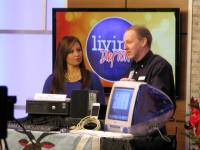
(TUNE INTO WDTN-TV2’S LIVING DAYTON AT NOON ON FRIDAY NOVEMBER 28TH FOR A SPECIAL SEGMENT ON THIS TOPIC PRESENTED BY DEER IN HEADLINES AUTHOR GERY L. DEER.)

Gery L. Deer is an independent columnist and business writer based in Jamestown. More at gerydeer.com.


Is this your new site? Log in to activate admin features and dismiss this message
Log In