Local News & Commentary Since 1890.

Archive for the ‘Jobs’ Category

Has Kasich set his sights on the Oval Office?

In Business, Economy, Education, Jobs, Local News, Media, National News, Opinion, Politics, Senior Lifestyle, State News, Uncategorized on February 19, 2013 at 11:45 pm

Deer In Headlines

By Gery L. Deer

(AP Photo/Charlie Neibergall, File)

(AP Photo/Charlie Neibergall, File)

I am by no means one of the top political minds in the State of Ohio – far from it, in fact – nor do I hold any connections that would give me insight into what might be going on in the governor’s office right now. But, it seems to me (nod to fellow columnist Bill Taylor) that John Kasich has his eye on another chief executive office – the one with the oval-shaped room.

While most commentators are crediting the activity to Kasich’s bid for re-election, given the level of his high-handed agenda over the last two months, it is my belief that the governor is planning a run for the 2016 Republican presidential nomination, or at least the vice-president’s spot on the ticket. A quick review of the governor’s public agenda clearly shows a noted increase in the number of high-profile policy and legislative initiatives, particularly in recent months.

It certainly seems as if he is doing just what a politician should do when he wants to win over both sides for a broader appeal. He’s riding the fence, trying to appease liberals as well as conservatives with nationally controversial legislative changes such as an increase in the minimum wage passed in December, but largely unpopular with republicans. Dangerous, since he is still vulnerable even in a re-bid for his job, but it’s a give and take.

According to political columnist, Chris Cillizz, a September Washington Post poll showed that the republican governor held a 50-percent approval rating. In December, a Quinnipiac University poll gave him a 42 percent overall job approval, with 35 percent disapproving, his highest marks in that poll since inauguration.

He is more popular than ever, possibly more so than his democratic predecessor, Ted Strickland. But, in the last half of his term, he is upping the ante to prove he can lead in tough times and get things done to improve Ohio’s economy even as Washington remains stymied.

Kasich still has a long way to go with a great many negatives on his desk, among them lackluster job numbers, which are currently below the national average. He also has some outspoken opposition to his “rough” demeanor.

In a recent Dayton Daily News report, Montgomery County Republican Party Chairman Rob Scott, a Kasich supporter, admitted that the governor sometimes has a harsh approach.

“I think what Gov. Kasich has brought to Ohio is that he’s up front and honest: this is what we need to do and this is how we get there,” Scott said. “And he may run over a couple people, but sometimes to get things done, and to do what’s right, you’ve got to do that.”

If there is a possibility that Kasich is looking towards 1600 Pennsylvania Avenue, then the question is, does he have what it takes first to get the attention of a splintered GOP and second, to win over the disheartened voters from both sides of the aisle? At the moment the only conservative frontrunner for the presidential nomination is former vice-presidential candidate Paul Ryan. Once an unknown, Ryan had the national stage, often upstaging his running mate with his more down-to-earth demeanor and likeability among the younger voters.

Kasich is getting national attention for his aggressive policies and growing poll numbers, but he’s still not well known outside Ohio and far too conservative even for moderate democrats. But, he might at least get credit for adding some new Ohio jobs in the near future, beginning with Ford’s pending announcement about a new engine plant to be located near Cleveland. The $200 million upgrade will add about 450 jobs to a plant which currently employs approximately 1,300 hourly and salaried workers.

This announcement comes on the heels of Kasich’s State of the State address in which he outlined even bolder plans to achieve his vision for the state. It remains to be seen if he can get legislators to go along with radical changes in taxes and school funding. If he manages to do half of what he’s set out to, he might just have a shot at the big chair in the Oval Office sooner than later.

There’s No Place Like Home. Again.

In Business, Children and Family, Economy, Home Improvement, Jobs, Local News, Media, Opinion, psychology, sociology, State News, Uncategorized on November 13, 2012 at 12:39 pm

DEER IN HEADLINES

By Gery L. Deer

Economists suggest that the Great Recession is over, but the aftereffects are still quite apparent. Along with record unemployment and a troubled political landscape the fiscal meltdown left one more frightening thing in its wake … junior, who came back home to live in your basement.

According to a February 14, 2012 story in Time magazine, more than 25 million adults returned to live with their parents because they are either unemployed or underemployed, or for a variety of other reasons, primarily economic. Another piece in a recent edition of USA Today quotes Paul Taylor, director of the Pew Research Center’s Social & Demographic Trends project.  “This is a case of families adapting to difficult circumstances,” he says. “Family is the ultimate social safety net.”

A temporary social safety net, yes, but it shouldn’t be indefinite. Most of the adults, single men and women between the ages of 22 and 34, moved back in with Mom and Dad because he or she could not find work in the same field or at a previous level of employment. With rent and other necessities becoming more difficult to manage, they end up on the doorstep of their family home hoping for a fresh start.

Unfortunately, because of lackluster employment growth in America, there seems to be very little light at the end of the tunnel for those empty nesters who invited kids back into the fold with open arms, but many of whom who were also ready to settle in and enjoy retirement. Instead, they’ve been returned to the days before the kids shipped off to the ivy covered walls of college.

Practical society places great importance on financial and personal independence and the idea that your job defines you. For most people moving back to the family home is a last resort and can often have a profound effect on the ego and the social life; a state to be avoided if at all possible.

For others, however, it’s just a cheap way to get out of having to actually look for a job. If you’re a parent whose children have returned to overstay their welcome, the main question now is when to show Maynard G. Krebs the door. Since you’re home with your adult kids, you can explain who he is after they read this.

It’s hard to say when it’s time to cut the purse strings. The lack of self-esteem brought on by unemployment and social rejection can really have a crushing effect on your child’s motivation to change a comfortable, safe situation.

After a time, gentle encouragement might be ineffective and you may need to use stronger, more direct measures. You might try saying something like, “Junior, it’s time for you to take whatever job you can and get back out there.” If that doesn’t work, try “Get out.” Just kidding; unless you think it would work then feel free to use the quote.

Kids, when you come back home, be respectful of the fact that it is still your parents’ house and you need to do whatever you can to make your stay effortless for them. Do your own laundry, cook, buy your own food, help with bills wherever possible and, by all means, be grateful!

Things will get better out there. There has been some improvement and there are jobs available. Sometimes it’s necessary to swallow one’s pride and take whatever work comes along, always striving to get back to wherever it is you want to be. Just keep at it and don’t give up.


Buy Local, Should Be More Than A Slogan

In Business, Economy, Education, Health, Jobs, Local News, Opinion, Senior Lifestyle, sociology, Uncategorized on September 26, 2012 at 8:01 am

DEER IN HEADLINES

By Gery L. Deer

We hear the phrase constantly – buy local. But regardless of how much encouragement comes from public service announcements, most people still buy what they need from large, corporate chain stores. From toilet paper to breakfast cereal, local markets have always had a difficult time competing with companies like Walmart, Target and Meijer.

Since the start of the recession, local chambers of commerce and other civic groups have tried to get people to switch from big box buying to shopping at the locally-owned retailer. As money belts tightened, those messages were falling on more deaf ears than ever before.

Money in a particular community is a bit like blood in a body, it has to circulate to do any good. Money moves around a region from business to consumer and back, over and over again. That’s how the economic system works. Buying from out-of-town based companies moves the money out of the area. Buying local keeps more (not all) of the money in the community.

Many argue that they simply can’t afford to shop locally because of significantly higher prices. Others complain that local companies lack the product selection or expertise of larger merchants. A family struggling to make ends meet and feed a couple of kids can’t pay $4 for a box of breakfast cereal at a local vendor, when Walmart has it for $2. For them, every dollar counts and the extra five minutes they drive is worth the time and gas if it means there is significant savings at the bottom of the sales receipt.

Prices are lower at chain stores because of mass buying and selling. For example, for every bottle of ketchup a small grocery store sells, companies like Walmart sell hundreds of thousands more. It’s a simple matter of volume. A small business lacks the massive reach and bulk buying power afforded to big companies and therefore has to pay more for products, passing that higher price along to customers at the cash register.

Some small shops lower prices on one aisle, like on every-day necessities such as bread, cereal, soap, and so on, while keeping prices higher on extravagancies to counter the difference. Many already offer a generic alternative to most products or a store brand, the quality of which is often superior to the national offerings.

In the end, it’s up to the consumer to pay attention and do a little homework to see what’s out there and comparison shop. Most large, chain stores will price match nowadays. But nothing is more infuriating than to see someone in Walmart trying for a price match with a coupon from a local store offering a cheaper alternative. Why not just shop at the local retailer and get the deal they’re offering while keeping the money in the community?

Of course, it could be easily argued that big-box stores should be welcomed rather than refuted since they employ more people and pay more taxes to small communities. Valid points of course, but what happens when corporate decides to move the store or shut it down? The collateral damage can be economically devastating.

It should be emphasized also that this problem is not limited to groceries and sundries. Service companies like law offices, insurance providers, carpet layers and even accountants struggle to retain clients, even after years of service. These kinds of businesses are based on trust, relationships and personal referrals, concepts that may have escaped the younger generations who opt, instead, for the online approach or more “progressive” options.

Buying local needs to be more than just a slogan offered up by politicians in tough economic times. Government can’t and won’t save the local economy. It requires a joint effort between consumers and businesses. Consumers need to tell local retailers what they want; Retailers, listen to customers and take action to keep them.

Buying local strengthens a community’s economy against downturn and protects jobs. So, take your next shopping trip to the local grocer and phone your nearest insurance agent for a competitive quote. You might be surprised at what you learn.

Gery L. Deer is an independent columnist and WDTN-TV2, Living Dayton business contributor. More at http://www.gerydeer.com


Sponsored By: 

Guerrilla Marketing, 4th edition: Easy and Inexpensive Strategies for Making Big Profits from Your Small Business

Fifty Years and Still Trucking

In Business, Economy, Education, Jobs, Local News, National News, Opinion, psychology, Senior Lifestyle, State News, Uncategorized on September 19, 2012 at 7:07 am

Deer In Headlines

By Gery L. Deer

Over the last few years many small businesses fell apart as a result of the recession. But one family business in Jamestown is celebrating a half-century of service with no signs of slowing down anytime soon.

In the summer of 1962 my father, Gary Deer, Sr., was working the machine shops at the great NCR, laying concrete on his off hours and helping my mother, Lois, raise my brother Gary, Jr., and sister Cathy (I wasn’t quite on anyone’s radar just yet). Money was always tight, but a toolbox full of skills always seemed to provide him with ways to pay the bills, however unconventional his blend of work.

It was around that time, armed only a truck and a scoop shovel, he was hired to haul a load of sawdust from Indiana to a greenhouse in Fairborn. Sawdust was used for landscaping and mixed with potting soil and mulch for bagging trees and other plants. Never one to turn down work, he agreed and that first load of wood shavings and dust led to a job that would support his family for many years to come.

Gary Deer and Son was the name he first gave his business, which included the cement work at the time. Fifty years later, there’s an “s” on the end, but it’s still very much in business and keeping my father and brother busy.

I grew up in the seat of an International Harvester grain truck. It was a beast of a vehicle, nicknamed the “binder” because of its lack power steering, a hand-actuated dump bed with the lever positioned outside and behind the cab and shaky, wooden sideboards. The truck held somewhere around 7,500 pounds of sawdust and always seemed to be in demand by dairies, horse stables and livestock farms.

One of dad’s earliest customers was Young’s Dairy in Yellow Springs. Even today, the popular tourist spot uses the clean, dry sawdust Dad supplies in the barns and around the livestock areas.

Over the last half-century, it’s been a common sight along US 35 to see one of Dad’s signature red (and for a time blue) trucks tarped down in red, white and blue rumbling down the highway. But you can’t imagine what it was like growing up and trying to explain your family’s business to teachers and other kids (particularly those from the city).

While taking a business class at Greeneview High School during my freshman year, we were asked to write a report about a chosen occupation we might pursue. Having no clue yet as to what I wanted to be when I grew up, I decided to write about Dad’s business – assuming I’d eventually be part of the business.

In the essay, I explained that sawdust was a major commodity within the agricultural, livestock and lumber industries. It’s a by-product of the wood finishing process in pallet shops and lumber yards, essentially vacuumed from beneath the saw tables and piped into a pile or building for storage. The mill can then sell off the sawdust at a premium, making money from what was basically waste material.

I went on to explain how grain trucks, semi trailers and wagons are used to then transport the material to dairies and stables to be resold as bedding. People make money by reselling the material, something my father and brother have now been doing for decades. The irony here was that the teacher gave me a “D,” not for my writing ability, but instead citing that sawdust hauling was, “not a viable career.”

Having effectively insulted my family business and our livelihood, the teacher was strongly encouraged by a higher power to change my grade and I wonder what he’d say today? That was more than a quarter-century ago and, though many businesses have dried up and blown away, Dad’s is still going, there’s even a website, garydeerandsons.com.

But I can’t help thinking sometimes about how things worked out, how random that first call was back in 1962 and where it led for my parents. It taught me that sometimes the simplest of circumstances hold opportunities you can’t even yet imagine. Mom and Dad created and managed the business on their own, with no help from anyone, and we are all forever grateful.

Of Stuffed Shirts and Empty Chairs

In Business, Economy, Education, Jobs, Local News, National News, Opinion, Politics, sociology, State News, Uncategorized on September 8, 2012 at 8:49 am

DEER IN HEADLINES

By Gery L. Deer

Americans have a tough decision to make in November: re-elect a president with failed policies and lackluster performance or replace him with an arrogant, out-of-touch businessman who seems to hate the poor and elderly (at least that’s how Democrats portray him).

President Obama has forced the country further into debt and is still nursing an unemployment rate of more than 8-percent. His first election campaign was built on the concept of “hope and change,” but his time in office has resulted in neither.

Mudslinging ad campaigns have done nothing to inform the public of what either of these men intend to do about the economy, jobs, healthcare or any other issue. And, for all the glitz, glitter and even Hollywood infiltration at the Republican National Convention, it would be hard to argue that it was anything above unremarkable.

Mitt Romney’s predictable – no, make that inevitable – nomination by the GOP delegates held all the drama of getting part way through a mediocre novel and having someone spoil the ending. Nearly a week later, the only thing still being talked about from the event is the nearly unintelligible ramblings of actor Clint Eastwood to an empty chair.

Ridiculously long and pointless, this scene made no one’s day and served only to confuse viewers and insult senior Americans. Former Secretary of State Condoleezza Rice helped to reverse the “Eastwood” effect, attracting both the African American and female viewer and adding class and intelligence to the stage,

Unless the Republicans can really show how he intends to change things for the better, Mitt Romney is going to have a difficult time showing Obama the door come January.  People simply aren’t responding to the lack of an obvious platform coupled with his image as a stuffed shirt corporate type who registers a big fat zero on the personality scale. Add to that the silver spoon he’s had in his mouth his entire life and it’s a combination that leaves a bad impression on struggling, middle-class voters.

Even though the Obama administration has failed to deliver most of what was promised in 2008, Conservatives seem to lack inspiration on any level and just can’t seem to get out of their own way. Republican Kevin Yoder’s skinny dipping adventure into the Sea of Galilee then trumped by Republican senate candidate Todd Akin’s offensively ignorant statements regarding rape certainly stole Mitt Romney’s spotlight for a few weeks this summer.

Unfortunately for the RNC, perception is everything in a race like this – especially since no one seems to be paying any attention to the facts. Mitt Romney comes across as the personification of the “Jones” that everyone living in a snooty, upscale neighborhood is trying to keep up with. He’s completely unaware that the people down the street are losing their home to foreclosure or that the guy next door just lost his job because his company shipped the work to China. Romney just wants to have his two Cadillacs in the garage and make sure his boat is ready for a long weekend in the Hamptons.

The main difference between the candidates is, not surprisingly, ideological. Obama is the guy who wants to care about everyone but keep his job. He still wants to hold on to his own wealth of millions – yes, he’s a millionaire just like Romney, but he wants to appear like he’s not. People think he’s a nice guy and respect his efforts while still admonishing his failures. But swing voters seem to be uncertain as to whether he should get four more years to keep trying.

As the Democratic National Convention gets underway, it will be interesting to see how the President counters one resonating quote from Mitt Romney during the RNC: “You know something’s wrong with the job [Obama’s] doing as president when the best feeling you had was the day you voted for him.” The President is still polling better that Romney in many regions, including Ohio, but poll numbers are not election returns and, right now, it’s anybody’s race.

Imagination and Experience are the Best Teachers

In Business, Children and Family, Education, Jobs, Opinion, psychology, Science, sociology on August 17, 2012 at 9:33 am

By Gery L. Deer

DEER IN HEADLINES

Albert Einstein is said to have commented, “Imagination is more important than knowledge.” As much as I admire the scientist and his great intellect and insight, I’d have to alter his statement, from my own experience, to read, “Imagination is equally important to knowledge.”

During most of my educational experience, imagination was frowned upon. Teachers wanted me to use the knowledge I gained from my books and their instruction and not vary from those works. At home, I had the opposite approach.

My parents, particularly my mother, not only encouraged my imagination, but did everything they could to enhance it. I was given the opportunity to create and experiment with everything from paper sculpture and music to electronics and heavy equipment operation; a unique combination of experiences, to say the least.

The drive to achieve is not limited to those in academia. Applying a vivid imagination using knowledge and experience to solve problems has been a driving force behind American ingenuity.

A great number of history-making people had virtually no formal education; Abraham Lincoln and the Wright Brothers, just to name a few. Some academics would have you believe that these people were anomalies but I believe they are far more common than is generally known.

Often, rising to greatness has more to do with luck and circumstance than anything else. There is something to be said for being in the right place at the right time, regardless of how intensive your labor.

Academics are fine, and necessary, and everyone should take advantage of as much education as they like. But I think our teachers should spend as much time encouraging creative thought and diversified study of the individual. What makes that student thrive? What makes her yearn to know more?

If advanced education is the goal, such as a master’s or post-graduate degree, more hands-on experience should be required before the diploma is awarded. There are far too many MBA’s and PhD’s out there with little to no practical experience behind them.

My educational background is in engineering, computer programming and the sciences, but most of my real-world experience is in communications, writing and the media. My education allows me to have a better understanding of the world as a whole and my experience helps me to apply it to a practical, wage-earning end.

If not for the creativity and drive I was taught by my family, some of which must be inherent, it’s likely I would be punching a clock at some technology lab somewhere, miserable and confined.  I have found, on my own, a blend of these vital components, but that’s hard to teach someone.

Not all educators are as rigid in their teachings as I am generalizing here. I had a few over the years who encouraged self-expression of imagination, even in the sciences. But in the end, each person has to find his or her own path but it should be as balanced as possible between imagination and knowledge.

Humanities greatest achievements have been made by some of the least-educated, most imaginative people who ever lived. There is still room for enlightenment, regardless of how many letters are after your name.

If you are not an academic over-achiever, never be intimidated by knowledge. Knowledge is free for all and in today’s high-tech world it is more accessible than ever. Take advantage of that!

For those with advanced education but no experience, don’t be so cocky about that piece of paper you’re carrying around. Be aware enough of your own shortcomings to ask more experienced people for assistance.

If you value the experience of others, no matter what their educational background, you will go much further and gain respect for your efforts.


Beavercreek Computer Service Celebrates Grand Opening with Ribbon Cutting

In Business, Jobs, Local News, Politics, Technology, Uncategorized on July 11, 2012 at 7:48 am

By Gery L. Deer

The Jamestown Comet.com


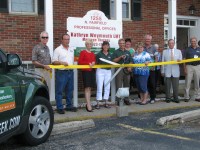
Beavercreek – On Tuesday, July 10, Computer Troubleshooters of Beavercreek celebrated its one-year business anniversary with a ribbon cutting at its new location at1255 N. Fairfield Road. Part of an international network of franchises, Computer Troubleshooters provides IT support for residential and commercial clients servicing both Apple and Windows based computer systems.

President and CEO, Cliff Brust spoke briefly after the ceremony. “We’re happy to be here and we hope you don’t have too many computer problems, but if you do, remember we’re here to help you.”

Among the thirty-plus attendees for the event were Beavercreek Mayor Vicki Giambrone, Vice Mayor Jerry Petrak, Council Members Scott Hadley, Debborah Wallace and Chamber of Commerce President/CEO Clete Buddelmeyer. Guests received a tour of the new office and two desktop printers were given away as door prizes. Refreshments were provided by Subway and 4Starters coffee shop.

The celebration continues this weekend. Computer Troubleshooters is holding a public grand opening from 11AM until 3PM on Saturday July 14. Visitors can stop in to meet the staff and register to win a free desktop printer. For more information contact Computer Troubleshooters by calling (937) 458-2000 or visit http://www.ctbeavercreek.com.

Computer Troubleshooters To Hold Public Grand Opening July 14

In Business, Economy, Jobs, Local News, Media, National News, Science, Senior Lifestyle, Technology, Uncategorized on July 2, 2012 at 10:32 pm

BEAVERCREEK, OH – Computer Troubleshooters of Beavercreek (CTB) is celebrating one year of business with a public grand opening of its new office at 1255 N. Fairfield Rd., Suite 103. From 11 AM until 3 PM on Saturday, July 14, the public is invited to visit the new facility and register to win a desktop printer.

Part of an international network of independently owned franchises, Computer Troubleshooters provides complete information technology (IT) support for residential and commercial clients. In addition to the new location, the company is celebrating one year in business.

CTB President Cliff Brust is excited about the growth of his company. “We’ve been fortunate to find success in the Beavercreek area and we appreciate the support of the business community to allow us to continue to serve them,” he says.

“We have also focused on our managed services and cloud computing for business and medical documentation to provide our clients with the most advanced technology and highest quality support available to them.”

Brust will appear on WRGT TV’s, Fox 45 in the Morning, Monday, July 9th at 8:15AM to talk about common mistakes made by both commercial and personal computer users. For more information contact Cliff or Genevieve Brust by calling (937) 458-2000 or go online to www.ctbeavercreek.com.

A Half-Century of Walmart. Economic Savior or Evil Empire?

In Business, Economy, Entertainment, Jobs, Local News, National News, Opinion, Politics, Senior Lifestyle, sociology, Uncategorized on July 2, 2012 at 10:25 pm

Singer, songwriter Jessica Frech’s satirical music video, “People of Walmart” has attracted more than 6 million viewers, and probably offended just as many. (Jessica is in the upper left square of this screen shot from her video.)

By Gery L. Deer

Deer In Headlines

Most people don’t realize that Walmart is the world’s largest private employer. According to a recent article in Time magazine’s business section, only the U.S. Department of Defense andChina’s People’s Liberation Army employ more people than Sam Walton’s massive dynasty of discount. On July 2, Walmart turned the half-century mark of rolling back prices and shaking up the competition.

On that date in 1962, Sam opened the very first Walmart store inRogers,Arkansas. Fifty years and four-thousand, three-hundred-ninety-nine stores later, the chain employs more than 2.1 million people and sets the standard by which other budget retailers are measured.

Along with those who appreciate Walmart’s contributions toAmerica’s economy, there are equally as many who regard it as an evil, impersonal, corporate monster. And they may be correct, after all, it would have been impossible to become the discount retail leader without doing some damage to the competition and holding fast to as much of its own money as possible along the way to get there.

Impenetrable by unions and continually slammed by the liberal left, the bargain behemoth continues to rake in the cash, bringing in a whopping $443 billion last year. Revenue like that must please the company’s shareholders, who, ironically, are probably the last people to set foot in one of its stores (at least while someone’s looking).

But what is Walmart, really? Is it evil? Or, is this just the price that has to be paid for corporate efficiency and unprecedented business growth? Do small towns really dry up and blow away when Walmart moves in?

The pros and cons of Walmart are probably more a matter of perspective than fact. Walmart shoppers are hard to categorize, but the common image is the middle to lower class, interested in getting the lowest price possible on toilet paper while caring nothing about the environment in which it is sold to them.

Well if you believe singer, songwriter Jessica Frech’s point of view in her satirical YouTube music video, People of Walmart, shoppers simply cannot be categorized. They come in every shape, size, color and creed, from every socioeconomic background and lifestyle. They come at every hour of the day and night in search of, well, a great deal on whatever it is they need.

It’s worth mentioning also that many Wallyworlders found Jessica’s music video terrifically offensive because it uses actual photos of Walmart shoppers in their native habitat. Even so, People of Walmart has been watched by more than 6.1 million viewers. People of Walmart 2, released last November, already has more than 1.6 million views. Apparently people weren’t that offended.

The economic effects by Walmart on local communities are as mixed as its clientele, probably more so than people generally know. According to a 2009 study, most negatively affected by the big box giant are those mom-and-pop retailers selling products in direct competition, such as small, higher-priced grocery, clothing and dry-goods stores.

The research also indicated that retailers offering products and services not available from Walmart tend to do better if in close proximity because people are already prepared to spend the money.

As for Walmart’s overall effect on and property values, new research released by the National Bureau of Economic Research startled the company’s critics. A 2001-2006 study of 159 new Walmart stores found that homes within a half-mile of each actually increased in value as much as 3-percent. Local tax revenue also increases substantially.

Like it or not, Walmart is here to stay. Anytime a business or an individual is successful, they will always have critics and even enemies. Fifty years ago, it’s doubtful that Sam Walton could have imagined what his small shop would eventually become.

Today his company provides jobs, affordable food and clothing, and the most unusually diverse array of patrons any retailer could imagine. So, happy birthday Walmart! Keep the rollbacks coming and, please, could someone fix the wheel on that one shopping cart that just won’t roll when you’re in a hurry?

Public Transportation Issues Expose Ignorance and Prejudice

In Business, Children and Family, Economy, Education, Jobs, Local News, Opinion, Politics, Senior Lifestyle, Uncategorized on June 26, 2012 at 10:22 am

Plans for public transportation service to local communities stonewalled by ignorance and prejudice. Photo courtesy RTA Dayton Wright Stop Plaza Transit Center

By Gery L. Deer

Deer In Headlines

Throughout most ofOhio, public transportation mainly consists of busses and commuter trains. But around the country, public transportation also includes cable cars, street cars, subways, ferry boats, and a host of other means, all of which are vital to the communities they serve.

According to the American Public Transportation Association, in 2010 Americans took 10.2 billion trips on public transit systems. The organization also reports that for every $1 spent on public transportation, $4 of economic return is generated.

Additionally, out of every dollar earned, Americans spend 18 cents on transportation and 94 percent of that money is used for maintaining a personal vehicle. People who use public transportation can save that money or use it for other expenses, providing further economic benefit.

So why are so many local government leaders in towns like Beavercreek and Tipp City resistant to the idea of placing public transit stops in their communities?  The answer is simple; the same things that tend to limit progress in any small community – ignorance and prejudice.

Regardless of how much positive information is provided regarding public transportation, some communities believe that unwanted elements outweigh any potential benefit. One argument leveled by critics is that buses will increase traffic problems. In reality, they actually ease road congestion by reducing the number of individual cars.

Proponents say that civic leaders want to block public transit stops so they can be more discriminating about who has access to certain neighborhoods. In the media both sides seem to be dancing around the concept that minorities, lower income people, the disabled and elderly, and even criminal elements are presumed to be the primary customers of public transportation.

Local officials and residents alike apparently believe that by restricting bus routes from higher-end retail areas they are somehow protecting the community from the less-desirable elements of society. How is that not racist or at the very least, discriminatory towards lower income people?

Of course dangerous criminals like drug dealers can ride into town on the local transit bus, but it’s likely that they already have a way in. Research shows that drugs are highly prevalent in upper income neighborhoods – just better hidden – and a bus stop is unlikely to have much of an effect on that problem, one way or the other.

Politically, government officials often take whatever side they think will appease the voters, regardless of what might be the right thing to do. Not everyone does this, but more do than not, unfortunately.

The indication here is that it’s not just the city councils that are uninformed, but so are the residents. After all, any hope of re-election rests with the brainless masses of the voting public. Remember folks that while your elected official is kissing your baby, he or she is also stealing their lollipop.

Regardless of the political implications, increased consumer traffic is good for local merchants and the economy. Public transportation provides more consumers with additional access to restaurants, malls, civic centers, post offices and other business routes. The money they spend goes into the local economy and increases the value of these businesses. When business values rise, so do those of the properties around them – commercial and residential.

In the end, none of the negative arguments hold much water. It still seems to boil down to snobby white guys (and gals) who are stonewalling public transportation expansions because they don’t want their neighborhoods to look like an inner city.

It might behoove these people to do a little research on urban decay before worrying that something like a bus stop is going to destroy their property value. Sometimes stupid is perpetuated by greed, prejudice and arrogance, and this issue is a perfect example of all three.

Is this your new site? Log in to activate admin features and dismiss this message
Log In