Local News & Commentary Since 1890.

Archive for the ‘Children and Family’ Category

Confronting your greatest fear

In Children and Family, Health, Local News, Opinion, psychology, Uncategorized on April 26, 2016 at 4:59 pm

Deer In Headlines
By Gery L. Deer

In the aftermath of the 1974 Xenia tornado, people in surrounding communities did what they could to help with the cleanup. Although my father was a teacher at the vocational school at the time, he also had heavy trucks so we went to help as well.

Everywhere you looked was devastation. Stunned families cried or stared blankly as broken water mains sprayed the splintered remains of unrecognizable homes. It was horrific. Even as a first-grader, what I saw that first day among the shattered remains of Xenia was inexorably seared into my memory and cultivated a fear of storms that’s hard for me to, even now, put into words.

During my first couple of years of college, I was fortunate enough to live at home and commute. One after class I went home and settled in to watch a movie and scarf down some drive thru before hitting the books. It was a dark, rainy day and the sky had that “look” about it.

Ever since that day in 1974, I’ve been keenly aware of unstable weather, as if I had some kind of built in, biological barometer in my head and this was one of those days when that sense was at its peak.

As I plowed through my burger and onion rings in front of the TV, the power flickered several times, but I did my best to ignore it. I was home alone, and as the wind and rain picked up, the trees in the valley surrounding our small farm it sounded like wild animals roaring in the distance.

At one point, I ventured out the back door and stood behind the house, watching the clouds off to the southwest. The wind became still. The rain stopped. It was dead quiet. I walked to the other side of the house for a better view on the far side of our barn. And there it was. About a hundred yards away, spinning down from the sky to the pasture in front of me – a tornado. It was small, gray, kicking up debris and dancing its way across the field in front of me as if with some kind of purpose in mind.

The 1974 Xenia Tornado was one of hundreds in a massive storm outbreak on April 3.

The 1974 Xenia Tornado was one of hundreds in a massive storm outbreak on April 3. This is probably the most famous photo taken of the giant twister from Greene Memorial Hospital by Fred Stewart.

I was frozen; not with fear, but with fascination. There it was, right in front of me, the thing I feared most; no, more than that. It was the only thing I’d ever been afraid of. Any normal person would have bolted to the nearest cellar. But I didn’t. I stood there, motionless.

A moment later, the funnel met the ancient wooden sideboards of one of my dad’s old farm trucks and they exploded into splinters with a sound like the cracking of a dozen brittle bones. I still didn’t move. I wasn’t afraid at all.

It seemed like it took an eternity for it to cross the 10-acre spread of pasture field, but it was probably more like 30 seconds. It bounced across the road a quarter mile away, circumvented one neighbor’s home completely but then crashed into an adjacent barn, destroying it in the blink of an eye and scattered bits of wood, sheet metal and hay for miles. I stood there, still motionless, taking it all in.

And as quickly as it came, it was gone. After it wrecked the barn across the road, it dissolved into nothing. A moment later, I realized I was being soaked by rain but still staring off across the field. It left a path of small debris along the way and mashed down the high grass as if some kids had tromped a trail through the field. But it was over. And any fear I once felt of these storms was gone.

As I got older, I studied everything I could about tornadoes, even going on a few local storm chases back in school. Over the years, I faced with two more of the swirling monsters but no longer fear any kind of storm. Today I am respectful of their power and unpredictability and still have a sixth sense when things aren’t right in the wind. The best thing any of us can do during Ohio’s tornado seasons is to be alert and prepared.

Gery L. Deer is an independent columnist and business writer. Deer In Headlines is distributed by GLD Enterprises Communications, Ltd. More at gerydeer.com.

Exercise and de-clutter this spring.

In Children and Family, Entertainment, Health, Opinion, psychology on March 24, 2016 at 11:02 pm

Deer In Headlines
By Gery L. Deer

DIH LOGOSpring has sprung and, even though temperatures aren’t quite sweltering yet, it’s time to get off that couch and get moving. No more excuses. You can do it! It’s time to get things done and here are two ideas to help.

If your goal is to get into a new outdoor workout routine, it’s best to get started sooner than later. I can’t help you much on running or some of the other athletics, but, for our would-be bicyclists out there, here are some suggestions from my own experience.

Growing up where I did, a bike was a necessity. Early on, I had to learn the rules of the road, long before there were “bike paths,” or lanes anywhere around our farm. So, my first recommendation for would be cyclers, do your homework.

Before you hit the road, be sure that you know the available routes and trails understand the rules. Hit up the local parks and recreation websites to learn about off-road, public trails and street-based bike routes.

Take extra care to plan out your route with each excursion and take a friend. It’s best not to ride alone on back roads or on isolated trails. Use the buddy system to stay safe.

Since many bike paths replaced former railroad lines, some of them go through small towns and take you onto sidewalks and thoroughfares. Be sure to watch for directional signs, both at eye level and painted on the pavement.

Make sure your cycle is in good shape as well. If you don’t do that kind of stuff, take it in for professional maintenance. Nothing’s worse than being stranded from a poorly maintained chain or crank.

Another thing that’s great about this time of year is the fresh start it brings. So how about those of you for whom a spring goal is to clear out the garage, basement or storage rental. It’s good for the living space and great exercise.

12903726_10153764334789342_1452602020_oMy friend Tami Doling is the owner of Silver Lining Organizers, LLC, and a fellow contributor to the WDTN-TV2 Living Dayton program, as well as Dayton Parent Magazine. She has some great advice on her website and blog on how to clear out the clutter, but it all begins with list of some pretty tough questions.

In her “ask the organizer” blog at Dayton Parenting Magazine, Tami offers the following “test” you can take to decide whether to keep something or not.

Begin by asking yourself the following: do you love it? Would you buy it again? Is it broken? Is it worth cleaning and storing? Can someone else use it?

I’d probably expand on the “cleaning and storing” question a bit further. For example, if you haven’t properly maintained an item, that is, you didn’t keep it well cleaned or stored, why would you start now? Probably time to chuck it.

But possibly my favorite of Tami’s advice is her 60 second rule. “If it takes you more than 60 seconds to decide to keep it,” she writes, “you probably don’t need it.” She also suggests that you try not to do too much at once. You could get blindsided by a sense of being a bit overwhelmed.

“Just start, and start small,” Tami says. “Pick a closet or drawer. Empty it and get rid of anything that you no longer need or use. Enjoy the clutter free area and use that feeling to motivate you as you tackle the next area.”

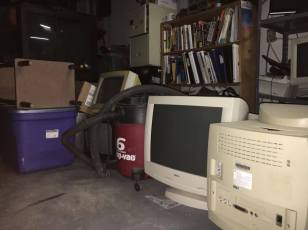
For the last several months, I’ve been in a state of consistent de-cluttering at home. I’ve thrown away things I didn’t even remember keeping, or why they were still there. Broken lamps, old VCRs, TV remotes – why did I keep old TV remotes?

This spring, I’m using the good weather to clear out a great many other areas too, and you can do the same. You can find more of Tami Doling’s articles, TV spots and great ideas about organizing and de-cluttering at silverliningorganizers.com.

Whether you’re starting a new exercise routine or getting some long overdue items checked off of that “honey do” list, the onset of spring is a great opportunity to start. Get up and get moving and I’ll see you outside!


Gery L. Deer is an independent columnist and business writer. Deer In Headlines is distributed by GLD Enterprises Communications, Ltd. More at deerinheadlines.com.

Is your vacation actually relaxing?

In Children and Family, Entertainment, Opinion, psychology, Travel on March 18, 2016 at 10:03 am

Deer In Headlines
By Gery L. Deer

DIH LOGOVacation. For some people the word conjures up images of sandy beaches, mountain cabins or just a sunny day hanging in the back yard. But what if you’re one of those people for whom the idea of sitting idle makes you feel anxious, unproductive and wasteful of time and money? Yep, I’m one of those people too.

I never understood the concept of vacation. I mean, really, what good does it do? For me, having down time means rest, to stop burning energy and recover. I can’t get into the idea of exhausting yourself for no good reason. So how do you actually get some relaxation on vacation? Here are some tips.

First, scale it back. Whenever someone talks about an upcoming vacation and the itinerary is jam packed with back-to-back activity, I have to wonder how that’s relaxing at all? Try to dial it back a bit and choose one location, maybe one major event, like a dinner out or something, and use the rest of the time to unwind. The more complicated your agenda, the more stressful it will be.

Next, minimize the amount of baggage you take along. People – especially Americans – have a tendency to overpack. Don’t take so much with you. Take only what you need, rather than looking like the Howells on Gilligan’s Island – a different outfit for every hour.

It’s important next to remember why you’re going – just to get away. It really doesn’t matter where you go as long as it’s a change of scenery and day-to-day activity. Make sure you get away and get a break.

Finally, turn off the tech. No kidding, leave the iPhone in the car or packed in a bag or something. Don’t take laptops or tablets. How about a book, you know, the paper kind with pages and ink? They never need to be recharged and are super cheap. If you’re on vacation with family and friends, spend time with them, not with Facebook and Twitter. Relax and put down the tech for a while.

I’d imagine I sound like a pretty big wet blanket, but I just don’t care for the beach, or water in general, and forget a cruise. If I’m going to a monstrous hotel, I want it to be attached to dry land. There are just some vacation choices I can’t understand.

Take camping, for example. My mom and dad loved taking the whole family to one of the local state parks for a weekend of the great outdoors. I grew up on a farm, with plenty of wildlife, grassland and woods, so “the great outdoors” was all around me. I didn’t see the point in paying to see more of the same. I liked being with the family, but otherwise I just never got it.

Today, I spend a great deal of money on a mortgage so that I don’t have to cook, eat and sleep outside. But some people spend thousands of dollars and hundreds of hours on just such pursuits.

beachI like nature as much as the next person, but camping is so much work you might just as well have stayed at your job. Building a fire, food prep and cooking, setting up the tent, all the equipment and the planning always left me exhausted, not rejuvenated.

What about fishing? Yuck. I really don’t see the “sport” in it and I’m not eating anything that came out of the water around where I live. I’ve never been a fan of freshwater fish in the first place, so I’m probably not the best judge on that one anyway.

And don’t get me started on camping trailers. I mean, what’s the point? Why go out to the woods to camp and just hole up in a rolling hotel room with satellite TV and Wi-Fi?

According to most financial sources I reviewed, wealthy Americans spend an average of $13,000 on vacation, annually. What puzzles me is when someone who normally complains about being unable to pay bills suddenly posts photos from their recent trip to Florida. How does that not add to stress instead of relieving it?

Of course, I know all the psychological and medical reasons one should take a break from work and refresh. But to spend money you don’t have and time that could be better used in some other way has always been a foreign concept to me.

Over the last decade, between work, maintaining my home and caring for my parents, I’ve rarely had a day off anyway. But, when I do, there is plenty to fill my time without my having to invent something.

When I do choose to relax, I’d prefer it had something to do with a nice hotel, music, a book and a long car drive. And I make choices that I can afford, not overload credit cards while my bills lay unpaid. That’s just ridiculous.

The point is that, while I have little interest in the usual vacation options, I do understand the need to relax. You should do whatever helps you unwind, but be mindful of how much stress the activity adds to your daily life and how much money you have to spend on it.

Taking a break doesn’t mean you have to empty your wallet. Consider something that actually allows you to rest, rather than waste energy and money doing the same thing every year. Whatever you choose, remember the point is to spend time with family and away from the daily grind.


Gery L. Deer is an independent columnist and business writer. Deer In Headlines is distributed by GLD Enterprises Communications, Ltd. More at deerinheadlines.com.


Get smart about birth defects.

In Children and Family, Education, Local News, Opinion, Science, Technology, Uncategorized on March 3, 2016 at 8:12 am

Deer In Headlines
By Gery L. Deer

DIH LOGOAccording to the March of Dimes, one out of every 33 babies in the United States is born with some kind of birth defect. The severity of these problems is broad reaching, from minor defects needing no intervention at all to those requiring invasive surgical treatment.

It’s important that people understand how many different kids of birth defects exist and how they affect the child, and the family. A structural birth defect occurs when a part of the body is missing or deformed. Kidshealth.org reports that heart defects are the most common of these but others include cleft palate and spina bifida.

When the child’s body chemistry is affected, it’s called a metabolic defect, which prevent the body from breaking down food for energy. Tay-sachs and phenylketonuria (PKU) are examples of this kind of defect. Causes of birth defects are not always clear but may include a combination of genetics and outside influences such as prescription drug use.

My mother, Lois, was epileptic. Sometime in her 20s she was prescribed phenobarbital to help reduce seizure events. Phenobarbital is an FDA-approved drug introduced in 1912 and was presumed safe. Mom took it for decades, including during the entire time she was pregnant with me.

According to findings by the North American Antiepileptic Drug (AED) pregnancy registry, and countless medical studies, phenobarbital has been linked to a myriad of birth defects. Research shows the drug to have some negative effect on an expectant mother’s level of folic acid.

Photo Courtesy ScienceMag.org

Photo Courtesy ScienceMag.org

Enter, me. I came into the world in the late 60s, fat, happy … and somewhat inside out. I was blessed by one of those structural birth defects mentioned earlier, apparently the result of my mother’s anti-seizure medication.

Without getting into specifics I had an internal organ protrusion to the outside through a defect in the abdominal wall, missing vertebra, malformed hip joints and several other related deformities.

As a result, I was neither expected to walk nor was there any exact estimation of a prognosis. Much of the surgical procedures involved in my care had yet to be invented and it took many years to get some of it right. Fortunately, nearly a half century later, thanks to medical science and my family’s level of faith and determination, I’m up and walking and in relative good health.

During her pregnancy with my two siblings in the early 1950s, my mother was not yet on the drugs and they were born with no similar issues. And, although the exact causes of my defects were never conclusive, mostly due to the lack of medical knowledge on the subject at the time, the drug angle is widely accepted as fact.

Countless lawsuits are going on to help families of those children affected by these drugs. But that’s a little like closing the barn doors after the horses have come home.

After decades of experimental surgery, trial and error medicine, and, at many times, constant pain, when I see an expectant mother smoking or drinking or doing something equally as stupid, I just want to scream. She has no idea what she is probably doing to her child and what he or she will go through because of it.

My mother and her doctors didn’t know that her treatment would do such damage to her youngest child’s life. But now, in our modern day of free and easy access to constant information, how can anyone be so ignorant as to do that to an unborn child?

And spare me the speeches and excuses about addiction. If you’re pregnant, you stop. If the life of your unborn child isn’t enough motivation to make you put down the bottle, or whatever it is that makes you a bad risk, nothing will be. You have to do whatever it takes to stop and hope the damage isn’t already done.

The point is that there are things we cannot control for our children and those that are entirely up to us. Do not consciously put your child through the kinds of horrible things I experienced because of a lack of knowledge or an unwillingness to change.


Gery L. Deer is an independent columnist and business writer. Deer In Headlines is distributed by GLD Enterprises Communications, Ltd. More at deerinheadlines.com


Prevent Blindness luncheon honors 2016 People of Vision Recipient

In Charities, Children and Family, Dayton Ohio News, Health, Local News, Uncategorized on January 12, 2016 at 5:45 pm


Screen Shot 2016-01-12 at 4.44.49 PMDayton, OH – The Ohio Affiliate of Prevent Blindness, the Levin Foundation and Shrimpf Eye Center at Grandview Medical Center are pleased to announce that Fifth Third Bank and Doug Compton, Dayton City Executive and Commercial Banking Team Lead, will be honored at the Annual People of Vision Award Event for their outstanding visionary leadership and philanthropic work in the community.

The award will be presented by the Levin Foundation and Karen Levin, Executive Director and Shrimpf Eye Center at Grandview Medical Center and Russ Wetherell, Senior VP, Administrator at the luncheon ceremony on February 9, 2016 at noon at the Racquet Club. The Master of Ceremonies for year’s luncheon will be The Jamestown Comet.com editor and entrepreneur, Gery L. Deer.

Screen Shot 2016-01-12 at 4.43.40 PMFounded in 1908, Prevent Blindness is the nation’s leading volunteer eye health and safety organization dedicated to fighting blindness and saving sight. The Ohio Affiliate of Prevent Blindness is Ohio’s leading volunteer nonprofit public health organization dedicated to prevent blindness and preserve sight. We serve all 88 Ohio counties, providing direct services to more than 800,000 Ohioans annually and educating millions of consumers about what they can do to protect and preserve their precious gift of sight.

Nearly 200 people attend the People of Vision Award Luncheon each year and the event raises over $50,000 to support the sight saving programs of Prevent Blindness including vision screening training, advocacy to widen access to vision care and vision research support.

“Fifth Third Bank and Doug Compton possess an exemplary commitment to serving our community and providing resources to people in need living in Montgomery County,” said Michael Martens, Prevent Blindness, Ohio Affiliate Dayton Area Leadership Committee Chair. “Their support of the community provides a strong foundation for families to build upon and Prevent Blindness is proud to honor them with this award,” he added.

The People of Vision Award was established in 1985 by the Ohio Affiliate of Prevent Blindness to honor and recognize visionary organizations and their top leadership for the outstanding work they have undertaken to enhance the quality of life within their communities. The premise of the People of Vision Award is that our community is enriched by such leadership which reflects a “vision of community” to be celebrated and emulated. It’s been recognized as one of Montgomery County premier charitable events

For more information or to make a contribution, call 800-301-2020. Or, visit us on the web at www.pbohio.org or on Facebook and Twitter.

PREVENT BLINDNESS DECLARES NOVEMBER DIABETIC EYE DISEASE AWARENESS MONTH

In Charities, Children and Family, Dayton Ohio News, Education, Health, Local News, National News, Senior Lifestyle, Uncategorized on November 6, 2015 at 3:35 pm

Dayton, OH – In an ongoing effort to help educate the public on diabetes risk factors and prevention strategies, Prevent Blindness has declared November as “Diabetic Eye Disease Awareness Month.”

Diabetes is the leading cause of new cases of blindness in adults. The National Eye Institute reports that diabetics are 25 times more likely to become blind than people without the disease. But when detected early, the blinding effects of diabetes can be lessened.

According to a recent study from Prevent Blindness, more than 8 million Americans have diabetic retinopathy, the most common diabetic eye disease. By 2032, that number is projected to increase by 35 percent.

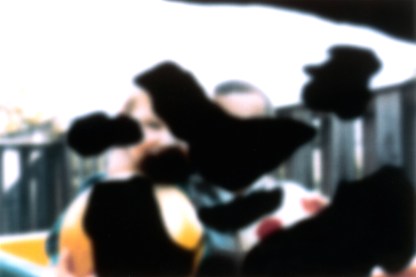
This is something like the world might appear to someone with diabetic retinopathy.

This is something like the world might appear to someone with diabetic retinopathy.

Those suffering from the disease may not experience any symptoms at first. However, as the disease progresses, patience experience a variety of symptoms including spots in the field of vision, varying blurred vision, and complete vision loss.

“With diabetes reaching epidemic levels across the US, Prevent Blindness urges everyone to get a dilated eye exam annually or as often as your eye health care professional recommends,” says Katie Neubert, the Dayton Area Manager of Prevent Blindness. “Eye care professionals can detect diabetes in its early stages, sometimes even before the patient has any idea.”

Diabetics are at risk of developing diabetic eye disease that can permanently damage their vision and even lead to blindness. Some factors can put some at higher risk for vision loss, include, age, ethnicity, duration of the disease, blood sugar control, hypertension, kidney disease and pregnancy.

“For those already diagnosed with diabetes, a doctor can help monitor vision and advise you of the necessary steps to take today to help lessen the impact that the disease may have on your sight,” Neubert says.

Prevent Blindness offers a variety of free resources dedicated to the education of diabetic eye disease including its dedicated website, preventblindness.org/diabetes. For more information contact Dayton Area Prevent Blindness by calling (937) 223-8766.

Prevent Blindness declares September as Sports Eye Safety Awareness Month

In Children and Family, Dayton Ohio News, Health, Sports News, Uncategorized on September 14, 2015 at 10:11 am

Dayton, OH – Prevent Blindness has declared September as Sports Eye Safety Awareness Month to encourage athletes to wear proper eye protection while playing sports. According to estimates by Prevent Blindness, the top five sports resulting in the most eye injuries were basketball, water and pool activities, use of air, gas, spring or BB guns, baseball/softball and football. In fact, in a single year, more than 6,000 Americans suffered an eye injury related to playing basketball.

Founded in 1908, Prevent Blindness is America’s leading volunteer eye health and safety organization dedicated to fighting blindness and saving sight. Serving the entire state, the Ohio Affiliate of Prevent Blindness provides direct services to more than 800,000 Ohioans annually and educates millions of consumers about how to protect and preserve the precious gift of sight.

The National Eye Institute reports that a sports-related eye injury is admitted to a U.S. emergency room every 13 minutes. Eye injuries from sports may include infection, corneal abrasions, blunt trauma, inflamed iris, fracture of the eye socket, swollen or detached retinas or a traumatic cataract. In the worst cases, some injuries may result in permanent vision loss. However, this kind of eye injury is 90-percent preventable.

sports googleKatie Neubert is the Dayton Area Manager for Prevent Blindness. “An injury can happen in a split second, but the effects of a series eye injury can have lasting negative effects for a lifetime,” she says. “That’s why Prevent Blindness encourages all athletes to always make sure that appropriate, properly fitting protective eye gear is part of their uniform.”

Parents, coaches, school staff and others can support children’s sports eye safety by following these tips.

Learn About The Risks – Parents, teachers, school nurses and coaches should learn about eye injury risks associated with sports before allowing children to participate. Enroll your child only in adult-supervised sporting activities through a school district, community center, etc., and try to discourage participation in high-risk sports, such as boxing, since adequate eye protection does not yet exist.

Always Use Protective Eyewear – Most sports-related eye injuries are preventable. Whatever the sport or the athlete’s age, appropriate protective eyewear is the first, best defense against eye injury. Also, be sure the child is seeing clearly by getting him or her an eye exam and request recommendations for protective eyewear before enrolling in any sports program.

Learn Warning Signs of Injury – Parents, teachers, school nurses and coaches should familiarize themselves with the warning signs of a serious eye injury and know when to seek treatment. Parents should also make it a point to meet with coaches or athletic trainers to ensure the proper procedures are in place to deal with a child’s eye injury should one occur.

To further support these efforts, Prevent Blindness is teaming up with Liberty Sport to provide eye care professionals with free information and materials through the “September is Sports Eye Injury Prevention Awareness Month” campaign. For more information please call Prevent Blindness locally at 937-223-8766 or visit preventblindness.org/sports-eye-safety.

Struggling to care for seniors at home

In Children and Family, Health, National News, Opinion, Senior Lifestyle, Uncategorized on September 14, 2015 at 9:33 am

Deer In Headlines

By Gery L. Deer

DIH LOGOA recent article in The Atlantic discussed the question of the difficulty of finding adequate care for America’s senior citizens as more of them are choosing to remain in their own homes as they age. In the article, published April 27, 2015 by Alana Samuels, the author relates the story of her grandmother’s plight to find adequate, affordable home care near the college town of Amherst, Massachusetts.

A shortage of qualified Certified Nursing Assistants (CNAs) coupled with outrageous hourly fees made the task of caring for her Parkinson’s ridden spouse that much more difficult. The author’s grandmother eventually gave up on agencies and a friend helped out until her husband’s death a couple of years later. It’s a story becoming all too common today.

By the year 2030, more than one quarter of all Americans will be over the age of 65. More than ever, those people are choosing to remain in their homes as long as possible, relying on home health care and the assistance of family for everything from grocery shopping to bathing.

Screen Shot 2015-09-14 at 9.31.25 AMOver the last few years, a host of “non-medical” in-home care agencies have sprung up all around the country, spread by franchise. Most offer no skilled health care services and little more than baby-sitting. They can help with things like shopping, cleaning and some companionship for homebound seniors.

But, these home care workers are not permitted to help in medical matters, not even to distribute medications, as would a CNA or other state-registered, skilled health care worker. One published estimate by Genworth puts the cost of non-medical home at a range of $10 to $36 per hour. The extreme discrepancy is attributed to variations in region and the type of care required.

One question families should be asking is exactly what could an unskilled worker possibly do that’s worth $36 per hour? Still, most have few options available; it’s either a nursing facility or home care.

Plus, the home itself can be more hazardous than the disabilities suffered by the senior. It may be necessary to modify the home to accommodate “aging in place,” with zero-clearance shower stalls, raised toilets, grab bars, and much more. This also carries added expense and attention to which families might be unaware.

The fact is that it’s much better, psychologically, and far cheaper for seniors to remain in their own home. But most people caring for an elderly family member cannot be with them all hours – people have to work and care for their own homes and families – and still need outside support.

The first place to start is with the local agencies on aging. Most counties or regions have a non-profit organization such as this to help put families and seniors in touch with needed services such as meals on wheels, in-home healthcare, and more.

Be aware, however, that most services referred by these agencies are self-pay and are not covered by Medicare or insurance. The advantage, however, is that they can generally offer a discounted rate on certain services based on the income of the senior. Contact the local agency for details.

For support on in-home modifications, consult the local builders association for referrals to certified aging in place specialists. Most can provide design and construction information for everything from a simple grab bar installation to more complex additions such as elevators.

Additionally, financial and insurance companies out there might be missing the boat on a potentially golden profit center – “in-home care insurance.” Separate from long-term care or other types of health insurance, this could be a specific product that addresses the far less-expensive options of keeping a senior at home rather than in a skilled care facility. Give it a slightly lower premium and the ability to purchase later in life, and it would likely be less difficult to sell.

Before hiring anyone, caregivers should do their homework. Get at least three references from previous clients and do a thorough Google search on the agency you choose.

Whatever the overall solutions to the home health care problem, it’s clear something has to be done in a hurry. With incidents of elder abuse on the rise in nursing facilities, it’s imperative that families have alternate care options.

Gery L. Deer is an independent columnist and business writer. Deer In Headlines is distributed by GLD Enterprises Communications. More at gerydeer.com.

Old Haunts Beatnik Cafe celebrates original Halloween stories by local authors

In Books, Children and Family, Dayton Ohio News, Entertainment, Holiday, Local News, Theatre, Uncategorized on September 11, 2015 at 8:37 am
Artwork by Michael Martin, WOWA Editorial Committee

Artwork by Michael Martin, WOWA Editorial Committee

Beavercreek, OH – Beginning at 7pm on Friday, October 16, author members of the Western Ohio Writers Association (WOWA) will take the microphone at Books & Co. to present the 2015 Halloween addition of their popular, “Beatnik Café” event. Writers from all genres will regale visitors with original works of poetry and prose to the theme, “Old Haunts.” The event is free and open to the public.

The live reading pays homage to the hole-in-the-wall poetry clubs of the 1960’s, but with a more modern style. Reading aloud from original work, each writer will take the stage for 10 to 12 minutes, dazzling audiences with short stories, poetry or who knows what. This is the 6th year for the quarterly event.

Barbara Deer is the co-founder of the organization. “WOWA was intended to provide a regular resource for peer critique, educational programs and networking opportunities to local writers of all genres, both amateur and professional,” she says.

Barbara Deer, WOWA co-founder.

Click to watch the video!

“Annual workshops are held all around the country, with two of the most well-known right here in the Miami Valley. But for most writers to thrive that type of support needs to come on a more regular basis,” Deer says. “Our group consists of professional writers and editors, college professors and everyone is ready and willing to offer help, a fresh eye and, sometimes more importantly, an honest opinion about the quality of the work – good or bad.”


Writers come from all around the region – southwest central Ohio, eastern Indiana and northern Kentucky – to attend monthly critique sessions, educational lectures and write-in events. Meetings are held on the first Thursday of the month at the Event Connections, 4140 Linden Ave. in Dayton, near the intersection of US 35 and Woodman Drive.

WOWA Logo 2Now in its seventh year, this talented group of scribes definitely have plenty to celebrate. In addition to the many individual members who have been published on their own, in May of this year eleven of them were featured in an anthology titled, “Flights of Fiction,” produced by GLD Enterprises Commercial Writing and published by Handcar Press (ISBN: 978-0-9885289-4-9). The book features stories set in and around the southwest Ohio region and is available in print and electronic formats from the WOWA website as well as Amazon and BN.com.

The Beatnik Café is a family-friendly, free, public presentation of WOWA and GLD Enterprises Communications. Books & Co. is located at 4453 Walnut St. at The Greene in Beavercreek. For more information, go online to www.westernohiowriters.org or call (937) 902-4857.

How secure is your child’s information at school?

In Children and Family, Education, Opinion, Technology, Uncategorized on August 10, 2015 at 12:48 pm

Deer In Headlines

By Gery L. Deer

DIH LOGOA high quality digital learning experience for students is something every school strives to accomplish. But as a parent, have you ever wondered just how your child’s educational and personal records are protected? It is possible that schools are unintentionally putting student privacy at risk.

Some student information, such as that disclosed when using digital learning material, may be managed, not internally at the district level, but by what are known as educational technology, or “edtech,” companies. That information can also end up in the hands of marketing companies and other third-party data collectors.

Joni Lupovitz is the vice president of policy at Common Sense Media, a nonprofit organization that rates the safety of media and technology for students and families. In a recent article on DistrictAdministration.com, Lupovitz says, “Everything is going digital, whether it’s taking attendance, seeing what kids buy for lunch, collecting and storing records, or integrating laptops and tablets into the classroom lessons.”

To ensure every child’s privacy, parents should ask questions such as the following. Does your school outsource edtech services and systems? If so, what are the company’s privacy policies and how do they compare to those of the school district? You have every right to know exactly where your child’s data is being used, who has it and how they manage that information.

schoolroomHow is the wireless computer network in the school system secured? Does the school system provide in-house information technology support or is it outsourced? Who has access to security information? What guarantees are in place regarding the security of any cloud system being used?

Unlike medical record management, legislation governing the management of students’ electronic personal information continues to lag. Even the Family Educational Rights and Privacy Act (FERPA), designed to help restrict access to student records, does not adequately address these issues since it only speaks to the improper disclosure of personal information.

If a school utilizes an outside edtech vendor for record keeping or other digital data management, they may be unaware of holes in the company’s privacy agreement allowing them that provider to sell collected information under certain circumstances. School administrators should then be held responsible to maintain control of that information and have a complete understanding of how the data might be used by the vendor.

Beyond the administrative holes in security and privacy, education of the student (and parents) on safe and proper use of technology is sorely lacking. Most people still have no idea of the security risks when using public wireless access.

Parents should also ask about the security of any websites being hosted by the administration where school information is readily available. Is private data, such as performance or attendance records, easily accessed? Is the data encrypted and to what extent? Be sure to read any privacy paperwork provided and make sure it’s well understood. If not, ask!

Parents must take the time to visit any and all websites managed by the school and familiarize themselves with the layout and information offered there. Sadly, better security usually means more expense, so there is every possibility that substance (good security) gave way to style (a prettier website).

If your child has a smart phone, laptop or other portable technology and utilizes the school’s Wi-Fi system, you may want to reconsider. Public Wi-Fi, even in a school, is insecure and should never be used to access personal or private information like banking, private email, or any other sensitive data.

Whenever a user logs into a website or online account through a public wireless system, there is a risk of breech. Without getting into the techno-babble of how it works, suffice to say that hackers “tag” certain Wi-Fi access points to collect data as people log in. This can happen at schools just as easily as anywhere else.

The take-away from all of this is that parents should be diligent in their understanding of how technology is used at school, whether it’s data management by the administration or Internet access by their child. Schools have an obligation to transparency, especially with regard to student records.

Further Resources:

https://www.commonsensemedia.org/kids-action/issues/privacy-and-safety

http://www.districtadministration.com/article/asking-edtech-vendors-tough-questions

http://www2.ed.gov/policy/gen/guid/fpco/ferpa/students.html

http://www.education.com/reference/article/what-educational-technology/


Gery L. Deer is an independent columnist and business writer. Deer In Headlines is distributed by GLD Enterprises Communications. More at gerydeer.com


Is this your new site? Log in to activate admin features and dismiss this message
Log In