Local News & Commentary Since 1890.

Posts Tagged ‘Gery L. Deer’

Is America ready for a Muslim president?

In Business, Opinion, Politics, Religion on October 12, 2015 at 9:50 am

 Deer In Headlines

By Gery L. Deer

DIH LOGOPresidential hopeful, Dr. Ben Carson, recently stated that he believes a Muslim should not be president of the United States. No sooner had he finished the sentence than the Internet exploded with sharply negative responses.

It’s hard to say exactly what Carson meant by this comment, which was most likely intended to endear him further to his conservative base. But, although it may not be politically correct to say so, there is a logical and practical concept behind the idea.

Professionally speaking, there is no reason a Muslim couldn’t or shouldn’t be president, anymore than there is for a Catholic. Perhaps a more correct statement might be that America, over all, may simply not be ready for a Muslim in the White House.

That said, a recent Gallup poll reports that six out of ten Americans questioned would say “yes” to a Muslim presidential candidate, that’s about 60-percent. That’s a higher number than one might expect but keep in mind poll numbers reflect only the demographic being surveyed. And, some might respond more positively so as not to appear bigoted, even if they don’t totally approve.

Can a Muslim achieve the presidency? Conservatives continue to debate the religious leanings of President Obama.

Can a Muslim achieve the presidency? Conservatives continue to debate the religious leanings of President Obama.

Christianity and Islam are the two largest religious groups in the world, at 33-percent and 21-percent of the population, respectively. So it’s only logical to assume there would be a greater number of each who are already serving in public office and aspire to something higher.

One major concern against the idea of a Muslim president seems to be that his faith would somehow force him to undermine or find himself in conflict with certain anti-terror policies. However, it’s vital to remember that it wasn’t “Islam” that attacked the U.S. on September 11th, but extremist terrorists – something with which Christianity should be all too familiar.

It only takes an eyes wide open look over the shoulder of Christianity to see that, historically, its followers have been responsible for more and bloodier deaths than any other single religious sect on earth. It may not be a popular truth but it is, in the end, the truth. As with most emotionally driven ideals, people have selective memory when it comes to Christianity, ignoring the bad and highlighting the positive.

During the Crusades, horrible wars were fought between European Christians and Muslims, so the arguments between the two groups are certainly nothing new. Over the millennia, Christians have fought in support of some pretty awful ideals including slavery and anti-Semitism. Even the spiritual beliefs of the Native American nations are all but extinct because of Christian influence and forced conversion.

In addition, given the sheer power and reach of the Catholic Church, it would seem far more dangerous an influence on U.S. policy than any Muslim could achieve. The resources and impact of the Vatican are as great as any first world country.

On the flip side, why would anyone in the Democratic Party vote for a Muslim? The liberal base is made up of civil rights heavies and women’s issue activists. If push came to shove, wouldn’t they steer clear of endorsing or giving any kind of authority or power to an individual whose beliefs include the subjugation of women and other groups?

Should a Muslim be president? Why not? But, is America prepared for it yet, probably not, despite what Gallup says. For the most part it’s not because of bigotry or racism, at least not intentionally. It’s just that people are often very frightened of change.

Still, as the election draws nearer over the next year, remember that the best reason to vote for someone is not because of gender, religion, or the color of his or her skin. Choose because of sound qualifications and agreement with the platform.


Gery L. Deer is an independent columnist and business writer. Deer In Headlines is distributed by GLD Enterprises Communications. More at gerydeer.com.

Struggling to care for seniors at home

In Children and Family, Health, National News, Opinion, Senior Lifestyle, Uncategorized on September 14, 2015 at 9:33 am

Deer In Headlines

By Gery L. Deer

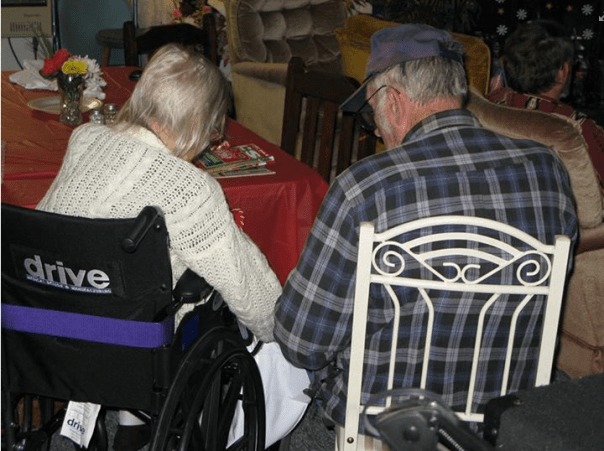
DIH LOGOA recent article in The Atlantic discussed the question of the difficulty of finding adequate care for America’s senior citizens as more of them are choosing to remain in their own homes as they age. In the article, published April 27, 2015 by Alana Samuels, the author relates the story of her grandmother’s plight to find adequate, affordable home care near the college town of Amherst, Massachusetts.

A shortage of qualified Certified Nursing Assistants (CNAs) coupled with outrageous hourly fees made the task of caring for her Parkinson’s ridden spouse that much more difficult. The author’s grandmother eventually gave up on agencies and a friend helped out until her husband’s death a couple of years later. It’s a story becoming all too common today.

By the year 2030, more than one quarter of all Americans will be over the age of 65. More than ever, those people are choosing to remain in their homes as long as possible, relying on home health care and the assistance of family for everything from grocery shopping to bathing.

Screen Shot 2015-09-14 at 9.31.25 AMOver the last few years, a host of “non-medical” in-home care agencies have sprung up all around the country, spread by franchise. Most offer no skilled health care services and little more than baby-sitting. They can help with things like shopping, cleaning and some companionship for homebound seniors.

But, these home care workers are not permitted to help in medical matters, not even to distribute medications, as would a CNA or other state-registered, skilled health care worker. One published estimate by Genworth puts the cost of non-medical home at a range of $10 to $36 per hour. The extreme discrepancy is attributed to variations in region and the type of care required.

One question families should be asking is exactly what could an unskilled worker possibly do that’s worth $36 per hour? Still, most have few options available; it’s either a nursing facility or home care.

Plus, the home itself can be more hazardous than the disabilities suffered by the senior. It may be necessary to modify the home to accommodate “aging in place,” with zero-clearance shower stalls, raised toilets, grab bars, and much more. This also carries added expense and attention to which families might be unaware.

The fact is that it’s much better, psychologically, and far cheaper for seniors to remain in their own home. But most people caring for an elderly family member cannot be with them all hours – people have to work and care for their own homes and families – and still need outside support.

The first place to start is with the local agencies on aging. Most counties or regions have a non-profit organization such as this to help put families and seniors in touch with needed services such as meals on wheels, in-home healthcare, and more.

Be aware, however, that most services referred by these agencies are self-pay and are not covered by Medicare or insurance. The advantage, however, is that they can generally offer a discounted rate on certain services based on the income of the senior. Contact the local agency for details.

For support on in-home modifications, consult the local builders association for referrals to certified aging in place specialists. Most can provide design and construction information for everything from a simple grab bar installation to more complex additions such as elevators.

Additionally, financial and insurance companies out there might be missing the boat on a potentially golden profit center – “in-home care insurance.” Separate from long-term care or other types of health insurance, this could be a specific product that addresses the far less-expensive options of keeping a senior at home rather than in a skilled care facility. Give it a slightly lower premium and the ability to purchase later in life, and it would likely be less difficult to sell.

Before hiring anyone, caregivers should do their homework. Get at least three references from previous clients and do a thorough Google search on the agency you choose.

Whatever the overall solutions to the home health care problem, it’s clear something has to be done in a hurry. With incidents of elder abuse on the rise in nursing facilities, it’s imperative that families have alternate care options.

Gery L. Deer is an independent columnist and business writer. Deer In Headlines is distributed by GLD Enterprises Communications. More at gerydeer.com.

Can there be gratitude without God?

In Opinion, Politics, psychology, Religion, sociology, Uncategorized on September 7, 2015 at 11:59 am

Deer In Headlines

By Gery L. Deer

DIH LOGOFor those who live without a God to thank, some kinds of gratitude might seem an awkward concept. So, whom do atheists thank for the world around them? Where is gratitude concentrated when benevolent events occur from what non-believers would accredit to random chance? Well, here are two ways people without a god express their thanks.

First, intransitive gratitude, as it’s become known, is a broad, indirect, sense of thankfulness. The beneficiary is thankful in general for life, health, flowers, bugs, whatever, but the gratitude is directed toward nothing specific.

From a practical standpoint, the concept of intransitive gratitude falls apart upon deeper analysis because it leaves people to a perception that random chance has some kind of purpose behind it, which might as well be called “supernatural” in nature. Suddenly, it becomes something akin to religion.

Perhaps then, a more tangible and less unbalanced concept of gratitude is preferable for those who would rather have it more focused. Most “non believers” direct their gratitude at those individuals they consider responsible for the positive events.

Say, for example, atheist Bob has a great meal at a friend’s house one evening. Obviously, he wouldn’t pray over it, but instead thanks his friend who worked for the money that paid for the food that she then cooked. From Bob’s point of view, there was no deity or other supernatural involvement.

yarpBob could trace that gratitude all the way back to the friend’s parents, who decided to have a child, and on and on. It’s more of a cause and effect concept but with some level of human direction.

For someone like Bob, directing the gratitude at some invisible, supernatural force seems illogical and improper. Instead, he prefers to honor the people directly responsible for the events or their subsequent results. It might not be accurate, however, to call this type of gratitude a “belief” because it has tangible beneficiaries – Bob’s friend, her employer, her parents, and so on.

The devout likely see this practice as sacrilegious, to say the least. For them the only “one” responsible for all the good in the world is the god they worship. He or She or It is responsible for everything, and nothing is random.

But is someone like Bob wrong or is his gratitude misplaced? Is he evil? Is he a heathen? Therein hangs the question, and one that can only be answered by the individual affected. Any prejudice or personal judgment, however, should be left out of the equation.

Indeed, it would be hard to argue against the idea, in the case of Bob’s meal, that the people who grow, package, ship, prepare and serve food, share a fair portion of the responsibility in his enjoyment of it, godly intervention not withstanding. So being grateful to those people would be highly appropriate.

On the other hand, to the logical eye, and without context, someone clench-eyed, bowing over the dinner plate with clasped hands and appearing to be talking to his or herself would seem quite silly. As with so many concepts, it’s all a matter of personal perception.

Gratitude must be measured and delivered by the grateful in his or her own way. If someone is religious, they’ll likely pray in thanks. For the less rigidly devout, it may be something more informal. Atheists or agnostics may thank the people directly, as Bob did in the example.

Religious or not, it’s important to keep in mind that nothing happens without some human intervention, somewhere down the line, even if not readily apparent. Every decision made by each person has some kind of an effect on the lives of countless others. So directly thanking people for their participation in some good fortune is always a kindness.

Regardless of where gratitude is directed – God, the grocer, a famer, an employer – being generally appreciative of the goodness in life will never be misplaced, even if it’s just within one’s own thoughts.

Remember that good things happen, not to those who wait, but who act. Recognizing good fortune and taking action is just as important as thanks given to those believed responsible.


Gery L. Deer is an independent columnist and business writer. Deer In Headlines is distributed by GLD Enterprises Communications. More at gerydeer.com

5 Pieces of advice for my younger self

In Health, history, Opinion, psychology, Senior Lifestyle, sociology on August 27, 2015 at 11:54 am

Deer In Headlines

By Gery L. Deer

DIH LOGOImagine if you could go back 10, 20, 30 years and talk to your younger self, what would you say? What advice would you have knowing what you know now? Well, believe it or not, you might find out some of that advice is just as relevant as it would have been back then. So if I could have a conversation with my younger self, I have five things I’d tell me, him, you know what I mean.

My number one piece of advice would be, and I know it sounds cliché, not to sweat the small stuff. Every day our life path carries us down one road or another, each with its own set of obstacles, successes, failures, and milestones. The important thing to know is how to recognize which is which and remain calm and in control, regardless of what is thrown your way.

There’s no way to really offer much more to anyone else on that subject though because everyone’s definition of “small” is going to be somewhat different. For example, to me small stuff is a flat tire on the car or having to retype a report I’ve worked on for days. As devastating as some events can seem at the time, when weighed against the larger mass of things, most fit the “small stuff” category although we’re often too consumed with the situation for a clear view.

The second thing I’d say to the “younger me” is to ignore people who say you are destined to … whatever. Your life is shaped by the decisions you make. That is, your story isn’t written yet. Every choice you make is like shaking the Etch-a-Sketch, the picture is redrawn at every turn. So, if you want something, go after it and don’t let anyone get in your way.

Number three is borrowed from some philosophical and religious concepts, which tell us that you are the only one who can cause yourself injury. I don’t mean injured in the physical sense, like being whopped over the head by a crowbar, I mean the kind of damage that’s done to the one swinging it. We only hurt ourselves when we cause pain and injury to others.

old youngThe fourth piece of advice is never to take yourself, or life, too seriously. Despite what you might think, you are so not “all that,” and you need to have some humility if you want to get along in the world. But it can’t be artificial because that’ll come back and bite you in the … well, you know. Be good to people because you want to and because it’s just the right thing to do. Sometimes it’s hard to accept, but the needs of others will often have to come way before yours.

My fifth and final piece of advice for my former self would be to relax a bit more, while you have the time. Life gets harder as days go on, not easier, regardless of what you might see in the media. Take whatever time you can when you have it, but never at the expense of others.

So, for now, that’s all I would say to me 30 years ago. No, actually, there is one other thing. I’d tell me to give my Mom a hug every chance I got and spend as much time with her as possible. Her absence has left an indescribable open wound that will never heal.

Oddly, the funniest thing about all of this is that, as a younger person, it’s highly unlikely any of us would have listened because we knew everything already, right?

The truth is people were giving you advice like this all the time but it just flew in one ear and out the other. After all, what did old people know? You had the world on the end of your line and you were reeling her in.

Now that I understand some of this, I know that some of the best people I know are on a constant journey of self improvement. Remember, it’s never too late for a little sage advice. Take care out there.


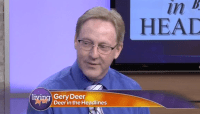
Watch the television version of this piece from WDTN-TV2’s LIVING DAYTON program …

Screen Shot 2015-08-28 at 2.58.23 PM


Gery L. Deer is an independent journalist and business writer. Deer In Headlines is distributed by GLD Enterprises Communications, More at gerydeer.com.

Hackers: The gangsters of the digital age.

In Business, Crime, Economy, News Media, Opinion, Uncategorized on August 24, 2015 at 10:49 am

Deer In Headlines

By Gery L. Deer

DIH LOGORecently, after watching a news story on the subject, my father, who recently turned 82 years old, asked me about what “hacking” was and why someone would do it. I struggled for a minute to explain it in terms he would understand while still giving him a rudimentary understanding of the technology.

It reminded me of a similar conversation I had with my great aunt in 1999, shortly before the Y2K turnover. At 91, she lived a fairly isolated existence in the Ohio Appalachian foothills and certainly not computer literate. But she was deeply concerned about the Y2K computer bug causing her to lose electricity, water and her savings.

I reassured her that there was nothing to be concerned about, and did my best to explain what was really going on, beyond the media hype, the volume of which was considerable when you take into account she had but one TV channel. However, satisfied with my explanation, she seemed never to give it another thought and the millennium switch came and went without incident.

The fact that she was worried at all was troubling and shows just how influential the media can be in exacerbating a problem. Today, we’re faced with a similar situation, demonstrated by my dad’s concern over hacking. So, just exactly who and what should you be worried about and why?

Hacking costs companies more than $445 billion each year.

Hacking costs companies more than $445 billion each year.

For those who don’t know, “hacking” refers to the act of using specialized programming that identifies and exploits weakness in the security of a computer system in an effort to either steal or expose confidential information, or just to prove it can be done. It is a crime and often the hackers are in another country.

These digital gangsters break in for a variety of reasons, mostly to steal and sell sensitive information, political records or financial information. Without getting into more deep technical and political motives, keep in mind that hackers aren’t interested in getting into your private computer.

Not to rain on anyone’s self-confidence, but you’re just not that important – unless you’re some celebrity or politician – for hackers to waste the effort. There has to be some gain in the end, although it might simply be the act itself, the accomplishment of breaking in.

Some hacked information is sold to other criminals who will use it for their own nefarious purposes. When performed against something like the marital cheating website, Ashley Madison, the hope is that there will be some big name to expose and embarrass. That leaves the potential for some celebrity or politician to pay handsomely to keep his or her name off of the publicized list, essentially using the information for extortion.

Most of the time, the average computer user is not directly at risk, but that said, you could still be vulnerable if a store or bank you frequent happens to be a target. The best advice is to read all correspondence from retailers and financial institutions.

If their systems are compromised, they will contact customers first – very quietly – before going public with the information, so as to limit panic among their patrons. You will be instructed what to do in the event of a hack and how to best communicate with the vendor for further information.

Another way to protect your own information with online accounts, and I can’t stress this enough, is to use strong, complex passwords. Often the data stored for online accounts does not include a visible password, even the website owners can’t help you if you lose it. So the more complex it is, and the more often you change it, the less likely a hacker will be able to gain access to your information even if they get in.

Hacking, as a criminal activity, has created a billion-dollar industry around the world, on both sides of cyber security. More than ever, specialists are being trained to combat cyber attacks and electronic infiltration on every level.

As cyber security becomes more sophisticated, so will the criminals who seek to break it. They are the nameless, faceless equivalents of the modern day Jesse James and John Dillinger. Each generation has its nemeses and cyber criminals are the current lot, intent on wreaking havoc with our digital world.

Gery L. Deer is an independent columnist and business writer. Deer In Headlines is distributed by GLD Enterprises Communications. More at gerydeer.com.

How secure is your child’s information at school?

In Children and Family, Education, Opinion, Technology, Uncategorized on August 10, 2015 at 12:48 pm

Deer In Headlines

By Gery L. Deer

DIH LOGOA high quality digital learning experience for students is something every school strives to accomplish. But as a parent, have you ever wondered just how your child’s educational and personal records are protected? It is possible that schools are unintentionally putting student privacy at risk.

Some student information, such as that disclosed when using digital learning material, may be managed, not internally at the district level, but by what are known as educational technology, or “edtech,” companies. That information can also end up in the hands of marketing companies and other third-party data collectors.

Joni Lupovitz is the vice president of policy at Common Sense Media, a nonprofit organization that rates the safety of media and technology for students and families. In a recent article on DistrictAdministration.com, Lupovitz says, “Everything is going digital, whether it’s taking attendance, seeing what kids buy for lunch, collecting and storing records, or integrating laptops and tablets into the classroom lessons.”

To ensure every child’s privacy, parents should ask questions such as the following. Does your school outsource edtech services and systems? If so, what are the company’s privacy policies and how do they compare to those of the school district? You have every right to know exactly where your child’s data is being used, who has it and how they manage that information.

schoolroomHow is the wireless computer network in the school system secured? Does the school system provide in-house information technology support or is it outsourced? Who has access to security information? What guarantees are in place regarding the security of any cloud system being used?

Unlike medical record management, legislation governing the management of students’ electronic personal information continues to lag. Even the Family Educational Rights and Privacy Act (FERPA), designed to help restrict access to student records, does not adequately address these issues since it only speaks to the improper disclosure of personal information.

If a school utilizes an outside edtech vendor for record keeping or other digital data management, they may be unaware of holes in the company’s privacy agreement allowing them that provider to sell collected information under certain circumstances. School administrators should then be held responsible to maintain control of that information and have a complete understanding of how the data might be used by the vendor.

Beyond the administrative holes in security and privacy, education of the student (and parents) on safe and proper use of technology is sorely lacking. Most people still have no idea of the security risks when using public wireless access.

Parents should also ask about the security of any websites being hosted by the administration where school information is readily available. Is private data, such as performance or attendance records, easily accessed? Is the data encrypted and to what extent? Be sure to read any privacy paperwork provided and make sure it’s well understood. If not, ask!

Parents must take the time to visit any and all websites managed by the school and familiarize themselves with the layout and information offered there. Sadly, better security usually means more expense, so there is every possibility that substance (good security) gave way to style (a prettier website).

If your child has a smart phone, laptop or other portable technology and utilizes the school’s Wi-Fi system, you may want to reconsider. Public Wi-Fi, even in a school, is insecure and should never be used to access personal or private information like banking, private email, or any other sensitive data.

Whenever a user logs into a website or online account through a public wireless system, there is a risk of breech. Without getting into the techno-babble of how it works, suffice to say that hackers “tag” certain Wi-Fi access points to collect data as people log in. This can happen at schools just as easily as anywhere else.

The take-away from all of this is that parents should be diligent in their understanding of how technology is used at school, whether it’s data management by the administration or Internet access by their child. Schools have an obligation to transparency, especially with regard to student records.

Further Resources:

https://www.commonsensemedia.org/kids-action/issues/privacy-and-safety

http://www.districtadministration.com/article/asking-edtech-vendors-tough-questions

http://www2.ed.gov/policy/gen/guid/fpco/ferpa/students.html

http://www.education.com/reference/article/what-educational-technology/


Gery L. Deer is an independent columnist and business writer. Deer In Headlines is distributed by GLD Enterprises Communications. More at gerydeer.com


Preventing student debt will take work

In Economy, finances, history, National News, Opinion, Uncategorized on August 5, 2015 at 11:10 am

Deer In Headlines
By Gery L. Deer

DIH LOGOIn recent months, democrats seem more upset than ever about the level of student debt, with President Obama leading the charge to loan forgiveness. But as tuition continues to rise for state students in a still struggling economy, why has nothing been done to limit massive salaries paid to state college administrators, many near the million-dollar mark, while students struggle to pay skyrocketing fees?

Constantly up in arms over the greed of wealthy conservatives, liberals seem to maintain a blissful ignorance toward millionaires who help to push their own political agenda, such as college administrators. But limiting the salaries of these academic fat cats could help to ease the financial burden on the schools and the students.

According to the salary database of the Ohio State University, for example, former President E. Gordon Gee “earned” a whopping, $859,566 in 2013. And that’s only the cash salary; this figure doesn’t include any sort of benefits or bonuses. You could easily surmise that his nearest underlings earn somewhere close to that, at least in the middle six figures.

What could a state employed “figurehead” possibly do to be worth that kind of money? After all, it’s OSU, not Harvard. That’s simply ridiculous, no matter how many letters are stacked up after his name.

IMG_3970Universities aren’t alone in this outrageous salary model, however. According to a December 2015 report by the Dayton Business Journal, Sinclair Community College President Steven Johnson now earns a base salary – without benefits – of $371,454.

Why are the taxpayers shelling out nearly a half-million dollars for a community college president? Keep in mind that these people are not teachers and most high-level administrators continue to receive raises and bonuses even when the schools are making budget cuts everywhere else.

Still, while it could help lower tuition slightly, even if the salaries are cut back in top-heavy administrations, it wouldn’t do much to help people actually pay for school. College students need to take on some of the responsibility to limit their own debt, in ways that no one wants to talk about because they’re politically incorrect.

First, here’s a thought just way out of left field – get a job. Most of the people I went to college with were not from wealthy families and many of the loans we’re talking about today didn’t exist three decades ago. So, they did what I did, applied for every grant and scholarship available and worked as many as three, part-time jobs to help cover the costs. Some did take out small loans, a semester or two at a time, and paid them back as they went.

It’s hard to pinpoint exactly when “work” became such a bad word? A student who works while in school gains a better sense of responsibility, learns how to handle money more efficiently and is more self-sufficient. That also makes them less likely to return home after they graduate because they aren’t afraid to take jobs to make ends meet while looking for their career spot.

Another major sticking point of the American university mentality is that you have to finish your degree in no more than four years. Those who don’t hit the mark may end up at the bottom of the placement pile, labeled as disengaged or unmotivated, and that’s just ridiculous.

Common sense suggests that if it takes longer and the student works during their higher education years, future employers will benefit from applicants with more real-world experience and the worker is more likely to excel faster and make more money.

The simple fact remains that the American economy is still wounded, and all of the handouts in the world won’t change that. Students today would be far better off to work while going to school. If that means they don’t get done in four years, so be it. In adult life, you don’t always have it easy and you need to take responsibility for yourself.

Loan forgiveness is treating the symptom, not the disease. With the foregone conclusion that they’ll never have to pay back a student loan, there is simply no incentive for people to try to stay out of that debt in the first place.


Gery L. Deer is an independent columnist and business writer. Deer In Headlines is distributed by GLD Enterprises Communications. More at gerydeer.com

Fragile life, one to a customer.

In Health, Local News, Opinion, Science, Senior Lifestyle, Technology on July 18, 2015 at 12:59 pm

Deer In Headlines

By Gery L. Deer

DIH LOGORecently, I was reminded again of just how fragile life really is for us. The human body is an amazing bit of engineering. Each of us is comprised of a mass of carefully balanced electromechanical systems that may seem at times indestructible but at others so delicate that the slightest damage could be catastrophic.

The adult body is supported by 206 bones, around 6 quarts of blood, a pair of lungs, two kidneys, about 20 feet of intestines, one heart and stomach, and 31 pairs of nerves. But for all of this, and more, the most important component is the brain, the body’s control center.

The human brain is incredibly resilient, resisting failure through high fevers, concussions, and countless other kinds of injuries. But, like an electronic circuit board, the brain’s delicate electrical system can “short out,” causing failure in other areas of the body, sometimes without warning.

Last week my brother, Gary Jr., was complaining of numbness in his right arm. He was having trouble gripping things or using simple tools. He worked through it, but over the next several days the symptoms advanced to become Parkinson’s – like tremors, causing his arm and hand to shake and flail.

IMG_3857

Gary Deer Jr. with brother Gery (left) and father Gary Sr. just prior to surgery.

At the emergency room, doctors first thought he’d had some kind of stroke and he was admitted for further tests which revealed some type of mass on the lower left part of his brain. At this point, they’re still not certain whether the spot is a tumor or some kind of infection, but any type of stroke has been ruled out.

During the first day at the hospital, he experienced several seizures similar to those caused by Epilepsy, each more invasive than the last; violent shaking of one side of the body, garbled speech and periods of unconsciousness. Medication settled the seizures but doctors are still waiting to figure out how to treat the lesion on the brain. Hopefully there will be something positive to report later on, but for now we wait.

Until his arm went numb and the tremors started it seemed like there was no warning to all of this, high insight revealed that the clues were everywhere. Most of his early symptoms were easily dismissed as fatigue or previous injury.
He had been more tired than usual in recent weeks, even falling asleep during conversations. He was having trouble with the right arm before as well, but attributed those issues with a car accident he’d been involved in a few months earlier.

So the point here is, if something seems out of the ordinary don’t wait until it turns into something more to get it checked out. At this point, there is no way to know if earlier detection would have made much difference for my brother, but, assuming a full recovery – and that’s the only outcome I can imagine right now – it might have helped decrease the yet to be known long-term effects.

For a guy in his early 60s, my brother is in relatively good health, having only ever gone to the doctor for severe cases, such as pneumonia or to be checked out after that car accident. Even though he eats like a teenager on a diet of hot dogs, popsicles and soda pop, he is usually energetic and on the move. Still, this thing snuck up and bit him when he wasn’t looking, as many serious illnesses tend to do.

Sometimes it’s hard to accept your own mortality or imagine that something the size of the end of a ball point pen could cripple you or end your life. We are incredibly fragile creatures. Gary Jr. and I joke often that we each should have died several times over from events we’ve experienced in life – a truck crash, lightning electrocution, something – but I never imagined either of us being taken out by something so small.

I survived serious health issues from birth, so I don’t play games with life – extreme sports, drinking, smoking, etc. – and this is one example of why. So if you’re experiencing odd symptoms, or don’t feel like yourself for whatever reason, don’t wait. Go get checked out. People need you more than you might realize.

Update: July 18, 2015 – My brother’s case has changed since this column was first submitted. Surgery on July 15th revealed no tumors or cancer but instead a serious bacterial infection which created a tumor-like abscess in the brain. The infectious mass was removed but the overall infection will have to be treated with intravenous antibiotics for several weeks followed by many months of continued antibiotic therapy. At this time, he is still in the hospital but recovering and is expected to be released soon to home care.

Gery L. Deer is an independent columnist and business writer. Deer In Headlines is distributed by GLD Enterprises Communications. More at gerydeer.com.

Western Arts Showcase offers historic entertainment at Annie Oakley Festival

In Dayton Ohio News, Entertainment, history, Holiday, Local News, Media, Theatre on July 13, 2015 at 12:23 pm

AOF_3_GLD Greenville, OH – Jamestown Whip Artist Gery L. Deer and Xenia Thrown Weapons Expert, Kirk Bass, will lead a full troupe of whip artists, trick ropers, knife throwers and other Wild West arts experts during the 2015 Annie Oakley Western Arts Showcase during Annie Oakley Festival at York Woods, 6129 Reed Road, Ansonia, OH 45303. The event is free and open to the public.

Presented in the spirit of the stage-style Wild West shows of the late 19th Century, each production will include some detailed history about how these arts came to be and who still practices them today. Champion knife thrower Kirk Bass, of Xenia, Ohio, and his daring wife Melodee are among the performers to take the open-air stage for two shows on Saturday, July 26 beginning at 1 p.m. with a series of western arts perform the suspenseful Bass Blades impalement show, and much more.

Whip marksmanship competitions headline the afternoon show beginning with the National Whip Speed and Accuracy Exhibition Competition, the world’s only Bullwhip Fast Draw contest. Plus, there is a brand new contest taken straight from the big screen.

In 1981, a fedora-wearing, leather-clad archaeologist threw the crack heard round the world when he “whipped” a pistol from the hand of a jungle guide. At the beginning of “Raiders of the Lost Ark,” Indiana Jones demonstrated his skills with the holstered fast-draw of a 10-foot bullwhip, all while having to spin around to take aim first.

In the spirit of Dr. Jones’ proficiency, this year’s Showcase competition will include a special “blind fast draw,” where whip artists must mimic the move used in the film to turn, draw their holstered whip and shoot at a target with speed and accuracy. The first contest of its kind, the feat has never been attempted in a public event like this, even by the showcase’s producer, whip performer Gery L. Deer.

“With the popularity of Indiana Jones among western performers, particularly whip artists, it’s odd this hasn’t been done before,” says Deer, who holds multiple, national whip speed and accuracy titles and is the director of The Whip Artistry Studio, the only permanent whip training facility in America. Contests begin at 1 p.m., followed immediately by a matinee performance at 2:30.

At 5:00p.m., visitors to the festival will see the Grand Wild West Showcase hosted by the music and comedy of Greene AOF_6_GLDCounty’s own, The Brothers & Co. Variety Show. “We pull out all the stops on Saturday evening,” says Deer. “The Brothers & Co. Variety Show is a one-of-a-kind musical variety show from a by-gone era, full of comedy, magic, and some of the best four-part music on stage today. There will be nothing else like this anywhere at the festival!”

“Last year breathed new life into this long-running event,” Deer says. “Our goal is to provide a featured event for Saturday that will help draw more people on what is typically the busiest day of the festival.” For more information or to participate in the whip contests, contact the production office of GLD Enterprises at (937) 902-4857 or email, gdeer@gldenterprises.net.

“We have some of the best Wild West arts entertainment anywhere in the Midwest with real practitioners of each skill,” says Deer, who started the event in Jamestown, Ohio, back in 2002 as a Midwestern convention of Wild West arts practitioners. “These are talented performers with genuine ability, no fakery, no tricks. Everything you see in our show is real Plus all of our shows are in 3-D and high definition!”

The event is sponsored by GLD Enterprises Communications, The Brothers & Co. Variety Show, and the Annie Oakley Festival Committee. All performances are family friendly and presented on the grounds of the Annie Oakley Festival. For links to the festival and sneak previews of the performers plus more information go online to www.ohiowesternarts.org.


Public perception and the dusty GOP

In Economy, history, Opinion, Politics, Uncategorized on July 7, 2015 at 3:02 pm

Deer In Headlines

By Gery L. Deer


DIH LOGOIt seems the republican field of presidential candidacy is bursting at the seams, not to mention getting a little ridiculous. At the time of this writing, there are a dozen GOP candidates hoping to sway voters, and the RNC, before next year’s primary season, while only four democrats have officially tossed their hats into the ring.

At this point in the game, it’s anyone’s race. Until the democratic field shakes out, it’s unlikely there will be many republican endorsements. Before that can happen, supporters need to see is how their favorite conservative candidate stands up against the opposition.

Most early candidacies are a function of money – how much they have, how much is coming in and where to spend it for the best return on the investment. Media is critical to political perception, and expensive, but, at this point many of the candidates will have to spend time doing the old grip and grin just to introduce themselves to key voters in New Hampshire, South Carolina and Iowa. It seems old school in a world of nonstop social media, but it’s necessary.

1280px-Republican_National_ConventionThere are too many GOP candidates with little to no name recognition and that will be an obstacle. Keep in mind, most of the country had no idea who Barack Obama was until the eleventh hour and, two terms later, he has repeatedly made history. But, can the Republican National Committee change the perception of the GOP as the tired, dusty party to something more progressive?

Dem forerunner Hillary Clinton has experience, but not in the same “boots on the ground” role as Jeb Bush or one of the other candidates who have been state governors. Still, just having been a governor isn’t enough to guarantee any sort of mileage in a presidential campaign, especially when accomplishments in office have been lackluster, to say the least.

Ohio Governor John Kasich, for example, has announced that he will officially launch his 2016 White House bid in late July. To hear Kasich describe it, he’s earned his seat at the table having been single handedly responsible for Ohio’s economic recovery following the recession. But, economists have been clear that Ohio’s recuperation is consistent with the rest of the country, resulting instead from federal stimulus packages, short term interest rate reductions and bail outs.

Assuming respectable advancement in the primaries, the candidates could experience secondary problems based on their choice of running mate. While the announcement comes much later in the game, everyone is thinking about it now and those interested in the job are quietly knocking on the door behind the scenes.

Hitching a ride on Kasich’s coat tails as a running mate would most likely be Ohio’s attorney general, Mike DeWine, an obvious choice for the short list. Although he served in congress for a time, DeWine’s name recognition is relatively useless beyond the borders of the Buckeye State.

If Kasich chooses DeWine, he would probably also have to deal with conservative backlash for the AG’s many liberal-leaning policies, the least of which is gun control, including his sponsorship of legislation against assault weapons and personal firearm ownership. Though carefully kept out of any published information, DeWine is also rumored to have been a democrat before changing sides in order to make a political name for himself in Ohio’s largely conservative Greene County. If true, that could further impede any national conservative support of a Kasich-DeWine ticket.

But even if the GOP candidacy field narrows, republicans are still stuck with the public perception as a “rich white guys club,” despite the fact there are two minorities on the list; an African American, retired neurosurgeon Ben Carson, and a woman, former business exec Carly Fiorina. Historically, the GOP has great difficulty connecting with younger voters and minorities and, so far, nothing has happened to mitigate that problem.

Republicans are largely seen by young voters as bigoted, gun-happy, greedy and stuck in the1950s. Until one of the many conservative candidates manages to offer an alternative to that perception for a mass audience, Americans might be looking at another term under a democratic administration.


Gery L. Deer is an independent columnist and business writer. Deer In Headlines is distributed by GLD Enterprises Communications. More at gerydeer.com.