Local News & Commentary Since 1890.

Archive for the ‘Politics’ Category

Congress is robbing Peter to pay Paul … and Mary

In Business, National News, Opinion, Politics, Uncategorized on January 8, 2013 at 8:53 pm

Deer In Headlines

By Gery L. Deer

debt calamityAnytime you take resources originally allocated for one use and direct it towards another, you are “robbing Peter to pay Paul.” Although there’s some dispute about the origins of the old saying there seems to be no doubt about its meaning, particularly with the United States Congress. Given the scope of the debt and the amount of money coming in, perhaps the saying should really be, “robbing Peter to pay Paul and Mary.“

Now that we’re past the overblown, media-hyped and mostly imaginary fiscal cliff, the next challenge is to get both sides of the congressional aisle to come together on how to pay America’s bills.

Just like the rest of us, the government takes in a certain amount of revenue every day and congress decides how it is going to be spent. In recent years, however, money coming in doesn’t come close to what has to be paid out – an issue all too familiar to their constituents.

To be fair, juggling America’s money is no easy task and trying to comprehend the full scale of fiscal goings on in Washington would be impossible in this short essay. So, let’s just focus on a single day in the life of the almighty federal dollar; say, February 15th.

On that day alone, according to a recent CNN report, the Treasure will take in only $9 billion. Sounds like a lot of money, right? Not when you consider the government is already committed to pay out $52 billion. Deciding how to allocate spending is the major challenge taking into account the kinds of bills that need to be paid.

On our random date, February 15th, again from the CNN report, America’s bills include $30 billion in interest on the national debt; $6.8 billion in IRS refunds; $3.5 billion in federal salaries and benefits; $2.7 billion in military active pay; $2.3 billion in Medicare and Medicaid payments; $1.5 billion to defense vendors; $1.1 billion in safety net spending, including for food stamps and unemployment benefits; and $4.4 billion in other spending.

Just like balancing your home checkbook, there is only so much money to go around and you have to decide what to pay and when. The stakes are a bit higher at the federal level, of course. If you don’t pay your electric bill the power company disconnects you. It’s inconvenient, but unless you’re on some kind of life-sustaining device, you aren’t likely to die from it.

If congress fails to pay Medicare or Medicaid or the salaries of our military, it becomes far more than an inconvenience. People could lose their homes, hospitalization and child support.

That said, the danger is also a bit over dramatized for the evening news. What happens next is a game of musical bucks, shifting and reallocating funds from one program or department to another until the immediate needs are covered without causing too much uproar in the area from which the money originated. Sound familiar?

It should. This is how most middle-class families balance their budgets every month; choosing which bills get paid over the ones that are less urgent. It’s more about weighing consequences and trying to keep from adding more debt to the pile than actually paying off the amount owed.

The debt ceiling is one of the determining factors in reallocating resources. If the debt ceiling is higher, they get more time to cover certain bills, thus allowing them to pay other, more critical ones.

Every bill passed by congress has “pork” in it; pet project funding that really benefits no one but the congressman or senator who sponsored it. In most cases elimination of that kind of spending would ratchet up the country’s bank account and allow more debt to be paid down, instead of using it for a study like how long it takes a cockroach to eat a bar of chocolate.

Congress has several fiscal deadlines coming up and, as usual, Democrats and Republicans are already posturing to gain ground before debate even begins. But in the end, the American people will be the ones paying the price; higher taxes, higher energy costs and more wasted money on a congress that has simply failed to do its job.


Stop the presses. Please?

In Children and Family, Entertainment, Media, Opinion, Politics, psychology, sociology, Technology, television, Uncategorized on December 18, 2012 at 10:41 am

mic1DEER IN HEADLINES

By Gery L. Deer

Following the horrific shooting in Newtown, Connecticut, I’ve debated whether to weigh in as yet another part of the media’s relentless armchair quarterbacking of the tragedy. When I finally decided to write about it, I thought I’d take a slightly different approach. Even though I am a part of the machinery of the American press, I believe they deserve a scolding.

From the moment the news hit the wires that a gunman had opened fire at Sandy Hook Elementary, the press has been relentless in its coverage. Every media outlet has surpassed the necessary “news” aspects of the story, as each tries to scoop the other with grotesque detail, or by displaying the most painful tale from surviving parents and children.

None of this is necessary. As Newtown tries to begin what is certain to be a long and difficult recovery from these events, it has become a media circus. Completely oblivious to how invasive and unwelcome they are, television news programs are broadcasting remotely from every open parking lot, thrusting microphones and cameras into the faces of grieving parents and neighbors.

If the pointless commentary by coffee mug wielding morning show hosts isn’t enough to make you sad for the state of our news agencies, factor in that both sides of the gun control debate are using this awful event as a pulpit for their ridiculous agendas. Other commentators suggested the shooting would distract the public from the Fiscal Cliff debate. Apparently, the ignorance of such an unprofessional media just continues to flow. Politicizing such unspeakable tragedy is reprehensible and, for lack of a stronger word, moronic in the highest degree.

Additionally, when the media gives exploiters a platform, they are just as guilty. While the American press has the responsibility to report, they also have an equal liability to know when enough is enough and let respect and good taste outweigh greed for ratings gold.

No matter how many guest experts are interviewed or what level of speculation goes into the motivations of the troubled man who pulled the trigger, or even how many cameras are shoved into the faces of survivors, we may never know the real reasons why these things happen. Endlessly debating the issue on morning talk shows will do nothing more than provide a better plan for the next unstable loner to do it more efficiently.

As the days and weeks pass, the frenzy will die down and Newtown residents will be left to deal with things on their own. Unfortunately, because of the nature of this event and our country’s twisted fascination with mass murder and other horrific crimes, the families will be faced with constant reminders in the media, books, online, everywhere. They will have something in common with those who lost loved ones in the Twin Towers on 9/11. They will forever be forced to relive that day over and over because of the public’s sick thirst for grotesque detail.

From my point of view, this will happen again; not because of guns or some madman’s quest for power but because our nation aggrandizes the killer and the event. It’s likely that there are more mentally ill people out there who see an act of deadly aggression as his or her only way to get noticed and distort that undying craving for attention into an internally-driven martyr complex.

Those who guard our schools, theatres and malls need to be on the alert, now more than ever. Thanks in no small part to the media’s continuous exposition, somewhere out there, sitting quietly in a dark room, the next shooter is deteriorating into madness and admiring the mayhem of this most recent horror.

Make no mistake – I do not blame the media for the acts of a madman. But I do blame them for their lack of good taste and journalistic judgment. We are lucky to have a free press, but there is a point where complete coverage becomes blatant commercialization and exploitation of tragedy.


Christmas trees represent peace and goodwill

In Education, Entertainment, Health, Media, National News, Opinion, Politics, psychology, Religion, sociology on December 3, 2012 at 11:55 pm

Deer In Headlines

By Gery L. Deer

1836 sketch of a Christmas tree in America

1836 sketch of a Christmas tree in America

Are you offended by the term, “Christmas” tree? Or, on the other hand, maybe you get upset when someone refers to a “holiday” tree? Whatever your viewpoint, you might be surprised to learn that until the 1840’s, the Christmas tree was virtually nonexistent in America and largely considered a pagan symbol. Like many other Christian images and traditions, the tree was borrowed from earlier beliefs.

In fact, leaders of early New England Puritan societies preached against what they considered to be “heathen traditions,” such as caroling, decorating and so on. Around 1659, the General Court of Massachusetts declared any observance of the “sacred” December 25th holiday a penal offense.

Only church services were permitted and anything else, even the simplest ornaments or decorations, earned the offender punishment by fine or imprisonment. That mentality continued, for the most part, until the 19th Century when the first recorded display of a Christmas tree in America was by German settlers of Pennsylvania in 1830. So what happened? History.com offers this explanation.

“In 1846, the popular royals, Queen Victoria and her German Prince, Albert, were sketched in the Illustrated London News standing with their children around a Christmas tree. Unlike the previous royal family, Victoria was very popular with her subjects, and what was done at court immediately became fashionable—not only in Britain, but with fashion-conscious East Coast American Society.”

And with that, the Christmas tree was finally accepted in the New World. But why is the evergreen used? As it turns out, that story has ancient beginnings. During the winter solstice, ancient people collected evergreen boughs and placed them over entrances and windows. It was believed in many countries that the evergreen helped to keep away evil spirits, witches, demons and other supernatural bad guys.

The mysterious Druids, the Vikings and even the ancient Egyptians and the Romans had similar tree-related practices. Today, 16th Century Deutschland is credited with the origins of the modern Christmas tree, or tannenbaum, a German word meaning “fir tree.”  Devout Germans borrowed the ancient practice and added decorations to the trees, brought them into their homes and eventually added candles and gifts to the tradition.

In the 21st Century, the tree has finally become the centerpiece of Christmas holiday decor. Some of the largest trees are placed on the grounds of The White House in Washington D.C., and New York City’s, Rockerfeller Center. But as America grows increasingly secular regarding Christmas, people are starting to refer to “holiday” trees, effectively removing the Christian association from the emblem.

As odd as it might sound, given the varied history of the institution, it may be more accurate to share the image outside the Christian connotation. Since the tradition stems from such ancient beginnings, thousands of years before Christ, tree decorating is not uniquely Christian. Hard line Christians may be offended by this idea, but hopefully they can see the promise over the offense. Sharing the practice may open the hearts of those less cordial, regardless of their faith.

Whether to you it is truth or myth, the story of the birth of Christ is one of hope. Christmas is not about the decorations, songs or presents associated with the holiday. It’s about a spirit of good will to celebrate the hope that mankind can be better than he is the other 364 days of the year.

For the truly devout, deeply held faith cannot be rocked by the change in reference to one holiday image. But remember, respect for beliefs other than your own should be paramount if Christmas is to have any meaning at all. Only through respect, understanding and kindness can there truly be peace on earth and goodwill to… everyone. Have a Merry Christmas, a joyful Hanukkah and a happy and safe New Year.


Apocalypse Now & Then: Aunt Margaret and the Mayans

In Children and Family, Economy, Entertainment, Health, Media, National News, Opinion, Politics, psychology, Religion, Science, Senior Lifestyle, sociology, Technology, television, Uncategorized on November 26, 2012 at 11:56 pm

Case in point. The graphic is actually the AZTEC calendar, commonly misused to represent the Mayan version. Misinformation is only part of the problem with the doomsday scare.

By Gery L. Deer

People seem to have a bizarre, and sometimes irrational, fascination with the end of the world. So far, however, concerns about ominous apocalyptic events have been little more than the babblings of high-profile conspiracy nuts, money-grubbing religious fanatics and an over abundance of exaggerated media coverage. Still, the idea of impending doom must generate some money for someone because every few years, there’s a new disaster on the horizon.

In November of 1999, at the age of 91, my Great Aunt Margaret was still a smart woman, if not particularly personable to some, and she’d lost most of her eyesight to Glaucoma. A retired school teacher, she had spent more than three decades living alone in her old, block house at the foothills of the Appalachians, surrounded by other even more isolated senior citizens.

I was standing with her outside the house, watching my dad do something to her garage door, when I felt her frail, thin hand take my arm as she said, calmly, “Gery, what’s this about the world ending or everyone losing all their money because of a problem with all the computers?” Catching me somewhat off guard, I had to think for a moment on how to explain to her the Y-2-K issue in a way she’d understand, considering she knew nothing about computers. Her home still had a manual television and rotary telephone.

“Well,” I began, “old computers only allowed for two digit year notations in their programming so when they roll over from the year 1999 to 2000 on December 31st, they’ll think it’s 1900.” I went on to explain how some software would generate miscalculations but it really wouldn’t cause as big a problem as the media had blown it up to be. Satisfied with my understanding and explanation of the problem, she nodded and dismissed it. But for a time, she was frightened, actually scared she’d lose all her money and that the electricity and water to her home would stop flowing to her isolated home in the hills.

The idea that she and her elderly friends were so frightened by disinformation legitimized by a panic-loving media really angered me. A short time later, laying my technical and writing careers on the table, I published an editorial denouncing Y2K as little more than techno paranoia. As it turns out, unsurprisingly, I was right, but now we’re faced with a similar problem in the form of the Mayan calendar prophecy and other end of the world predictions set for December of this year.

Just like their Y2K counterparts, religious and survivalist extremists from all over the world are out there touting an imminent doomsday of Biblical proportions, stirring up baseless fear and panic. As the stories continue to be blown further out of proportion petrified people pointlessly buy everything from survival books to bomb shelters in an attempt to protect themselves. But experts say there is nothing to fear. The misunderstood Mayan prophecy is based on a calendar that restarts, marking a long period of time the way we might catalog a century or millennium.

Of course we could still fall victim to our own stupidity and blow ourselves up over petty arguments about who owns the world’s resources or whose god is the ‘real’ one. We’re human and we’ve been killing each other since the model was introduced so that’s not likely to stop. But the idea of a cataclysmic natural disaster destroying all life and civilization on earth is pretty far out. Is it impossible, no; staggeringly unlikely, yes.

In any case, if something that big happens there’s nothing that any of us can do about it. All the lunatics out in the woods with a few boxes of dried beef and lots of guns will be just as dead as the rest of us.

Sadly, my aunt passed away several years ago, well into her 90s. But, for all the other “Aunt Margarets” out there, frightened by all this apocalyptic nonsense, please count your blessings, sit back, relax and enjoy the holidays. I promise you, like I promised her; the world isn’t going anywhere anytime soon.

Voting With Conscience, Not So Easy

In Economy, Education, Home Improvement, Local News, Media, National News, Opinion, Politics, psychology, Religion, Science, sociology, State News, Uncategorized on October 30, 2012 at 8:34 am


DEER IN HEADLINES

By Gery L. Deer

In just a few days, Americans will go to the polls to elect a new president or retain the old one for another term. It’s been a heated race almost from the start but now that we’re down to the wire, the candidates are running in a dead heat.

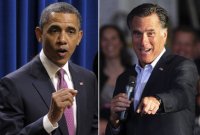
Governor Mitt Romney and President Barack Obama are neck-in-neck in the polls and pounding the pavement in battleground states like Ohio and Virginia, Hurricane Sandy notwithstanding. But with so much negativity – some say far more than in elections past – how will the non-partisan and undecided voter make a choice come November 6? It’s probably going to end up, for most, to be a vote of conscience.

Voting your conscience may not be easy, but it’s often the only way to feel as if you made a difference and chose the candidate that best serves your values and interests. Sometimes, you have to say, “What’s in it for me?”

Unfortunately, it’s hard to say how any individual might benefit from this election especially since most of the campaigning has been about one candidate saying why the other is bad, rather than telling us what he or she is going to do to once in office. Individual benefit will be based on a kind of trickle-down effect depending on which way the national election goes and how much change there is likely to be at the congressional level.

Once again, as noted previously in this column, it’s the local elections to which people should be giving more attention. It’s at the ground level that things actually get done in a way that directly affects the voter, regardless of how much we’d like to believe otherwise.

When weighing the issues of economic distress and job scarcity, the average person only has his or her experiences to call upon for reference. Discussing these problems on a national scale is almost pointless since the changes needed to affect these issues have to occur at the local level. That leaves the voter even more stymied.

Once more, we’re back to voting with our conscience. If you’re undecided, look at the following characteristics of the candidates – whether local or national.

First, is he or she right for the job? Do they give of the ‘air’ of a president or whatever position they intend to hold? Take the time to surf the internet and review video and read speeches they’ve given before and after becoming a candidate for office. Try to see around the fluff and the ‘marketing’ done to promote the candidate and look for threads of the person underneath. Do they seem genuine? Do you think they believe what they’re telling the people?

Do they share your personal values? I’ve long said that it’s simply a bad idea to choose a presidential candidate based on their religious beliefs or because of their take on subjects like abortion. But, when left with a tied score on the business issues, moral issues have to be taken into consideration, so you have little options at that point.

Does the candidate seem to flip-flop, only saying what his people are telling him to say or what he thinks the voters want to hear? Or, do you believe he holds to a set of ideals? This is probably the most important part of choosing a candidate in any election. Most politicians say what they expect the constituents want to hear. If he or she is a republican, conservative ideology comes across more prominently, and the same with being a democrat; the liberal voice will be louder.

But in order to capture a broader audience, the candidates will “pad” their ideology with sprinklings of the other side, or implied agreement with the opposition in small, virtually insignificant ways. This makes them seem more bi-partisan in an attempt to interest the other side.

Voting your conscience is much harder than voting based in facts and issue stance. Try to do your homework before you go to the polls. Choose the candidate you can feel good about supporting throughout their term and remember, no matter who you vote for, get out and vote.

Voters can’t handle the truth

In Business, Economy, Education, Local News, Media, National News, Opinion, Politics, State News, Uncategorized on October 9, 2012 at 9:03 am

Deer In Headlines

By Gery L. Deer

Politicians distort the truth and exaggerate facts to elicit effect from an audience. All of them do it. The idea of any candidate being open and honest is not only unbelievable, but would likely bring the American political system to a dead stop.

No one is going to be completely honest and the determination of whether a politician is lying is in the eye of the beholder. Unfortunately die-hard fans of a particular candidate will insist that it’s only the opponent who lies. The hard, cold truth is, they all “lie.”

In the Star Wars film series, mentor Obi Wan Kenobi warns Luke Skywalker that many of the truths we cling to in life depend greatly on our point of view. Nowhere is that a more appropriate statement than in the political ring.

Often, distortion of the facts is an effort to cover uncertainty or a lack of knowledge. No one could possibly provide an answer to every problem and, rather than appear weak or uninformed, a candidate has prepared a neutral response to counter his or her lack of a solution. Voters should learn to read between the lines and determine whether this behavior is a character flaw or the nature of the job.

Sometimes a candidate, in a moment of either clarity or misstep, will betray his or her thoughts. Mitt Romney’s off-the-cuff remarks about the 47-percent of people who will vote for Obama because of the president’s predilection for endorsing entitlement programs is a perfect example of what can happen when a candidate’s true thoughts come to light.

Political candidates are under intense, constant scrutiny. Every word, every step, every mispronounced name can affect their overall image and subsequent performance in polling. Even misspeaking can be inferred as a lie and bring a campaign crashing down at any moment.

No matter how carefully words and phrases are chosen, however, they can still be used out of context to paint a candidate with a single brush stroke. Generally referred to as “sound bites,” the act of hacking up entire speeches into 30-second snippets has become far too common and can lead the listening public to the wrong conclusions.

Along the same concept, political advertising should be focused on informing the public about the intentions of the candidate. Instead, the point of these messages is to tear down the other guy, discrediting the opposition to the point of exclusion. Millions of dollars are poured into these ads just so each campaign can go back and forth on television, radio and on the Internet, just trying to counter the latest round of jabs from the other side.

Print or broadcast, generally the ads follow a simple pattern. One candidate takes a stab at the opponent’s position on something which is then answered from the other side with an accusation of lying about it, followed by some kind of weak rebuttal. But who is actually lying? Once again, that may depend on a point of view.

Developing and keeping on track a strong platform is tough for a political operative in today’s 2-minute news cycle. Since the American voter tends to go on hearsay and emotional preference rather than fact, it’s nearly impossible to maintain a consistent message. Much of the time is spent on damage control, like the president is doing now after his lackluster performance in the first debate.

Still, whether or not a politician lies is almost irrelevant to the modern voter. Americans seem to be more interested in trivial issues than the larger picture, proven by how easily they are distracted from more important problems by garbage issues. One man’s garbage, however, is another man’s treasure; so once again, it’s back to the pesky point of view.

One thing is for certain – all politicians lie. Voters just need to come to terms with how much of that really matters and learn how to separate the facts from the rhetoric.


People Treat You Like The Clothes You Wear

In Business, Economy, Entertainment, Media, National News, Opinion, Politics, psychology, sociology, television, Uncategorized on September 11, 2012 at 9:59 am

DEER IN HEADLINES

By Gery L. Deer

How do you think people see You?

From the earliest of ages most people are taught not to judge the proverbial book by its cover. But, contrary to that advice, we all tend to treat people like the clothes they wear, even though we only see what they show us.

Each of us is judged every day by our friends, employers, customers, even those on the street who we don’t know. We are judged because of height, weight, hair color, skin color, clothes, shoes, the car we drive, what kind of dog we have and, especially during this election season, our political views.

Sometimes these assessments are socially motivated. If you are active in a particular political, social or economic circle, your sociopolitical survival may dependent solely on the perceptions of others. Your clothing, how you walk, how you speak and even the color of your eyes can affect whether people accept you into their clique.

Still, while most of us avoid calling such critical attention to ourselves, some people crave it or are naturally argumentative, choosing instead to invite a challenge to their choices. When you put a bumper sticker on your car or dye your hair blue, for example, the purpose for doing so couldn’t be clearer – you are trying to get a reaction from people.

Naturally, someone is reading this saying, “No, that’s wrong! I’m exercising my freedom of expression.” A valid point; but we express things so that people will hear us, otherwise why bother? So again, whatever the motivation, you’re seeking the attention and someone will be judging you for it.

Now, in an era of high-tech surveillance, even more people are watching and judging us. For those who actually thrive on such attention, reality television has set an unprecedented tone of exposing the worst in people.

Exposure seems to be the operative word here, with TV shows that exploit virtually anyone all in the name of ratings. Cable television, once dedicated to entertainment and news, now specializes in parading before us a sideshow that would have embarrassed even the likes of P.T. Barnum.

From little people and hyper-religious families with dozens of children to hog-hunting hill folk and spray-tanned uber-rich housewives, producers jockey for best train wreck for prime time. Why? Networks are raking in the advertising cash by feeding on the voyeuristic, excessively judgmental nature of the American public.

People think it’s fun to watch and criticize those who have willingly thrown themselves out there to be fed upon by the vultures in the viewing audience. All of this comes from our inherent tendency towards prejudice and the underlying critical nature of humanity.

Something worth mentioning is that as I was writing this, I realized I had used the word “judgment” or “judge” more than I normally would in one essay. Reviewing several online thesauruses, I discovered there were no direct synonyms for the word “judgment” when it applies to forming an opinion or condemning someone based on personal opinion. It was the only word that fit. How’s that for a narrow-minded reality?

In the end we’re all judged and we all do the same to others. We might not act on those opinions, but we certainly have them. It’s a fact of society, and always has been. A person in a business suit will likely be treated differently than someone in dirty, torn jeans and a t-shirt. As inaccurate as it might be sometimes, people treat you like the clothes you wear.

Remember also, that all of this depends on your point of view, like the car missing two hubcaps on one side. If the observer is looking at the side of the car where the wheels are still covered, what difference does it make?


Of Stuffed Shirts and Empty Chairs

In Business, Economy, Education, Jobs, Local News, National News, Opinion, Politics, sociology, State News, Uncategorized on September 8, 2012 at 8:49 am

DEER IN HEADLINES

By Gery L. Deer

Americans have a tough decision to make in November: re-elect a president with failed policies and lackluster performance or replace him with an arrogant, out-of-touch businessman who seems to hate the poor and elderly (at least that’s how Democrats portray him).

President Obama has forced the country further into debt and is still nursing an unemployment rate of more than 8-percent. His first election campaign was built on the concept of “hope and change,” but his time in office has resulted in neither.

Mudslinging ad campaigns have done nothing to inform the public of what either of these men intend to do about the economy, jobs, healthcare or any other issue. And, for all the glitz, glitter and even Hollywood infiltration at the Republican National Convention, it would be hard to argue that it was anything above unremarkable.

Mitt Romney’s predictable – no, make that inevitable – nomination by the GOP delegates held all the drama of getting part way through a mediocre novel and having someone spoil the ending. Nearly a week later, the only thing still being talked about from the event is the nearly unintelligible ramblings of actor Clint Eastwood to an empty chair.

Ridiculously long and pointless, this scene made no one’s day and served only to confuse viewers and insult senior Americans. Former Secretary of State Condoleezza Rice helped to reverse the “Eastwood” effect, attracting both the African American and female viewer and adding class and intelligence to the stage,

Unless the Republicans can really show how he intends to change things for the better, Mitt Romney is going to have a difficult time showing Obama the door come January.  People simply aren’t responding to the lack of an obvious platform coupled with his image as a stuffed shirt corporate type who registers a big fat zero on the personality scale. Add to that the silver spoon he’s had in his mouth his entire life and it’s a combination that leaves a bad impression on struggling, middle-class voters.

Even though the Obama administration has failed to deliver most of what was promised in 2008, Conservatives seem to lack inspiration on any level and just can’t seem to get out of their own way. Republican Kevin Yoder’s skinny dipping adventure into the Sea of Galilee then trumped by Republican senate candidate Todd Akin’s offensively ignorant statements regarding rape certainly stole Mitt Romney’s spotlight for a few weeks this summer.

Unfortunately for the RNC, perception is everything in a race like this – especially since no one seems to be paying any attention to the facts. Mitt Romney comes across as the personification of the “Jones” that everyone living in a snooty, upscale neighborhood is trying to keep up with. He’s completely unaware that the people down the street are losing their home to foreclosure or that the guy next door just lost his job because his company shipped the work to China. Romney just wants to have his two Cadillacs in the garage and make sure his boat is ready for a long weekend in the Hamptons.

The main difference between the candidates is, not surprisingly, ideological. Obama is the guy who wants to care about everyone but keep his job. He still wants to hold on to his own wealth of millions – yes, he’s a millionaire just like Romney, but he wants to appear like he’s not. People think he’s a nice guy and respect his efforts while still admonishing his failures. But swing voters seem to be uncertain as to whether he should get four more years to keep trying.

As the Democratic National Convention gets underway, it will be interesting to see how the President counters one resonating quote from Mitt Romney during the RNC: “You know something’s wrong with the job [Obama’s] doing as president when the best feeling you had was the day you voted for him.” The President is still polling better that Romney in many regions, including Ohio, but poll numbers are not election returns and, right now, it’s anybody’s race.

Olympic Games Offer Mixed Messages for Kids

In Children and Family, Education, Entertainment, National News, Opinion, Politics, sociology, Sports News, Uncategorized on August 3, 2012 at 8:22 am

I recently read an article composed by a local non-profit about the lessons that could be learned by children from the Summer Olympic Games. The story encouraged parents to watch the events with their kids and discuss the nature of competition, good sportsmanship, hard work, and so on.

As they grow up, we try to teach children the value of good sportsmanship, hosing them down with gooey sentiments like, “It’s not whether you win or lose but how you play the game that counts.” But even in that very statement there is hypocrisy and an absence of reality.

Coming in first is, and always will be, the ultimate purpose behind Olympic competition. The quest for the center platform has driven countries and individuals to outrageous behavior. Figure skater Nancy Kerrigan was clubbed in the leg at the 1994 Winter Olympics, causing her severe injury. Intended to knock Kerrigan out of the contest, the attack was arranged by Jeff  Gillooly, the ex-husband of one of her competitors, Tonya Harding.

In the days of the Cold War, the fierce competition between the United States and the Soviet Union was fueled by precarious diplomatic relations and the massive egos of the world’s two super powers. Winning was not only imperative, it was a matter of life and death for some. However anecdotal, failed Russian athletes were said to have been exiled, tortured and jailed if they were outperformed by Americans.

Sometimes the motivation behind Olympic participation is not a gold medal, but gold itself – in the form of money. Like it or not, the Olympics is a business – for the sponsors and the competing countries.

Every four years, billions of dollars are spent by the nations of the world to send teams of athletes to the summer Olympic Games. Countless corporations spend billions more trying trump the advertising bids of their competition for the honor of being “official” sponsors. Exposure on the world stage can boost a company’s recognition a thousand fold. Recognition translates to sales.

There is money to be made, a lot of money, not to mention the bragging rights for bringing home the most gold. In fact, just to host the Olympic Games, London spent more than $18 million, which has the British Parliament debating even as the event proceeds.

In the end our kids are getting, at best, a mixed message. They see it on television, and in the stands at the local little league game whenever parents get into fist-fights over a bad call. So parents are just as much to blame as the media.

We grow up being told that sportsmanship, honor and diligence is the ultimate goal of athletic competition, but the truth is a bit more obvious and children are smarter than most people give them credit.

Even a kid understands that no one goes to the Olympics hoping for a bronze medal or wishing to be in fifth place. Their eye is on the gold. A gold medal means recognition, money, fifteen minutes of fame, and the cover of Sports Illustrated.

As for, “how you play the game,” well, that’s a distorted idea as well. Olympic athletes are constantly monitored for illegal use of steroids and other enhancement drugs. The threat of cheating looms heavy over the excitement of the arena. Clearly, winning is the most important objective. After all, if winning doesn’t matter, why keep score?


Aurora, Colorado: It Was About Madness, Not Guns

In Media, National News, Opinion, Politics, psychology, sociology, State News, Uncategorized on July 22, 2012 at 11:12 am

When tragedy struck an Aurora, Colorado movie theatre last week, a life and death drama unfolded before the very eyes of a horrified nation. A fun, midnight premier of the latest Batman film instead became a traumatic experience never to be forgotten by those who lived through it.

Covered head-to-toe in protective body armor, the gunman opened fire in the theater using multiple weapons from handguns to assault rifles. The Aurora chief of police reported that the man had colored his hair red and claimed he was Batman’s comic book nemesis, the Joker.

Accounts so far describe the alleged shooter, 24-year-old James Holmes, as a clean-cut, doctoral student with no background in criminal activity or predilection for violence. Nevertheless, he painstakingly planned the attack on the theater in every detail, from his booby-trapped apartment, to the careful selection of explosives and firearms.

In the end, more than a dozen people died and many more were injured as people desperately search for a motive. Some people are blaming the Batman films, particularly Heath Ledger’s version of the arch villain, the Joker, for inspiring Holmes’ behavior. Others are pointing fingers at the media in general for sensationalizing this kind of random violence.

As usual, it didn’t take long for the anti-gun lobby and the liberal left (generally one and the same) to politicize the horrific event in favor of their agenda. Arguing that further gun restrictions are needed because the shooter obtained the firearms legally is without basis.

Logically, someone who is capable of this kind of cold, calculated murder would have found a way to obtain what he needed regardless of the legality. Conversely, the pro-gun conservative assertion that the suspect could have been stopped sooner if more people carried firearms is just ridiculous.

If a bunch of gun-toting amateurs with over-active hero complexes had suddenly opened fire on the attacker the only result would have been even more bloodshed. It’s unimaginable why anyone needs an assault rifle for personal protection, but guns are not the issue in this case.

In the coming months, armchair experts will dilute and dissect the facts and anecdotes from the tragedy, each offering their own empty opinion of why and how someone could commit such a horrible act. But no amount of speculation will break through the facts in this case because they reside only in the distorted mind of the suspect, Holmes.

Short of post 9-11 level security measures placed at every public venue, there is little else that could have prevented this tragedy. The Aurora shooting was the act of a disturbed mind who, if not identified by some level of professional evaluation, would have eventually found some way to act out his violent tendencies.

In the movies, even a genius superhero like Batman is portrayed in his alter ego, Bruce Wayne, as emotionally troubled and bordering madness. But the end result of his violent, albeit not lethal, tendencies allows people to accept his methods to justify the outcome. Justice is served, and the bad guy either lands in jail or somehow causes his own deadly demise.

Unfortunately, the real world doesn’t work like that. Disturbed individuals do bad things. It is rarely predictable and often ends in tragedy. Pushing for further anti-gun legislation simply gets more weapons into the hands of criminals and limits defensive capabilities of law-abiding citizens, and even the police.

Instead, perhaps experts, not politicians, should focus on the more difficult task – dealing with the people who might eventually create havoc and death through such violent acts, regardless of what kind of weapon they use.


Is this your new site? Log in to activate admin features and dismiss this message
Log In