Local News & Commentary Since 1890.

Archive for the ‘Opinion’ Category

Living in the family museum

In Health, Opinion, psychology, Senior Lifestyle, Uncategorized on February 7, 2016 at 7:57 pm

Deer In Headlines
By Gery L. Deer

DIH LOGOAlthough there is a lot of talk about millennials returning home to live with parents, the majority of Americans still move away from their family home. As a teenager, most people long for independence to explore different worlds, expand careers and so on while at the same time freeing themselves from the obligations and responsibility associated with living close to parents and immediate family.

But that wasn’t me. Yes, I had the same desire to see and experience the world, but I seemed to need a grounding to make it work properly for me. I did move away from my hometown for brief periods during college, a few years for work and the like. But for the majority of my life, I’ve remained within just a few miles of my family farm, where my father still lives.

12674271_10153643748619342_101686889_nFor the last two decades, my family music group has called our family farm “home” and that’s where we practice and produce our shows. But it wasn’t until I began helping to care for my mother in 2009 that I ended up having to spend far more time in the home where I grew up than one might think is usual – or psychologically healthy.

My mother passed in 2011 but, a few years later, I had to repeat that effort as my dad’s health made it necessary for us to assist him as well. Fortunately, not to the degree Mom needed help, but once again the situation required me to be at his house several days each week.

My family home is pretty much as it always was with minor changes here and there. But to me it seems simultaneously totally familiar and completely foreign. My job makes it easy for me to work remotely, but there’s a constantly present, underlying distraction.

I’m not entirely sure it’s psychologically healthy to be in this situation sometimes. I’m surrounded by the past every day, as if my dad’s home is a museum with dusty, disorganized exhibits displayed out of context and unvisited.

Growing up, our family home was always a bit of a sanctuary for me, a place the difficulties of the world didn’t penetrate. Today, it can sometimes seem more like a workplace. There’s something disquieting occasionally about walking the halls in what used to be a nurturing home but that now serves another purpose.

Of my siblings and me I am the only one to have grown up in the house. Still, it can still feel very strange to be there now. Today, Dad occupies only certain rooms, but once upon a time the whole house rang with laughter and music, as the smell of homemade food wafted throughout. Now I walk through the dark, silence wondering where the years went.

Maybe it’s having come so close to losing my brother to a serious illness last summer that has triggered some of these deeply buried thoughts. But, whatever the reason, they’ve come blasting to the surface like a volcanic eruption.

Mostly I’m troubled by the fact that my father is so very alone in the world now, having outlived everyone close to him save his children. Within just a few years of each other he lost the aunt who raised him, his brother-in-law who was like a little brother to him, and, most tragically, my mother.

There’s no one left of his generation except a sister, who lives a few hours away, a half-brother whom he doesn’t know very well, and a couple of school friends he speaks to on the phone. These are problems he has that I can’t fix.

Someday, because of my birth position in the family, I’ll likely be the only one left of my mother, father and siblings. I can’t replace what Dad’s lost, so I spend my time with him trying to give him a good quality of life in the present. But there are days when we both sit melancholy and remember the past in the quiet emptiness and solitude of our family home.

Gery L. Deer is an independent columnist and business writer. Deer In Headlines is distributed by GLD Enterprises Communications, Ltd. More at gerydeer.com

Saving the mythical middle class

In Economy, history, Local News, National News, Opinion, Politics on February 1, 2016 at 9:38 am

Deer In Headlines

By Gery L. Deer

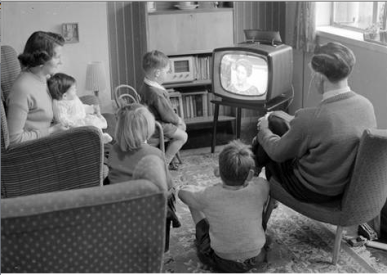
DIH LOGODuring the post-war euphoria of the 1950s, Americans were convinced of a concept that has carried through into the next century. The “middle class” was a figment of someone’s imagination – probably a politician – and sold to the public as the ideal life. But the idea of a middle class has become as mythological as the Leave It To Beaver universe that created it.

As the presidential election year kicks into high gear, saving the dying middle class will be the subject of countless speeches. But how do you preserve something that no longer exists, if it ever did at all? The truth is, you can’t.

But who is the middle class? As it turns out, there is no consistent definition of this mythical group. Depending on the source, the middle class can be defined in a number of ways, from economical status to age and race demographics. So when you hear a politician spout off the words, “middle class,” the context is vital, otherwise it’s meaningless.

According to CNNMoney.com, one definition by the Pew Research Center is based on income. It lists the middle class as those Americans who earn between $46,900 and $140,900. Another marker has to do with aspirations.

Most people who consider themselves middle class want to own a home, send their kids to college, have proper healthcare and investment savings, a car, vacations, and so on. Obviously, that means that the money has to exist to make any of that a possibility so we’re back to financial definitions once again.

Photo courtesy NBC News

Photo courtesy NBC News

The simple fact of it is the concept of the middle class is a myth; a myth we have all been trapped into believing to the point of mass hysteria. The American dream does exist, but it’s far less detailed than we’ve been taught over the last 70 years or so, and it’s not as tied to the middle class as once thought.

Between the American dream and the middle class, I’d much rather focus on the former; at least I know it’s ambiguous and depends on my own efforts, choices and aspirations. The American dream is different for each person.

Yours might be to own a bookstore while your neighbor’s may simply be to be healthy and happy in his or her own way. But trying to be part of the middle class has done countless families harm over the years, struggling to “keep up with the Joneses,” and fighting the never ending war to amass “stuff” so as to appear successful.

As a political hot button, the idea that the middle class is suffering provides unlimited opportunity to yank at the heartstrings of conservatives. Liberals don’t seem to care as much about it. It all goes back to that subliminal mental tie-in between the middle class and the American dream.

The question remains, how do politicians evoke emotion over a group that doesn’t actually exist? Or, stated more correctly, a group that encompasses so many different kinds of people as to eliminate any particular demographic. Actually, it’s easier than you might think.

If politicians can keep that apple pie imagery flowing and preach doom and gloom over its demise, people will flock to the polls to protect it by voting for them. It’ll have the same effect as the anti-communist films of the 1950s and 60s depicting a family on a nice summer picnic when suddenly the nuclear bombs start dropping. Destroy the middle class and America dies.

But, once again, it’s impossible to destroy what doesn’t exist. The middle class is defined by whoever wants to use it to their benefit, to push their agenda. Oddly, I’d say the middle class is more about a state of mind of the individual than actual numbers.

We all just want to be normal, average Americans in similar status to our neighbors so we can relate to each other. In the end, I think we all just want to be financially stable and happy with our lives.

Gun crime liability rests with shooter

In Crime, history, National News, Opinion, Politics, psychology on January 21, 2016 at 1:00 am

Deer In Headlines

By Gery L. Deer

DIH LOGOGun control is one of those subjects that is, at best, incendiary and at worst causes explosive arguments. Debate is heated and emotionally driven regarding the real meaning of the second constitutional amendment and how it applies in modern American life.

But it might be that we’re missing a larger question as we grapple to decide whether guns should be available at all to private citizens. Perhaps a larger and more readily answered question should be, who actually carries the criminal responsibility when someone uses a firearm to harm others?

Recently, Democratic presidential hopeful Bernie Sanders stated that, if elected, he would work to repeal the immunity granted by congress to firearms manufacturers. Passed into law in 2005, The Protection of Lawful Commerce in Arms Act (PLCAA) protects firearms manufacturers and dealers from being held liable when crimes have been committed with their products.

Most of the disagreement comes from debate surrounding the “intended use” of a product relative to manufacturer or reseller liability. From some points of view, the only intended use of a firearm (gun) is to kill people. However, those law-abiding citizens who maintain guns with absolutely no ill intentions towards others heatedly contest this line of thought.

Ranchers and farmers must have firearms in order to protect property and livestock from wildlife. Even in southwestern Ohio, for example, the wild coyote has become an ever-increasing problem to cattle farms and other livestock producers. While fences, traps and dogs have been used to curb the problem, often a rifle seems to offer the only permanent solution.

At some point, lawmakers need to understand that pulling the trigger is the choice and sole responsibility of the shooter.

At some point, lawmakers need to understand that pulling the trigger is the choice and sole responsibility of the shooter.

But, if one subscribes to the concept that guns are only intended for killing of people, then, logically, culpability rests solely with those who build and sell weapons. Since, by this definition, the products are meant for killing there is no “misuse” of the firearm if it is used to murder.

Conversely, if an axe were used to kill someone, the manufacturer wouldn’t be held criminally liable because the product was not intended for that purpose. Once again, however, why is no one looking at the guy on the trigger (or handle, if the axe is still in play here)?

Once upon a time in America, responsibility for ones actions was the basis for many a legal precedent. Today, the United States has adopted a social climate rich with the idea the personal responsibility is politically incorrect.

At what point did Americans stop blaming the person who pulled the trigger and begin assigning responsibility, not to the perpetrator, but to the manufacturer or seller of the weapon used to commit the crime?

And the next question is, where does self-defense come into play? Who is responsible if someone threatens a law-abiding citizen with an illegally obtained gun and the victim protects herself with a legally purchased and licensed concealed pistol? Good question. It would clearly depend on the facts of the situation.

Making guns entirely illegal is not the answer either. Arguing that swords and battle-axes are illegal so no one uses them to commit crimes because of that fact is, well, stupid; apples to oranges. This kind of weapon simply doesn’t do enough damage for those with mayhem in mind.

Facing facts, the bad guys will always have guns because, quite simply, they don’t obey the law (that’s what makes them bad guys). So if the only people who can own and use a gun – for any purpose at all – are criminals, what are people supposed to do to protect their families and property?

When an act of self-defense has taken place, it should be up to the investigating police officials and, perhaps, eventually a jury to evaluate the culpability and intent where any weapon is concerned. Once again, the discussion has to circle back around to personal responsibility.

Better background check data, waiting periods for purchase and greater restrictions on gun show sales are good options for the short term. They maintain second amendment rights while providing increased safety and also address the question of personal responsibility. Applying some common sense while protecting the rights and security of Americans might just save some lives.

Gery L. Deer is an independent columnist and business writer. Deer In Headlines is syndicated by GLD Enterprises Communications Ltd. More at deerinheadlines.com.

Why I’m done with Star Wars.

In Entertainment, Holiday, Media, Movies, National News, Opinion, Uncategorized on December 28, 2015 at 9:58 am


Deer In Headlines

By Gery L. Deer

DIH LOGOIf you’re a die-hard Star Wars fan, you’re not going to like what you’re about to read and that’s OK with me. If you haven’t seen Star Wars, Episode VII: The Force Awakens, you should probably stop reading right now because I will be giving away some major spoilers, and, subsequently the main reasons I’m done with the franchise.

I’ve been a lifelong Star Wars fan and it was always a part of my personal pop culture, just as it was for millions of others. But, The Force Awakens was so tragically disappointing that it has ended my interest in any future Star Wars movies with director J.J. Abrams at the helm.

In 2009, Abrams did little to endear himself to fans of CBS Paramount’s Star Trek franchise when he tossed the half-century-long story canon established by Gene Roddenberry in favor of his “alternate universe.”

IMG_4731

Gery’s 1978 Millennium Falcon toy space ship with a couple of the action figures from the 90s. Gery sold off a great portion of a vast 1970s era collection in 2005.

But, for Star Wars, I was willing to give him a chance and hold my opinions until seeing the movie. Sadly, my worst fears were realized and I simply do not understand why any true Star Wars fan likes this film.

However overblown the hype and merchandising, this “new” story is little more than a mashed up repeat of the original trilogy into one movie. At its core, The Force Awakens is the story of a wannabe Lightsaber jockey seduced by the dark side who adopts a Vader-esque breath mask and sets out to hunt down former teacher, Luke Skywalker.

His evil cohorts have build a space station (that looks like a moon) and blow up some important planets before being destroyed by a spunky pilot and his adorable robot. Does any of this seem familiar yet?

But wait, there’s more! The worst part of the story is that the bad guy is the son of Han Solo and Princess Leia and isn’t much more than a whining, 20-something, Darth Vader fan boy with daddy issues. He doesn’t even need the mask, popping off regularly throughout the movie!

Near the end of the film, he confronts Solo on a bridge and kills him to prove to his master how “evil” he has become. And that’s just about when I nearly walked out on this film. Killing off a beloved, long-lived character should be purposeful and respectful. Abrams’ blatant “murder” of Han Solo was anything but either. The word that comes to mind to describe it is, pointless.

As a writer, it’s hard for me to accept that a character like Solo was written to have survived everything we saw in the first three films just to be murdered in a moment of gullibility.

Rumor has it that this was the only way actor Harrison Ford would agree to return to Star Wars. If that’s the case, then the character’s death should have had meaning. But it didn’t.

Sadly, some great performances by the new cast, including the female lead, are overshadowed by the retread story line. I’m well aware that more than $1 billion in box office returns – not to mention a flurry of media praise – do not support my conclusions. But it won’t be the first time good box office returns had no real relationship to the quality of a film.

Personally, I believe this film travesty is just a way for director Abrams to leverage his control over Star Wars. He simply punched the fans in the face to reinforce that this is now his property and it will go how he wants it, fans and good writing not withstanding. But, money talks so you’re likely stuck with him for a while.

As talented as he may be, J.J. Abrams will never be a George Lucas or Steven Spielberg. No amount of lens flare will make up for the fact that he simply doesn’t care about these stories, the characters, or, more importantly, the fans.

All we can do is hope no one lets Abrams anywhere near Indiana Jones. Now excuse me, I need to go put the rest of my Star Wars collection on eBay. May the Force be with you.


Gery L. Deer is an independent columnist and business writer. Deer In Headlines is distributed by GLD Enterprises Communications. More at gerydeer.com


Combating fear and terrorism at the holidays

In Crime, history, Local News, Media, National News, News Media, Opinion, Politics, psychology, sociology, Technology, Travel, Uncategorized, World News on November 19, 2015 at 11:05 am

Deer In Headlines
By Gery L. Deer

DIH LOGOAs the holiday season begins, bad guys around the world are watching and willing to do anything to disrupt safety and security. In the shadow of the Paris attacks in which 129 people died and more than 350 injured, it’s hard not to worry that another strike is just around the corner.

The level of anger and hatred leveled at peace-loving people is almost incomprehensible. But what can we do, as individual Americans, to remain safe and keep the terrorists from spreading fear?

For the most part, remaining diligent about safety should be a common sense concept. But, surprisingly, many Americans are complacent about their place on the global stage. But it’s only a matter of time before ISIS and similar groups manage to hit an American target on a massive scale, just as al Qaeda did in 2001. In other words, we’ve been lucky.

As the White House plans for the reception of thousands of Syrian refugees fleeing terrorism themselves, many conservatives are debating the idea that the inrush of refugees may include planted ISIS terrorists. Although this is certainly a legitimate concern, my guess is, however, they already have people on the ground here in the States, recruiting American young people on our own soil.

It can still happen here ... again.

It can still happen here … again.

Young, mush-brained Americans are being recruited into these terrorist cells in staggering numbers. One report by CNN.com states, “ISIS takes a somewhat secular approach, portraying how much better life purportedly is in the caliphate as compared to the corrupt West.”

The article also offers a reminder that it’s not just American youth who are attracted to the ISIS recruitment process. It also appeals to a wide demographic of people from all ages and socioeconomic ranges.

Additionally, gun control in the U.S. may help reduce domestic terror violence, but taking guns from the hands of law-abiding citizens might actually make ISIS’ job easier by making them bolder. My guess is that one of the few things keeping the bad guys at bay is a “Texas” mentality – the belief that we’re all gun-crazy and packing heats everywhere we go.

While that wouldn’t scare the leaders or group on the whole, those individuals they recruit to actually act would think twice if there was a possibility of not completing their “holy” mission – the deaths of hundreds of free Americans. If the assailant were to be gunned down by a regular citizen before he can detonate his bomb or unload his weapon on innocents, he’d be a failure and dishonor himself.

Americans can’t afford to depend entirely on the federal government to protect them from these threats and should remember the advice of the Department of Homeland Security (DHS). On the official DHS website, the agency states, “Citizens should report suspicious activity to their local law enforcement authorities.”

DHS officials urge citizens to be “vigilant for indicators of potential terrorist activity” and watch the National Terrorism Advisory System (NTAS) Alerts for information about specific threats. While being vigilant, however, it’s important to be clear on who exactly constitutes “the enemy.”

Clearly, Americans are behind our French allies, in solidarity against a common enemy with no borders, no face, no diplomatic recognition, no motive (except murder) – the enemy could be anyone. But we must keep in mind that “alert” doesn’t mean “paranoid.”

The words “Islam” and “Muslim” are being thrown around in the reports about the most recent terror attacks. We must remember that Muslims are not the enemy – ISIS is the threat. Muslims, like most Christians, are peaceful, law-abiding citizens who are deeply harmed by what these radicals are doing.

History is full of religious extremism, from virtually every major sect on the planet. We’ll never be completely rid of it, but we can do our best to keep it from damaging our society and protect citizens of the free world as effectively as possible.

As a people and a country, America survived 9/11 and we’ll survive whatever ISIS throws at us. But anything we can do to prevent this most recent threat from any level of success is worth the effort and diligence.


Gery L. Deer is an independent columnist and business writer. Deer In Headlines is distributed by GLD Enterprises Communications. More at gerydeer.com.


Respite is theme of National Family Caregivers Month

In Entertainment, Health, Opinion, Senior Lifestyle, sociology, Uncategorized on November 11, 2015 at 5:36 pm

Deer In Headlines
By Gery L. Deer

DIH LOGOAccording to the latest numbers, around 83-percent of long-term care in the U.S. is provided by unpaid family members. Although it might not affect you directly at this point, odds are someone you know is caring for an elderly or disabled family member.

Family caregivers are saving the government and insurance companies billions of dollars every year and go largely unnoticed. Caregivers play many roles for their charges, from accountant to housekeeper and personal assistant to nurse. It’s a nonstop challenge with daily changes so there is no “normal,” particularly when caring for someone with an advancing deteriorative disease.

Lois Deer (right), mother of the author, passed away in 2011 after two years of full-time care by her family.

Lois Deer (right), mother of the author, passed away in 2011 after two years of full-time care by her family.

The term, “caregiver” usually conjures up thoughts of an adult child looking after an elderly parent, but that’s certainly not the only situation. Parents of disabled children, grandparents, or even siblings caring for a disabled or elderly brother or sister, are all dealing with a similar situation – too much to handle and not enough help.

Caregivers often suffer from enduring fatigue, emotional stress and broad-reaching financial hardship. Over time, trying to cope with all of this can catch up with a person, causing chronic health problems. The organizers behind the website Caregiveraction.org have declared November as National Family Caregivers Month with the 2015 theme of “Respite: Care for the Caregiver.”

The organization notes that most caregivers feel that respite is a luxury and many even view it as selfish. But trying to find a way to decompress on a regular basis should be made a priority.

Juggling one home, a job and a personal life can be tough enough, but when you’re doing it for two households it can break even the most resilient of people in a hurry. The majority of caregivers pull double duty in order to handle their own homes and families while seeing to the doctor visits, medicine regimens, physical therapy, and other demands of their caregiving charge.

That constant state of stress can often lead to long-term health issues. It’s important that caregivers care for themselves also, set aside time to rest, eat right, and seek support if no other family is available to help out.

Some Caregiver Facts …
 Largest source of long-term care
 Most (66%) are female
 More than half are age 18-49
 Most caring for elderly parents
 Many suffer loss of wages and benefits

There are a number of organizations with resources available to help with respite care. Be aware, however, that generally there is no insurance or Medicare / Medicaid coverage for these services and the costs must be absorbed by the patient or caregiver.

Financial stress is one of the most prominent problems for family caregivers. Many either lose their jobs due to regular absences or have to quit in order to provide full time care. And, when the patient has limited income or other resources, the caregiver picks up the fiscal slack, spending whatever they have to ensure bills are paid.

If you know someone who has recently become a family caregiver, please keep in mind that they may have a different set of priorities than before. Depending on the situation, it is likely their life revolves now around the person for whom they provide care. They may not be able to drop everything and go shopping or out to dinner at a moment’s notice. Be patient and supportive.

Of course there are those who gives the family caregiver a bad name. Anyone who does this out of some kind of need for financial compensation or constant personal praise won’t be seen as anything but self-aggrandizing and reprehensible.

There is no glory or martyrdom in caregiving. It’s emotionally draining and physically exhausting, especially if your family member is terminally ill. The pain of watching someone wither away is like nothing imaginable without first-hand experience.

If you’re taking care of a family member, remember to take care of yourself too. You can’t do anyone else any good if you’re suffering as well. Caregiving is hard work, on any level, and it should be viewed objectively.

You wouldn’t work nonstop on a job would you? Do whatever you need to do to take a little time for yourself every day. Remember you’re doing the best you can and accept help when it’s offered.

Helpful Resources …

Centers for Disease Control : http://www.cdc.gov/aging/caregiving/facts.htm

The Caregiver Space . Org : http://thecaregiverspace.org/

Greene County Council on Aging : http://www.gccoa.org


Is America ready for a Muslim president?

In Business, Opinion, Politics, Religion on October 12, 2015 at 9:50 am

 Deer In Headlines

By Gery L. Deer

DIH LOGOPresidential hopeful, Dr. Ben Carson, recently stated that he believes a Muslim should not be president of the United States. No sooner had he finished the sentence than the Internet exploded with sharply negative responses.

It’s hard to say exactly what Carson meant by this comment, which was most likely intended to endear him further to his conservative base. But, although it may not be politically correct to say so, there is a logical and practical concept behind the idea.

Professionally speaking, there is no reason a Muslim couldn’t or shouldn’t be president, anymore than there is for a Catholic. Perhaps a more correct statement might be that America, over all, may simply not be ready for a Muslim in the White House.

That said, a recent Gallup poll reports that six out of ten Americans questioned would say “yes” to a Muslim presidential candidate, that’s about 60-percent. That’s a higher number than one might expect but keep in mind poll numbers reflect only the demographic being surveyed. And, some might respond more positively so as not to appear bigoted, even if they don’t totally approve.

Can a Muslim achieve the presidency? Conservatives continue to debate the religious leanings of President Obama.

Can a Muslim achieve the presidency? Conservatives continue to debate the religious leanings of President Obama.

Christianity and Islam are the two largest religious groups in the world, at 33-percent and 21-percent of the population, respectively. So it’s only logical to assume there would be a greater number of each who are already serving in public office and aspire to something higher.

One major concern against the idea of a Muslim president seems to be that his faith would somehow force him to undermine or find himself in conflict with certain anti-terror policies. However, it’s vital to remember that it wasn’t “Islam” that attacked the U.S. on September 11th, but extremist terrorists – something with which Christianity should be all too familiar.

It only takes an eyes wide open look over the shoulder of Christianity to see that, historically, its followers have been responsible for more and bloodier deaths than any other single religious sect on earth. It may not be a popular truth but it is, in the end, the truth. As with most emotionally driven ideals, people have selective memory when it comes to Christianity, ignoring the bad and highlighting the positive.

During the Crusades, horrible wars were fought between European Christians and Muslims, so the arguments between the two groups are certainly nothing new. Over the millennia, Christians have fought in support of some pretty awful ideals including slavery and anti-Semitism. Even the spiritual beliefs of the Native American nations are all but extinct because of Christian influence and forced conversion.

In addition, given the sheer power and reach of the Catholic Church, it would seem far more dangerous an influence on U.S. policy than any Muslim could achieve. The resources and impact of the Vatican are as great as any first world country.

On the flip side, why would anyone in the Democratic Party vote for a Muslim? The liberal base is made up of civil rights heavies and women’s issue activists. If push came to shove, wouldn’t they steer clear of endorsing or giving any kind of authority or power to an individual whose beliefs include the subjugation of women and other groups?

Should a Muslim be president? Why not? But, is America prepared for it yet, probably not, despite what Gallup says. For the most part it’s not because of bigotry or racism, at least not intentionally. It’s just that people are often very frightened of change.

Still, as the election draws nearer over the next year, remember that the best reason to vote for someone is not because of gender, religion, or the color of his or her skin. Choose because of sound qualifications and agreement with the platform.


Gery L. Deer is an independent columnist and business writer. Deer In Headlines is distributed by GLD Enterprises Communications. More at gerydeer.com.

Struggling to care for seniors at home

In Children and Family, Health, National News, Opinion, Senior Lifestyle, Uncategorized on September 14, 2015 at 9:33 am

Deer In Headlines

By Gery L. Deer

DIH LOGOA recent article in The Atlantic discussed the question of the difficulty of finding adequate care for America’s senior citizens as more of them are choosing to remain in their own homes as they age. In the article, published April 27, 2015 by Alana Samuels, the author relates the story of her grandmother’s plight to find adequate, affordable home care near the college town of Amherst, Massachusetts.

A shortage of qualified Certified Nursing Assistants (CNAs) coupled with outrageous hourly fees made the task of caring for her Parkinson’s ridden spouse that much more difficult. The author’s grandmother eventually gave up on agencies and a friend helped out until her husband’s death a couple of years later. It’s a story becoming all too common today.

By the year 2030, more than one quarter of all Americans will be over the age of 65. More than ever, those people are choosing to remain in their homes as long as possible, relying on home health care and the assistance of family for everything from grocery shopping to bathing.

Screen Shot 2015-09-14 at 9.31.25 AMOver the last few years, a host of “non-medical” in-home care agencies have sprung up all around the country, spread by franchise. Most offer no skilled health care services and little more than baby-sitting. They can help with things like shopping, cleaning and some companionship for homebound seniors.

But, these home care workers are not permitted to help in medical matters, not even to distribute medications, as would a CNA or other state-registered, skilled health care worker. One published estimate by Genworth puts the cost of non-medical home at a range of $10 to $36 per hour. The extreme discrepancy is attributed to variations in region and the type of care required.

One question families should be asking is exactly what could an unskilled worker possibly do that’s worth $36 per hour? Still, most have few options available; it’s either a nursing facility or home care.

Plus, the home itself can be more hazardous than the disabilities suffered by the senior. It may be necessary to modify the home to accommodate “aging in place,” with zero-clearance shower stalls, raised toilets, grab bars, and much more. This also carries added expense and attention to which families might be unaware.

The fact is that it’s much better, psychologically, and far cheaper for seniors to remain in their own home. But most people caring for an elderly family member cannot be with them all hours – people have to work and care for their own homes and families – and still need outside support.

The first place to start is with the local agencies on aging. Most counties or regions have a non-profit organization such as this to help put families and seniors in touch with needed services such as meals on wheels, in-home healthcare, and more.

Be aware, however, that most services referred by these agencies are self-pay and are not covered by Medicare or insurance. The advantage, however, is that they can generally offer a discounted rate on certain services based on the income of the senior. Contact the local agency for details.

For support on in-home modifications, consult the local builders association for referrals to certified aging in place specialists. Most can provide design and construction information for everything from a simple grab bar installation to more complex additions such as elevators.

Additionally, financial and insurance companies out there might be missing the boat on a potentially golden profit center – “in-home care insurance.” Separate from long-term care or other types of health insurance, this could be a specific product that addresses the far less-expensive options of keeping a senior at home rather than in a skilled care facility. Give it a slightly lower premium and the ability to purchase later in life, and it would likely be less difficult to sell.

Before hiring anyone, caregivers should do their homework. Get at least three references from previous clients and do a thorough Google search on the agency you choose.

Whatever the overall solutions to the home health care problem, it’s clear something has to be done in a hurry. With incidents of elder abuse on the rise in nursing facilities, it’s imperative that families have alternate care options.

Gery L. Deer is an independent columnist and business writer. Deer In Headlines is distributed by GLD Enterprises Communications. More at gerydeer.com.

Can there be gratitude without God?

In Opinion, Politics, psychology, Religion, sociology, Uncategorized on September 7, 2015 at 11:59 am

Deer In Headlines

By Gery L. Deer

DIH LOGOFor those who live without a God to thank, some kinds of gratitude might seem an awkward concept. So, whom do atheists thank for the world around them? Where is gratitude concentrated when benevolent events occur from what non-believers would accredit to random chance? Well, here are two ways people without a god express their thanks.

First, intransitive gratitude, as it’s become known, is a broad, indirect, sense of thankfulness. The beneficiary is thankful in general for life, health, flowers, bugs, whatever, but the gratitude is directed toward nothing specific.

From a practical standpoint, the concept of intransitive gratitude falls apart upon deeper analysis because it leaves people to a perception that random chance has some kind of purpose behind it, which might as well be called “supernatural” in nature. Suddenly, it becomes something akin to religion.

Perhaps then, a more tangible and less unbalanced concept of gratitude is preferable for those who would rather have it more focused. Most “non believers” direct their gratitude at those individuals they consider responsible for the positive events.

Say, for example, atheist Bob has a great meal at a friend’s house one evening. Obviously, he wouldn’t pray over it, but instead thanks his friend who worked for the money that paid for the food that she then cooked. From Bob’s point of view, there was no deity or other supernatural involvement.

yarpBob could trace that gratitude all the way back to the friend’s parents, who decided to have a child, and on and on. It’s more of a cause and effect concept but with some level of human direction.

For someone like Bob, directing the gratitude at some invisible, supernatural force seems illogical and improper. Instead, he prefers to honor the people directly responsible for the events or their subsequent results. It might not be accurate, however, to call this type of gratitude a “belief” because it has tangible beneficiaries – Bob’s friend, her employer, her parents, and so on.

The devout likely see this practice as sacrilegious, to say the least. For them the only “one” responsible for all the good in the world is the god they worship. He or She or It is responsible for everything, and nothing is random.

But is someone like Bob wrong or is his gratitude misplaced? Is he evil? Is he a heathen? Therein hangs the question, and one that can only be answered by the individual affected. Any prejudice or personal judgment, however, should be left out of the equation.

Indeed, it would be hard to argue against the idea, in the case of Bob’s meal, that the people who grow, package, ship, prepare and serve food, share a fair portion of the responsibility in his enjoyment of it, godly intervention not withstanding. So being grateful to those people would be highly appropriate.

On the other hand, to the logical eye, and without context, someone clench-eyed, bowing over the dinner plate with clasped hands and appearing to be talking to his or herself would seem quite silly. As with so many concepts, it’s all a matter of personal perception.

Gratitude must be measured and delivered by the grateful in his or her own way. If someone is religious, they’ll likely pray in thanks. For the less rigidly devout, it may be something more informal. Atheists or agnostics may thank the people directly, as Bob did in the example.

Religious or not, it’s important to keep in mind that nothing happens without some human intervention, somewhere down the line, even if not readily apparent. Every decision made by each person has some kind of an effect on the lives of countless others. So directly thanking people for their participation in some good fortune is always a kindness.

Regardless of where gratitude is directed – God, the grocer, a famer, an employer – being generally appreciative of the goodness in life will never be misplaced, even if it’s just within one’s own thoughts.

Remember that good things happen, not to those who wait, but who act. Recognizing good fortune and taking action is just as important as thanks given to those believed responsible.


Gery L. Deer is an independent columnist and business writer. Deer In Headlines is distributed by GLD Enterprises Communications. More at gerydeer.com

5 Pieces of advice for my younger self

In Health, history, Opinion, psychology, Senior Lifestyle, sociology on August 27, 2015 at 11:54 am

Deer In Headlines

By Gery L. Deer

DIH LOGOImagine if you could go back 10, 20, 30 years and talk to your younger self, what would you say? What advice would you have knowing what you know now? Well, believe it or not, you might find out some of that advice is just as relevant as it would have been back then. So if I could have a conversation with my younger self, I have five things I’d tell me, him, you know what I mean.

My number one piece of advice would be, and I know it sounds cliché, not to sweat the small stuff. Every day our life path carries us down one road or another, each with its own set of obstacles, successes, failures, and milestones. The important thing to know is how to recognize which is which and remain calm and in control, regardless of what is thrown your way.

There’s no way to really offer much more to anyone else on that subject though because everyone’s definition of “small” is going to be somewhat different. For example, to me small stuff is a flat tire on the car or having to retype a report I’ve worked on for days. As devastating as some events can seem at the time, when weighed against the larger mass of things, most fit the “small stuff” category although we’re often too consumed with the situation for a clear view.

The second thing I’d say to the “younger me” is to ignore people who say you are destined to … whatever. Your life is shaped by the decisions you make. That is, your story isn’t written yet. Every choice you make is like shaking the Etch-a-Sketch, the picture is redrawn at every turn. So, if you want something, go after it and don’t let anyone get in your way.

Number three is borrowed from some philosophical and religious concepts, which tell us that you are the only one who can cause yourself injury. I don’t mean injured in the physical sense, like being whopped over the head by a crowbar, I mean the kind of damage that’s done to the one swinging it. We only hurt ourselves when we cause pain and injury to others.

old youngThe fourth piece of advice is never to take yourself, or life, too seriously. Despite what you might think, you are so not “all that,” and you need to have some humility if you want to get along in the world. But it can’t be artificial because that’ll come back and bite you in the … well, you know. Be good to people because you want to and because it’s just the right thing to do. Sometimes it’s hard to accept, but the needs of others will often have to come way before yours.

My fifth and final piece of advice for my former self would be to relax a bit more, while you have the time. Life gets harder as days go on, not easier, regardless of what you might see in the media. Take whatever time you can when you have it, but never at the expense of others.

So, for now, that’s all I would say to me 30 years ago. No, actually, there is one other thing. I’d tell me to give my Mom a hug every chance I got and spend as much time with her as possible. Her absence has left an indescribable open wound that will never heal.

Oddly, the funniest thing about all of this is that, as a younger person, it’s highly unlikely any of us would have listened because we knew everything already, right?

The truth is people were giving you advice like this all the time but it just flew in one ear and out the other. After all, what did old people know? You had the world on the end of your line and you were reeling her in.

Now that I understand some of this, I know that some of the best people I know are on a constant journey of self improvement. Remember, it’s never too late for a little sage advice. Take care out there.


Watch the television version of this piece from WDTN-TV2’s LIVING DAYTON program …

Screen Shot 2015-08-28 at 2.58.23 PM


Gery L. Deer is an independent journalist and business writer. Deer In Headlines is distributed by GLD Enterprises Communications, More at gerydeer.com.