Local News & Commentary Since 1890.

Archive for the ‘Science’ Category

Does Everyone Suffer From Freud’s Alleged Death Wish?

In Entertainment, Health, Media, Opinion, psychology, Science, television, Uncategorized on April 30, 2012 at 10:52 pm

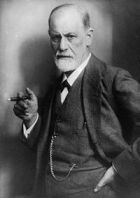
Sigmund Freud, by Max Halberstadt, 1921

By Gery L. Deer

Deer In Headlines

Sigmund Freud said that most people have a death wish, a desire, often deeply repressed, for self-destruction, often accompanied by feelings of depression, hopelessness, and self-reproach. Arguably, Freud’s theories have been the subject of considerable controversy and debate over the years but his impact on psychology, therapy, and culture is undeniable.

Debunked or not, psychology’s most famous figure may have hit this proverbial nail right on the head. At least that’s how it seems taking into account how many things people do while fully aware of potentially lethal consequences; for example, smoking, alcohol, recreational drug use, skydiving, auto racing, base jumping and other high-risk behavior.

It could be argued that some of these activities are no more dangerous than getting in the car in the morning and driving to work. Considering the safety measures involved in the case of something like skydiving, a quick spin in a Chevy would most likely be far more dangerous.

Of course, once someone starts taking drugs or abusing alcohol, a chemical addiction takes over and impedes their ability to stop. But they’re not the only ones.

Some experts suggest that so-called adrenaline junkies are not all that different from their AA-going counterparts. Similar addictive reactions occur in the bloodstreams of extreme athletes and even serial criminals, not for drugs but adrenaline. The high brought on by the endorphin rush can be overwhelming and highly addictive.

If the experts are right, treatment may be in order to help quell the desire for such extreme behavior. But, that doesn’t answer the main question – how do they start in the first place?

Could there actually be an inborn drive that blinds some people to the relative, even inescapable dangers, associated with risky behavior? Is it possible that some people are genuinely motivated by an involuntary drive akin to Freud’s death wish?

Blaming television and other entertainment media for romanticizing risky behavior is always an option, but only to a point. While these influences do affect modern society, they can hardly be blamed for anything prior to about 75 years ago.

Before the mass media evolved into what it is today, habitually addictive activities like smoking and alcohol use were predominantly passed on through families or influenced by social circles. Plus, the detrimental effects of these substances was not yet widely known or accepted.

It could be that people are just examining these issues far too closely. Maybe, to use another Freudian colloquialism, a cigar is just a cigar. Isn’t it at least possible that people simply do dumb things sometimes without deep, psychological forces at work? Of course it’s possible.

Psychoanalyzing risky behavior may rack up tons of cash for shrinks, but it’s entirely possible that some people just enjoy these activities for their own sake. Unfortunately, some of them become addicted to the rush, the drug, the adrenaline, or whatever it is that hooks them, and some even die as a result.

Life is dangerous – even if it’s unintentional. No matter the lifestyle, no one escapes Freud’s alleged death wish. Whether it’s a compulsion for that first cup of morning coffee or an obsession with shoe shopping, extreme behavior hits everyone in one way or another.

Sometimes the things a person appears to enjoy in life the most are exactly what may be killing them, or may eventually. Lifestyle changes or even therapy may be necessary, but the individual is the only one who can change the behavior.



Here On Gilligan’s Island: TV’s Sociological Snapshot

In Entertainment, Opinion, Politics, psychology, Religion, Science, sociology, television, Uncategorized on March 27, 2012 at 9:02 am

Gilligan's Island served as a humorous microcosm of American society.

By Gery L. Deer

Deer In Headlines

In 1963 television writer, producer Sherwood Schwartz created a short-lived situation comedy that, unbeknownst to audiences, provided a peak through a unique magnifying glass into the human condition. Panned by critics and adored by viewers, Gilligan’s Island became one of the most re-run shows of all time and earned a unique place in the annals of American pop culture.

Between 1964 and 1967, 98 original episodes of the show aired when it was suddenly cancelled before a fourth season could be filmed. Surprisingly, the show ran aground, not because of faltering ratings (it was always in the top 20) but instead because the president of CBS wanted to revive his wife’s favorite program, Gunsmoke, which had already drifted into the sunset.

Often taken too seriously by critics and sometimes misunderstood even by its fans, the premise of Gilligan’s was simple. Seven people set out on a scenic, three-hour cruise around theHawaiian Islands aboard the S.S. Minnow when an unexpected storm tossed their tiny ship and left it wrecked on the shore of an uncharted island.

Marooned more than 300 miles from their original course and left with only a transistor radio, a tool chest, four blankets and the clothes on their backs (which never seemed to wear out) the castaways had little hope of rescue. As if that wasn’t enough, each opportunity for escape from their tropical island nest was agonizingly thwarted – usually thanks to the ineptitude of the boat’s lovable, yet bungling first mate, (Willie) Gilligan.

Regardless of what people thought of the show, however, even today, the durability of Gilligan’s Island still leaves entertainment experts scratching their heads. It’s possible, though, that most people simply missed the point.

Gilligan’s offered us more than just 23 minutes of slapstick escapism. Along with campy, cartoon-like comedy, the program granted viewers a humorous and remarkably detailed glimpse of themselves.

Seven people, each of whom represented different social positions, were required to work together in order to survive in their shared predicament. The Skipper and Gilligan, for example, represented average, working class guys; a small business owner and his employee, if you will.

The Professor was a school teacher; the pragmatic scientist focused on getting everyone safely off the island. He also found ways to help make them all more comfortable while maintaining a discrete distance from the obvious distractions – Mary Ann and Ginger.

Sweet, kind, Mary Ann was a wholesome farm girl fromMiddle America. Television psychologists (yes, there are such people) often refer to her as the ‘linchpin’ of the story. Noticeably absent for a good part of an episode, Mary Ann would walk in at just the right moment bringing with her at least part of the solution to an impending problem, though sometimes inadvertently.

Movie starlet, Ginger, was Mary Ann’s voluptuous, big city opposite. Her Marilyn Monroe-esque sensuality was continually implied but never fully executed. Even though she was a film star, on the island she was relegated to a traditional ‘female’ role of the 1960’s, cooking and doing laundry.

Lastly, the millionaire Thurston Howell III and his socialite wife, aptly named, Lovey are obvious stand-ins for the high-brow elite. Carrying enough cash to support a small nation, the lazy yet likable couple solved problems back home with money – something that has no value on the island. Still, Howell’s business savvy and ruthless determination to return to civilization offers both foil and ally to the others.

And there you have it, seven snapshots of modern society dropped into a difficult situation where they are forced to get along for the common good. Of course a sitcom isn’t real life, but it shows us that we all have the same basic needs no matter where we are in the pecking order of society. In the end, we all require food, clothing, shelter, some level of happiness and a margin of personal satisfaction.

No one ever really finds everything they’re looking for in life, but peel away our political, religious and social trappings and we’re all the same. Just people trying to get along, regardless of whether we live on the streets of anywhere U.S.A., or here on Gilligan’s Island.

50 Years Later, Oh, That View Is Still Tremendous

In Local News, National News, Opinion, Politics, Science, State News on February 21, 2012 at 6:36 am

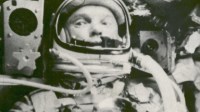
Col. John Glenn on his first orbit aboard Friendship 7 in 1962

By Gery L. Deer

Deer In Headlines


In 1958 the National Aeronautics and Space Administration (NASA) was commissioned to getAmericainto the space race and beat the Russians to the moon. President Kennedy had set a public deadline of landing a man on the moon by the end of the 1960’s but no one even knew if it could be done. To make it happen, NASA had to invent new technology and learn new skills previously conceived of only in the pages of comic books.

To get things started, NASA established Project Mercury and seven test pilots were chosen from various branches of the armed services to be the first American astronauts. Sitting in tiny capsules atop converted ballistic missiles, these brave men learned how to break the bonds of gravity, achieve orbit, navigate and then return safely back to earth.

On February 20, 1962, Colonel John H. Glenn, Jr., a Marine Corps fighter pilot fromCambridge,Ohio, blasted off fromCape Canaveralto become the first American to orbit the earth. Only the second Mercury flight, Glenn’s Friendship 7 capsule and splashed down safely in the ocean after completing three orbits. The mission lasted only 4 hours, 53 minutes and 23 seconds but it was long enough to allow the United States to catch up to the Soviets.

Glenn’s mission was considered a great success especially considering it happed less than a year after Mercury astronaut Alan Shepard flew the firstU.S.space shot aboard his Mercury capsule, Freedom 7. Shepard and Glenn had paved the way for the future of theU.S.space program, and within a few years, Project Mercury had achieved all its objectives.

The next series of missions, Project Gemini, allowed the astronauts to leave the relative safety of the capsule and the new two-person spacecraft that was more maneuverable than the Mercury craft. The Gemini vehicles were also used to develop docking and rendezvous technology, vital to the lunar landings.

By 1967, however, NASA had hit yet another growth spurt. Project Apollo replaced Gemini and, along with a few of the original Mercury 7 astronauts, nine new pilots were selected. Things were moving at a feverish pace and NASA was making good time to fulfill Kennedy’s promise but that achievement did not come without a price.

Each and every mission had multiple objectives ranging from simple tests of new equipment to advanced flight evaluations. Whatever the purpose, procedures were established in order to minimize danger. Ultimately, however, space flight was dangerous and these men were test pilots and sometimes things didn’t go as planned.

In January of 1967, Apollo 1 Command Pilot Virgil “Gus” Grissom, Senior Pilot Edward H. White and Pilot Roger B. Chaffee died in a fire during a ground test of the command module capsule atCape Canaveral. The accident forced several design and safety procedure changes and delayed manned Apollo flights for nearly two years.

When the first manned Apollo mission launched in October of 1968, many in Washington felt the Apollo 1 accident was caused by haste and carelessness and pushed for the program to be shut down before more money and lives were lost. Work continued, however and today Neil Armstrong’s immortal words from the Sea of Tranquilitystill resonate across the generations.

Between 1969 and 1972, there were six successful moon landings. In 1973, NASA launched America’s first space station, “Skylab,” and by 1977, the first space shuttle, Enterprise, was ready for flight control and landing tests. The space shuttles were retired in 2011 after three decades of service.


None of these later accomplishments would have been possible without the bravery and fortitude of those first 7 space pioneers. Ironically, John Glenn was one of the first astronauts to leave the space program (to pursue a career in politics) but he is also the only Mercury astronaut to return to space after retiring.

In 1998, Glenn flew as a payload specialist aboard the Space Shuttle Discovery at the age of 76 – the oldest human ever to fly in space. Here’s to John Glenn on the 50th Anniversary of America’s first orbital flight.